
How a Simple Maintenance Call Saved This Leesburg Home’s Outdoor Lighting System
When a Leesburg homeowner called Loudoun Lighting because several outdoor lights had stopped working, it initially sounded like a routine maintenance visit.
Instead, the inspection uncovered an installation problem that had been quietly shortening the life of the system for years.
More than half of the lamps in the three-year-old architectural and landscape lighting system had already failed. The fixtures themselves were high quality and the original design looked professional, so that level of failure immediately suggested something else was wrong.
What we found illustrates why outdoor lighting maintenance involves much more than replacing burned-out lamps — and why catching small installation and landscape changes early can prevent much larger problems.
The Call: Maintenance That Turned Into a System Checkup
The system was only about three years old, but more than half of the lamps had already failed. Something was off.
Because the fixtures themselves were high quality and the overall installation appeared professional, that level of failure was unusual. Rather than simply replacing the lamps and moving on, we took a closer look at the system to understand what was causing the problem.
The Discovery: Spotlights Buried Too Deep
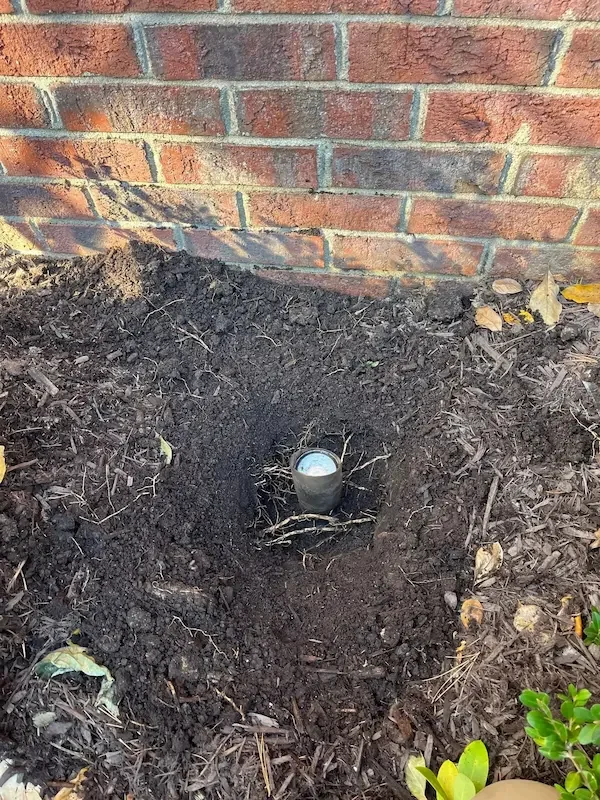
During the inspection, we found that many of the spotlights had been installed roughly six inches too deep into the ground.
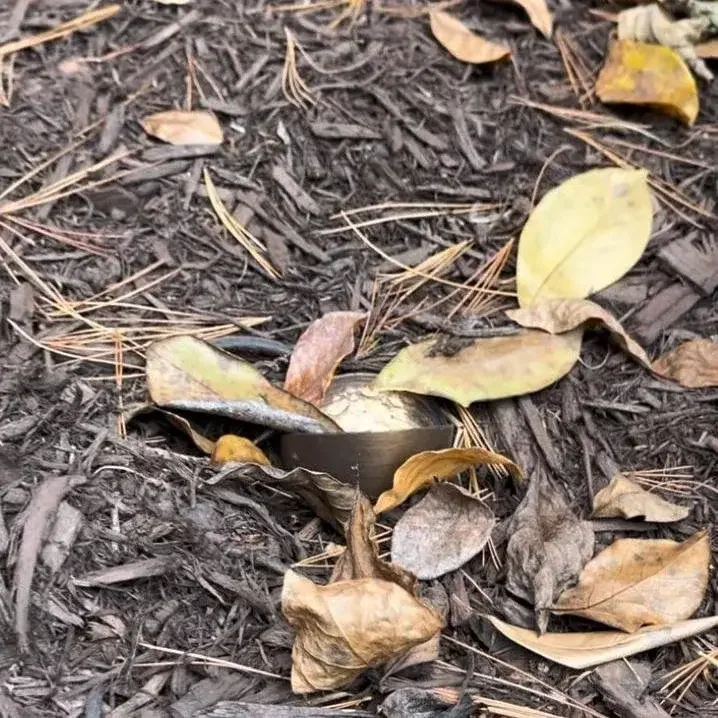
The reasoning behind this type of installation can seem practical: keeping fixtures lower may make them less vulnerable to lawn equipment, seasonal cleanups, or accidental movement. But landscape lighting fixtures need to be installed in a way that accounts for drainage, airflow, accessibility, and changing landscape conditions.
In this case, the excessive depth contributed to two problems.
Moisture Wicking: Deeply buried fixtures can draw water from the soil into the housing. Over time, water inside the fixtures clouds the lenses and damages internal components, reducing the lamps’ lifespan.
Poor Heat Dissipation: Outdoor lighting fixtures are designed to release heat through open air. When buried, they overheat more easily, leading to premature lamp failure and potential damage to the internal electronics.
In this case, both factors were responsible for the system’s early failures.
The Complication: Nature at Work
As the home’s landscaping matured over the past three years, shrub roots began growing tightly around several fixtures. If the homeowner had waited a few more years to address the issue, the roots could have made it nearly impossible to remove or reinstall the fixtures without damaging the wiring, or the plants themselves.
This is a common challenge we see in residential outdoor lighting repair: even well-designed systems can become compromised by natural growth or soil settling if they aren’t regularly maintained.
This is also why landscape lighting shouldn't be treated as a completely static system. The lighting may stay in roughly the same place, but the landscape around it does not. Plants mature, roots expand, mulch accumulates, soil settles, and branches begin blocking beams that were unobstructed when the system was installed.
Periodic adjustments allow the lighting to evolve with the property instead of gradually losing effectiveness.
Our Solution: Restoring the System the Right Way
To preserve the homeowner’s investment, our team carefully excavated each affected fixture, cleaned and resealed the lenses, and reinstalled the lights at the proper depth. We replaced the failed lamps and added a few new fixtures to improve coverage and balance across the property.
By the end of the project, the custom outdoor lighting system looked as beautiful as the day it was first installed, and now it’s built to perform reliably for many more years.
What This Leesburg Project Shows About Lighting Maintenance
This homeowner contacted us because lights were failing, but the real value of the service call was identifying why they were failing.
Simply replacing the lamps would have addressed the symptom while leaving the underlying installation problem in place.
A thorough outdoor lighting maintenance visit should look beyond whether each fixture turns on. It should also consider fixture position, moisture, lenses and seals, wiring, landscaping growth, aiming, light output, and how the system is performing as a whole.
In this case, correcting the fixture placement helped protect an otherwise high-quality system and reduced the likelihood that the same failures would continue.
If your outdoor lighting system hasn't been professionally inspected in several years—or you've noticed repeated lamp failures, dimming, misaligned fixtures, or changes as your landscaping has matured—Loudoun Lighting provides outdoor lighting repair and maintenance throughout Leesburg, Loudoun County, and Fairfax County.
💡Learn more about outdoor lighting repair and maintenance or schedule a consultation.
FAQs
How often should outdoor lighting systems be maintained?
Most residential outdoor lighting systems should be professionally inspected every one to two years. Regular maintenance helps identify issues like moisture intrusion, fixture misalignment, or heat buildup before they cause lamp failure or permanent damage to the system.
Why do outdoor lighting fixtures fail prematurely?
Outdoor lighting fixtures often fail early due to improper installation, moisture entering the fixture housing, or poor heat dissipation. Fixtures buried too deep or installed without adequate airflow are especially prone to overheating and water damage.
Can landscaping damage outdoor lighting systems?
Yes, growing plant roots, soil settling, and mulch buildup can damage outdoor lighting over time. Roots can shift fixtures, trap moisture, or make future repairs difficult if the system isn’t regularly checked and adjusted as landscaping matures.
Is it worth repairing an existing outdoor lighting system?
In many cases, repairing and maintaining an existing outdoor lighting system is more cost-effective than replacing it. Professional maintenance can extend system lifespan, restore performance, and protect the original investment—especially for high-end architectural and landscape lighting.
