
Highlighting Garden Features: How to Make Your Plants Stand Out at Night
A lot of homeowners spend years building their landscapes.
They carefully select trees. Install garden beds. Add ornamental shrubs. Create layered planting plans. Maybe even work with a landscape architect to shape the property over time.
And then the sun goes down. Suddenly, most of that detail disappears into darkness.
That’s one of the more interesting things about outdoor lighting. Done well, it changes how the landscape is experienced altogether.
At Loudoun Lighting, one of the most common things we hear from homeowners throughout Loudoun County and Fairfax County is some version of: “We invested so much into the landscaping, but at night you can’t really see any of it.” That’s usually where garden lighting becomes part of the conversation.
And contrary to what many people assume, good landscape lighting is rarely about making the entire yard bright.
It’s more about selectively revealing certain features, creating depth, and allowing the landscape to remain visually interesting after sunset.
The Goal Isn’t to Light Everything
This is probably the biggest misconception homeowners have about garden lighting.
The goal is not uniform brightness.
In fact, when everything is illuminated equally, the landscape usually becomes visually flat and less interesting. You lose contrast. You lose shadow. You lose focal points.
Good lighting design works more like editing. You decide what deserves attention.
Maybe it’s the Japanese maple near the front walk. Maybe it’s a mature boxwood hedge with a beautiful structure. Maybe it’s ornamental grasses that catch light and movement differently throughout the seasons.
Lighting helps guide the eye through the landscape intentionally. That’s what creates the atmosphere. And usually, the most effective gardens at night are the ones where some areas are allowed to remain darker and quieter in the background.
Trees Are Often the Starting Point
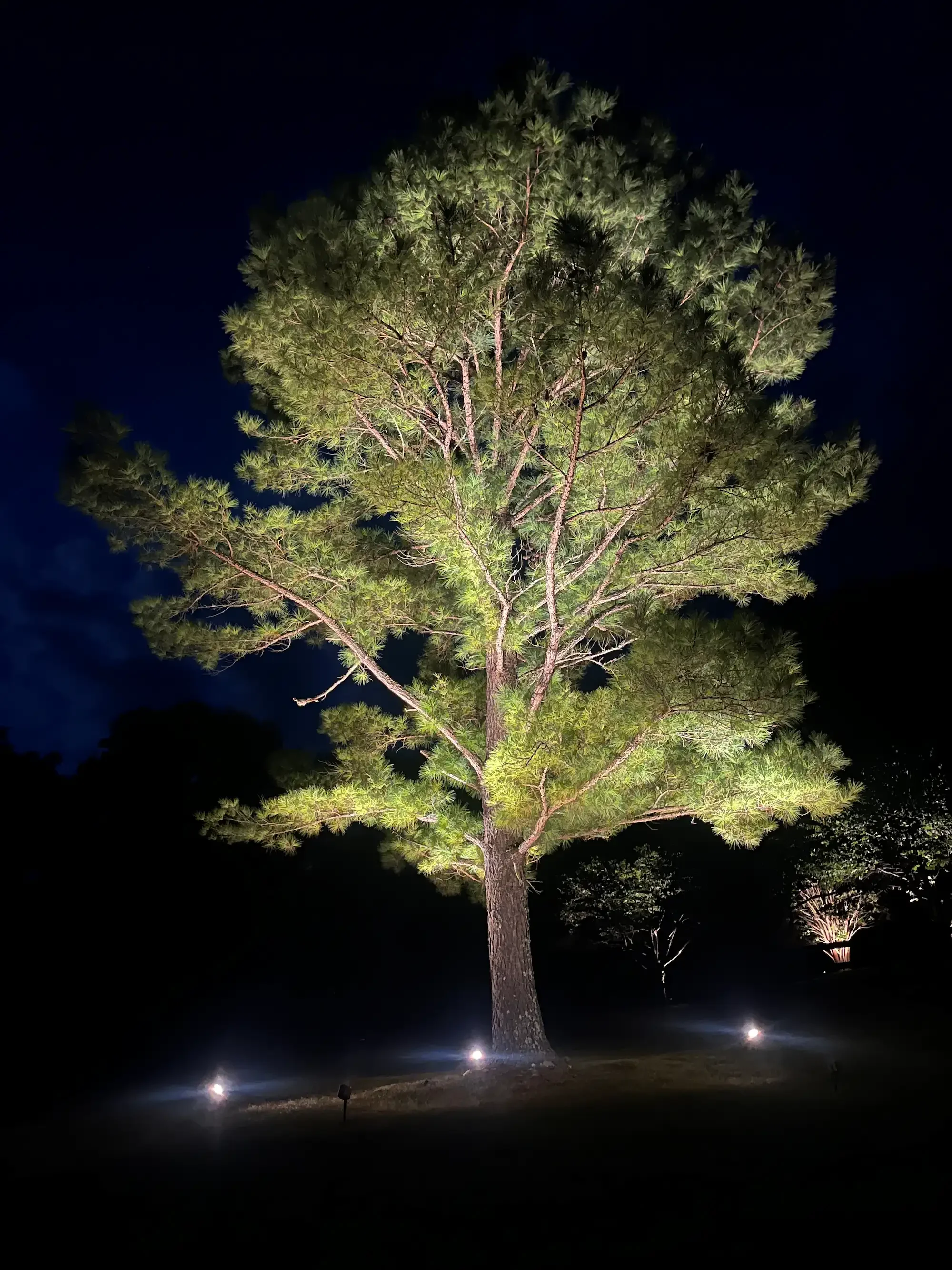
Professional uplighting transforms mature trees into dramatic nighttime focal points by revealing their structure, texture, and canopy.
When we design residential outdoor lighting systems, trees are frequently where we begin.
Partly because mature trees naturally anchor a landscape. But also because they respond beautifully to light.
Different trees create completely different nighttime effects depending on their branching structure, foliage density, bark texture, and canopy shape.
Large canopy trees often benefit from uplighting placed near the base, allowing light to travel upward through the branching structure. That creates depth and shadow within the canopy itself rather than simply illuminating the trunk.
Smaller ornamental trees can become focal points within the landscape when lit more selectively.
And sometimes, the effect isn’t really about brightness at all.
Certain trees, particularly those with interesting bark texture or layered branching, become more visually dramatic at night because lighting reveals details you barely notice during the day.
That’s one of the reasons lighting design requires observation. Every tree responds differently.
Shrubs and Plant Beds Require a More Subtle Approach
This is where homeowners often overdo things. Not every shrub needs its own fixture, and not every planting bed benefits from direct illumination.
In many cases, softer lighting techniques create better results. Adjustable fixtures hidden within planting beds can gently graze foliage or create soft highlights across larger shrub masses without making the lighting itself obvious.
That subtlety matters.
The moment lighting becomes visually distracting, the landscape starts feeling artificial.
We often talk about outdoor lighting as something people should feel before they consciously notice it. The landscape should still feel natural—just more visible, dimensional, and usable after dark.
That usually means restraint. A few carefully positioned fixtures almost always outperform dozens of overly bright ones.
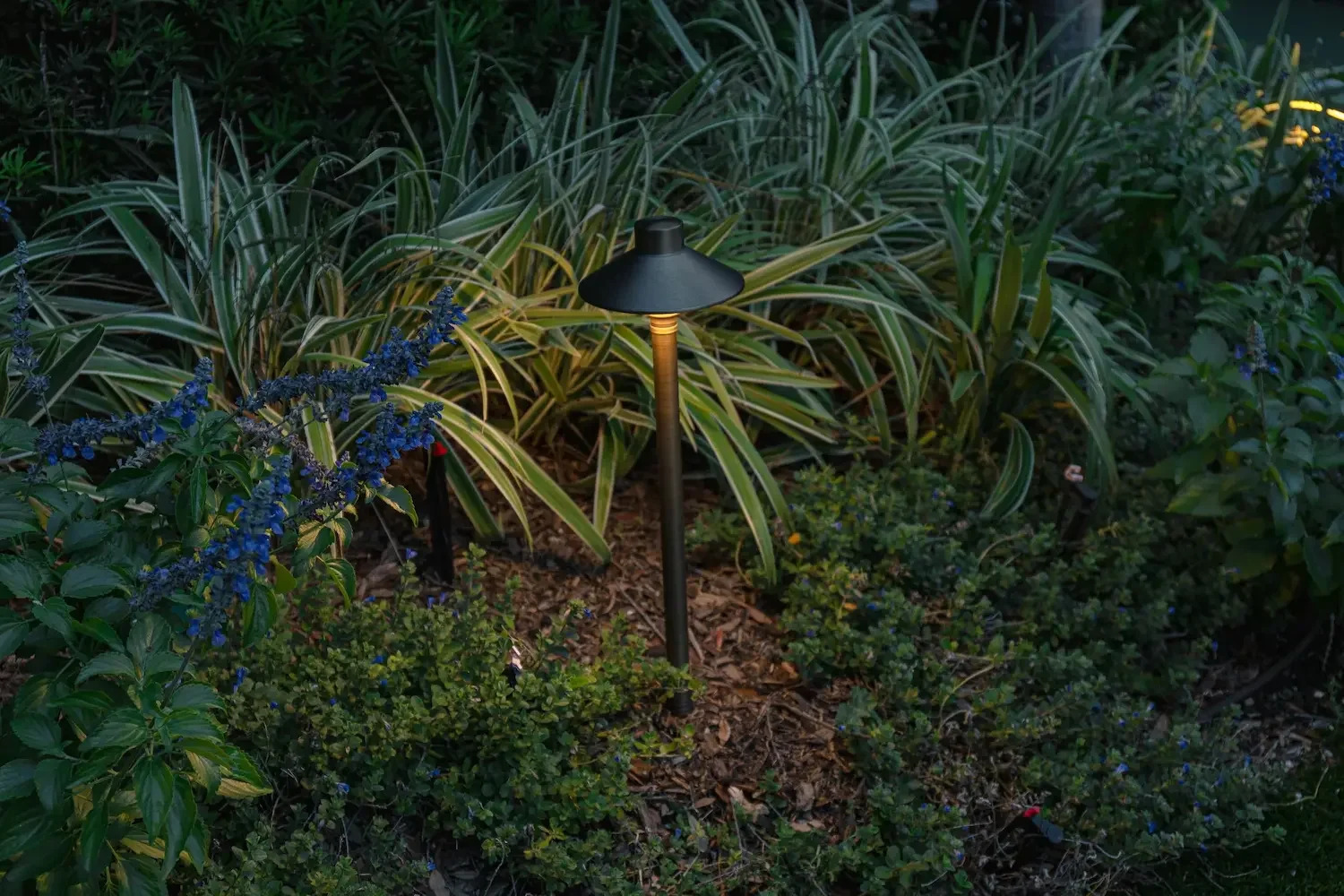
Subtle lighting within planting beds enhances texture and color while keeping fixtures visually unobtrusive.
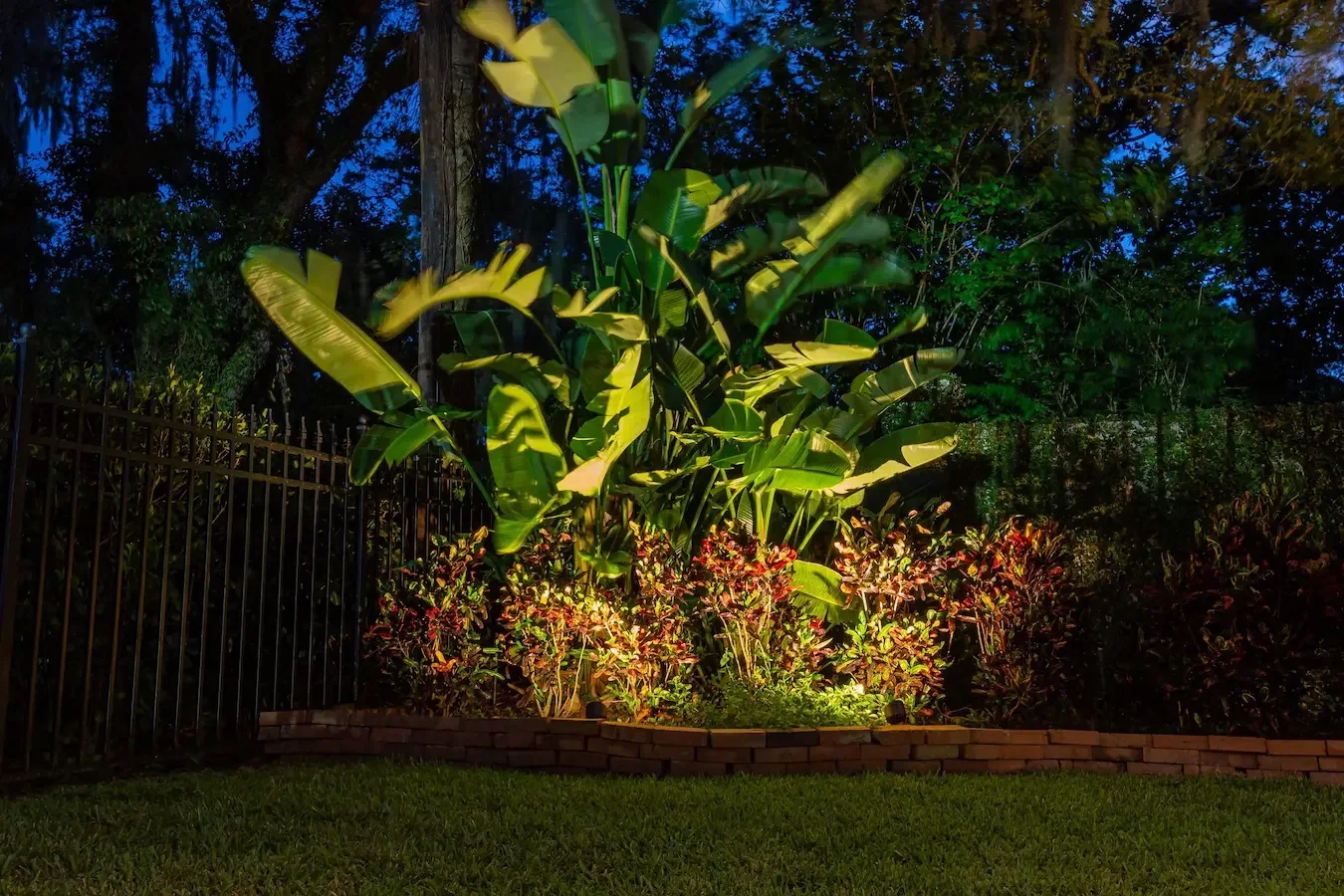
Strategic accent lighting highlights foliage, texture, and seasonal plantings, allowing the landscape to remain vibrant long after the sun goes down.
Some Plants Look Better at Night Than They Do During the Day
This is one of the more surprising parts of landscape lighting.
Certain plants become dramatically more interesting after sunset.
Ornamental grasses, for example, catch light beautifully because of their movement and texture. Layered shrubs can create depth and shadow that feels completely different at night. Flowering trees can take on an almost sculptural appearance depending on how they’re illuminated.
In some landscapes, techniques like moonlighting for trees and pathways can create a softer, more natural ambiance that mimics moonlight filtering through the canopy.
Even simple ground cover can become visually important when low-angle lighting creates texture across the surface of the landscape.
That’s why lighting design isn’t just about fixtures.
It’s also about understanding how plants behave visually at night.
The same garden can feel calm, dramatic, intimate, or expansive depending on how light interacts with the landscape.
Path Lighting Should Support the Garden—Not Compete With It
A lot of landscape lighting systems rely too heavily on pathway lights.
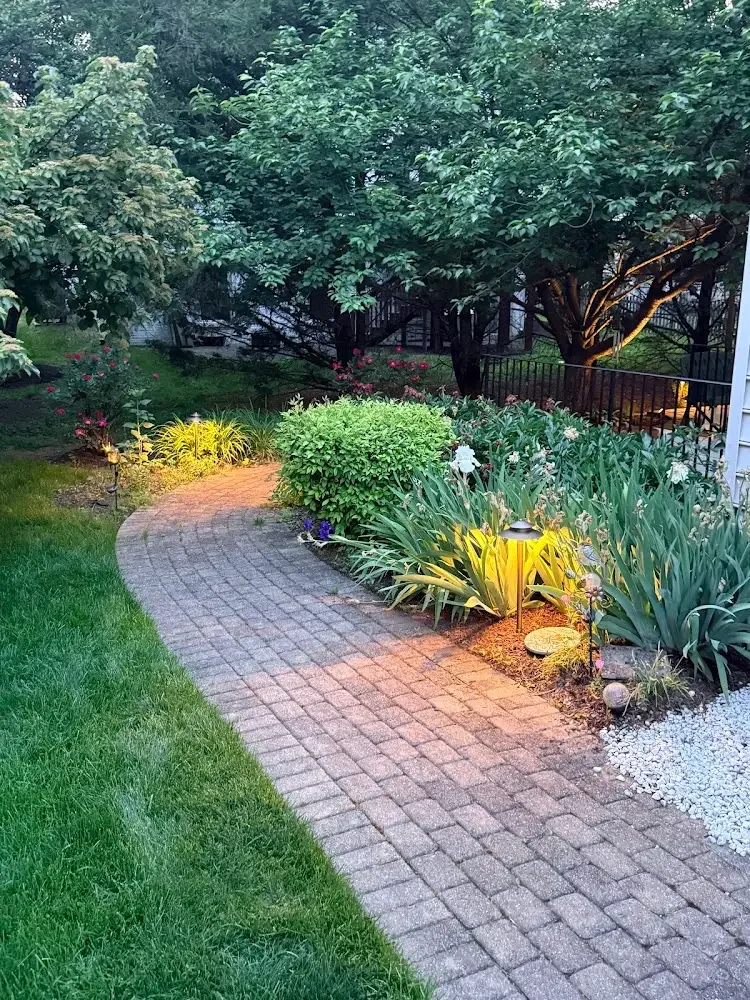
Thoughtful path lighting improves safety while allowing surrounding plants and garden beds to remain the visual focal point.
And pathway lights absolutely serve an important purpose. They help with navigation, safety, and circulation throughout the property.
In some landscapes, decorative fixtures like bollard lights can also help define pathways, garden transitions, and outdoor gathering areas while contributing to the visual design of the property during the day.
But when every pathway fixture becomes a bright focal point, the eye stops paying attention to the landscape itself.
We often prefer to let surrounding trees, shrubs, or architectural elements carry more of the visual interest while pathway lighting quietly supports movement through the space.
That balance creates a more natural nighttime environment.
It also helps avoid the “runway lighting” effect that happens when fixtures are spaced too closely together or use excessive brightness.
Good pathway lighting should feel comfortable, not attention-seeking.
Layering Matters More Than Fixture Count
One of the reasons professionally designed landscape lighting feels different from many DIY systems is layering.
Most homeowners naturally think in terms of fixtures: “How many lights do I need?”
But lighting design is usually more about composition than quantity. A well-balanced landscape lighting system might combine:
Soft uplighting in trees
Gentle lighting across shrub masses
Subtle pathway illumination
Downlighting from architectural elements
Accent lighting on focal plants
Ambient lighting near seating areas
The goal is to create variation and hierarchy throughout the property rather than treating every area the same way.
That variation is what creates depth, and depth is what makes a landscape feel visually rich after dark.
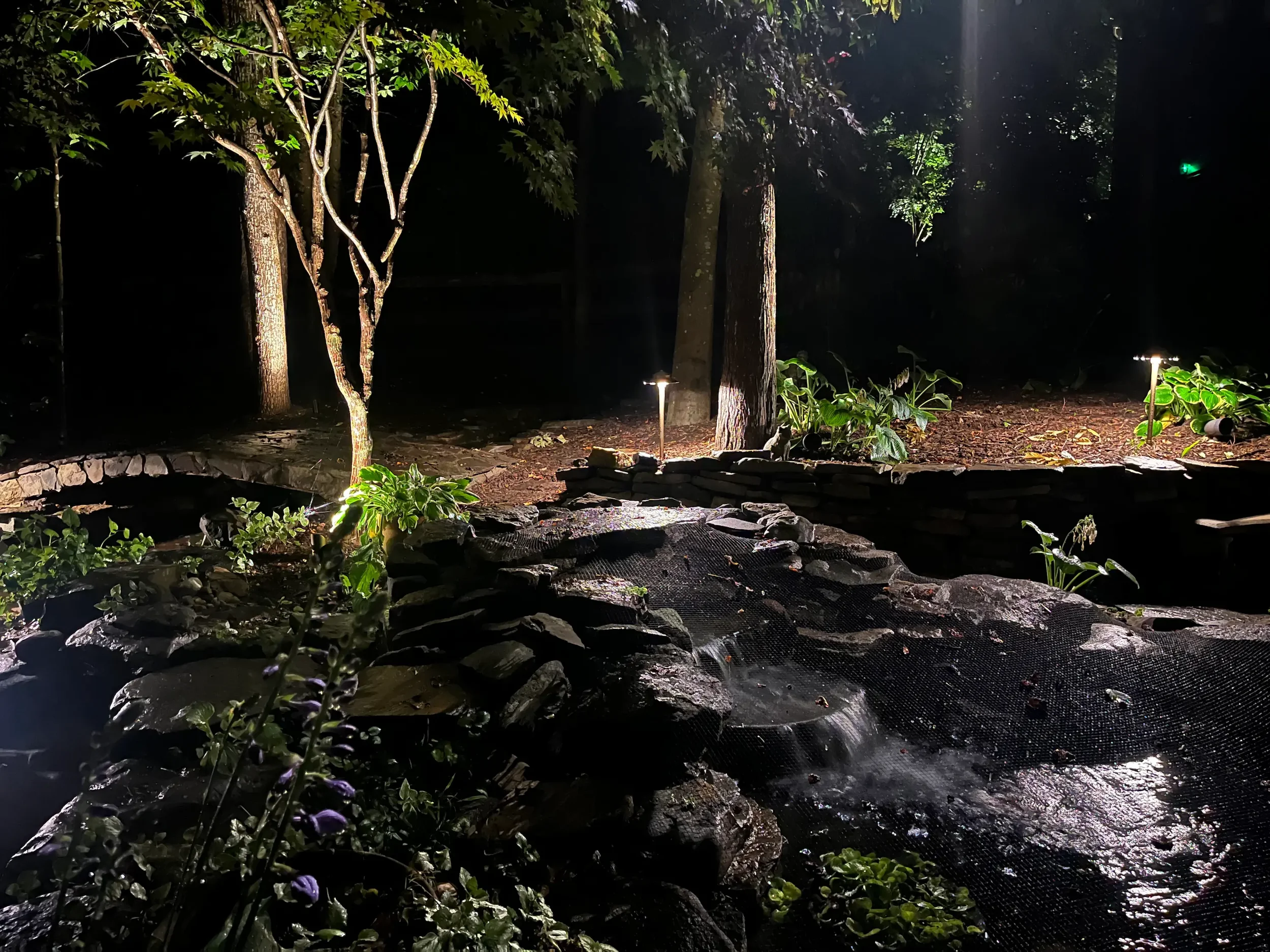
Layered lighting reveals the beauty of mature trees and water features, creating depth and extending the enjoyment of outdoor spaces after sunset.
Fixture Placement Matters More Than Fixture Brightness
This is another area where outdoor lighting often goes wrong.
When homeowners feel like the landscape isn’t standing out enough, the instinct is usually to add brighter fixtures. Most of the time, that’s not actually the problem.
Angle, placement, beam spread, and glare control usually matter far more than raw output.
A properly positioned low-output fixture can create a dramatically better effect than a powerful fixture installed in the wrong location.
In fact, overly bright lighting often flattens the landscape and eliminates the contrast that makes gardens feel inviting at night.
This is especially important around seating areas, patios, and outdoor entertaining spaces where visual comfort matters just as much as visibility.
Seasonal Changes Matter Too
One thing we always remind homeowners is that landscapes evolve constantly.
Plants grow. Trees mature. Branching structures change. Garden beds fill in over time.
Lighting systems should account for that.
Some fixtures may need occasional repositioning as shrubs expand or sightlines change. Certain plants may become more important focal features over time while others fade into the background.
That flexibility is one reason professionally installed landscape lighting systems tend to perform better long term. The system can evolve with the property instead of remaining static.
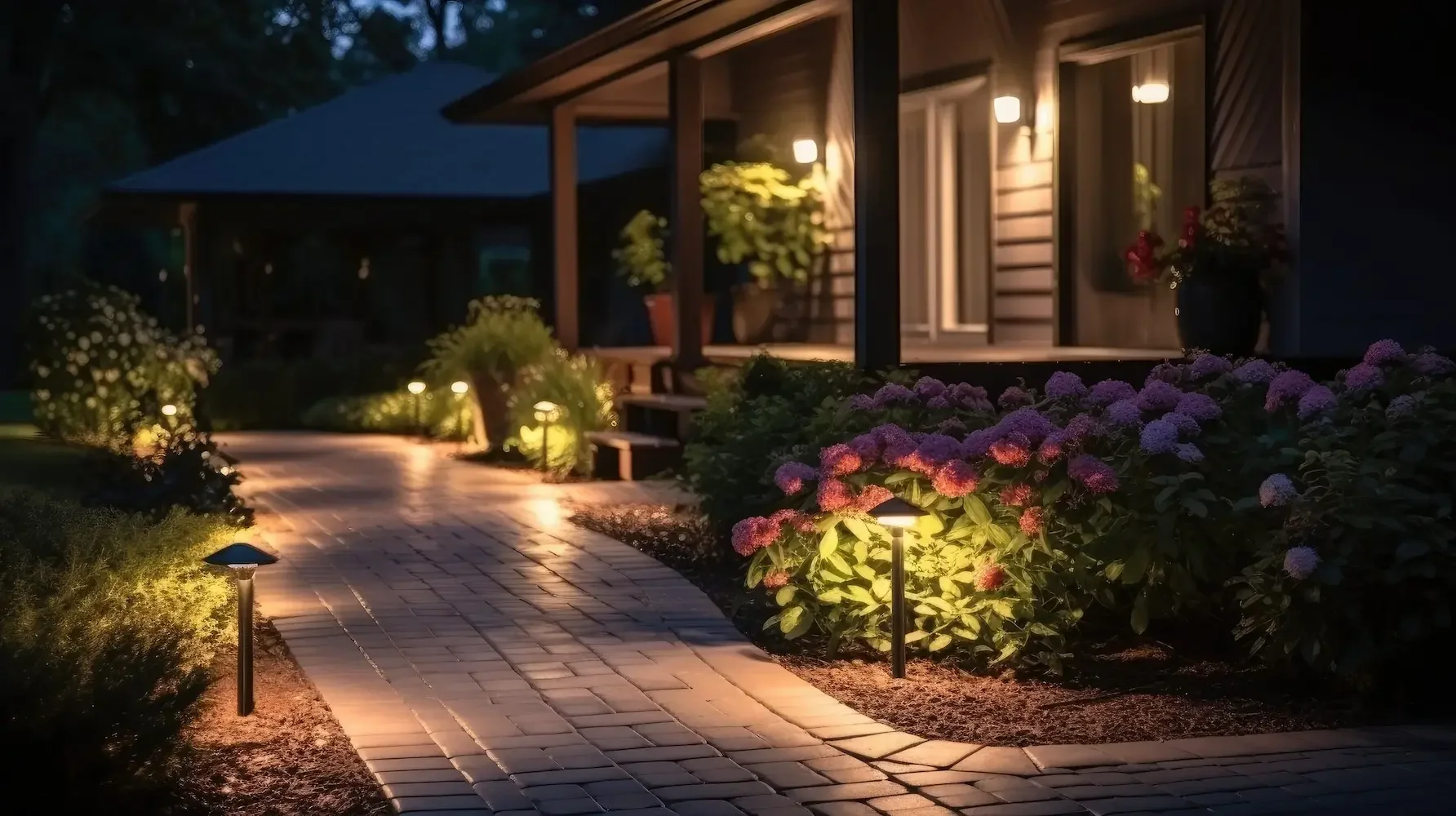
Balanced pathway lighting guides visitors naturally while enhancing the surrounding landscape without creating harsh hotspots.
The Best Garden Lighting Usually Feels Effortless
Ironically, the more intentional the lighting design is, the less obvious it often feels.
You’re not necessarily supposed to notice every fixture. You’re supposed to notice how the property feels.
Comfortable. Layered. Inviting. Calm.
You should be able to look out the windows at night and still experience the landscape as part of the home rather than watching it disappear into darkness.
That continuity between indoor and outdoor spaces is one of the biggest reasons homeowners invest in professional landscape lighting in the first place.
And when it’s done well, it changes how the property is experienced year-round.
Custom Garden Lighting Design in Northern Virginia
At Loudoun Lighting, we design custom outdoor lighting systems that highlight the architecture, landscaping, and unique character of each property throughout Loudoun County, Fairfax County, and surrounding Northern Virginia communities.
From illuminating mature trees and enhancing planting beds to creating more inviting outdoor living spaces, thoughtful lighting design can dramatically transform how your property feels at night.
Because at the end of the day, the landscape shouldn’t disappear when the sun goes down.
If you’re ready to bring more depth, beauty, and usability to your outdoor spaces after dark, schedule a consultation with Loudoun Lighting to explore a custom lighting design tailored to your property.
FAQs
What is the best way to highlight plants at night?
The best approach depends on the plant itself. Trees often benefit from uplighting, while shrubs and planting beds usually look better with softer, more indirect illumination. The goal is typically to create depth and texture rather than excessive brightness.
What color temperature works best for garden lighting?
Warm color temperatures—usually around 2700K to 3000K—tend to work best in residential landscapes because they feel natural and comfortable while enhancing plant color and texture.
Can outdoor lighting damage plants?
Professionally designed LED landscape lighting systems generally produce very little heat and are safe for plants when installed correctly.
How many landscape lights do I need for my garden?
There’s no universal number. Effective lighting design is usually about selective placement and layering rather than fixture quantity. Many landscapes benefit more from fewer, strategically positioned fixtures than excessive lighting throughout the property.
Should landscape lighting be bright?
Usually less bright than homeowners initially expect. Good garden lighting relies more on contrast, focal points, and subtle illumination than maximum brightness.
