
Landscape Lighting Design: How to Plan Outdoor Lighting Like a Professional
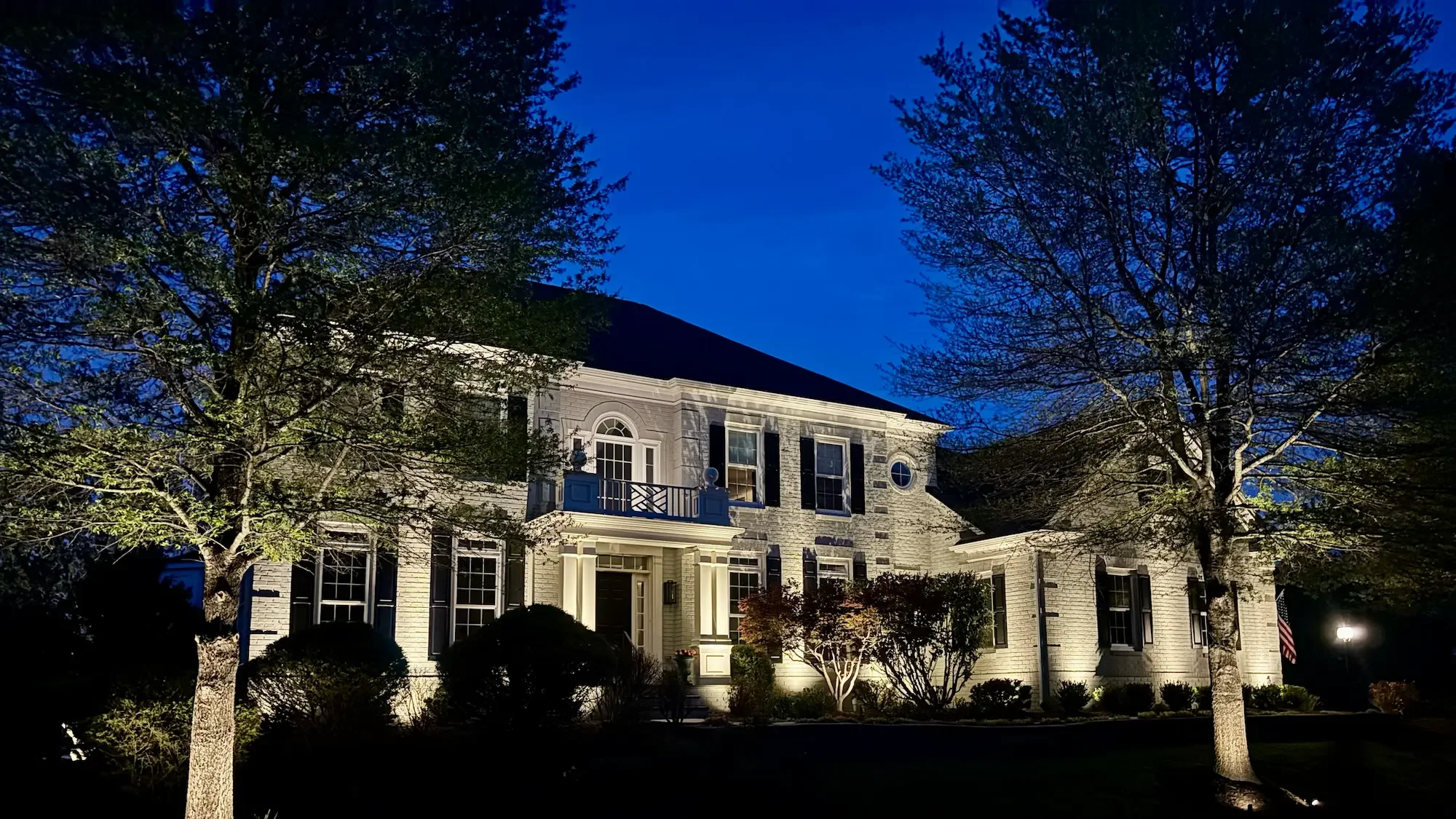
Landscape lighting is about much more than adding a few fixtures around your home. A thoughtfully designed lighting system transforms how your property looks, feels, and functions after sunset. It highlights architectural details, creates inviting outdoor living spaces, improves safety, and extends the enjoyment of your home long after daylight fades.
Unfortunately, many homeowners approach outdoor lighting by purchasing fixtures first and deciding where to place them later. The result is often an uneven collection of bright spots, dark gaps, distracting glare, and wasted investment. Professional landscape lighting design takes the opposite approach. Every fixture, beam angle, brightness level, and placement decision works together to create a cohesive nighttime experience.
At Loudoun Lighting, we design custom outdoor lighting for homes throughout Loudoun County, Fairfax County, and Northern Virginia. Every project begins with a lighting plan tailored to the home's architecture, landscape, and the way each homeowner lives outdoors. Rather than relying on pre-packaged kits or one-size-fits-all layouts, we carefully evaluate each property to determine how light can enhance its natural beauty while remaining subtle, elegant, and functional.
Whether you're planning lighting for a newly built home, renovating your landscape, or replacing an outdated system, understanding the principles of professional landscape lighting design will help you make informed decisions and avoid costly mistakes.
In this guide, we'll walk through the design process used by lighting professionals, explain the most effective landscape lighting techniques, explore fixture selection and placement, and share practical tips for creating an outdoor lighting system that adds lasting beauty and value to your home.
Considering professional landscape lighting? Schedule a personalized design consultation with Loudoun Lighting to discover how a custom outdoor lighting system can enhance your home, increase curb appeal, and create beautiful outdoor spaces you'll enjoy year-round.
What Is Landscape Lighting Design?
Landscape lighting design is the process of intentionally planning how light interacts with your home's architecture, landscaping, and outdoor living spaces. While installing landscape lighting involves placing fixtures in the ground or mounting them to structures, designing landscape lighting focuses on what you want people to experience when they view your home after dark.
A successful lighting design balances aesthetics and functionality. It creates visual interest without overwhelming the property, improves visibility without producing harsh glare, and guides visitors naturally through outdoor spaces while preserving the beauty of the surrounding landscape.
Professional designers think beyond individual fixtures. Instead, they consider how every element works together to create layers of light that enhance the entire property.
A comprehensive landscape lighting design typically considers:
Your home's architectural style and defining features
Existing trees, gardens, and landscape elements
Outdoor living areas such as patios, pools, and outdoor kitchens
Walkways, steps, and entry points that require safe navigation
Desired ambiance, whether elegant, dramatic, welcoming, or understated
Long-term maintenance and future landscape growth
Viewing angles from both inside and outside the home
Rather than trying to illuminate every square foot of the property, great lighting design emphasizes restraint. Darkness is just as important as light. Strategic contrast draws attention to the features that matter most and creates depth that cannot be achieved by simply adding more fixtures.
This philosophy is one of the biggest differences between professionally designed landscape lighting and many DIY systems. Store-bought lighting kits often prioritize fixture count over design, leading homeowners to over-light their property and diminish the very architectural character they're trying to showcase
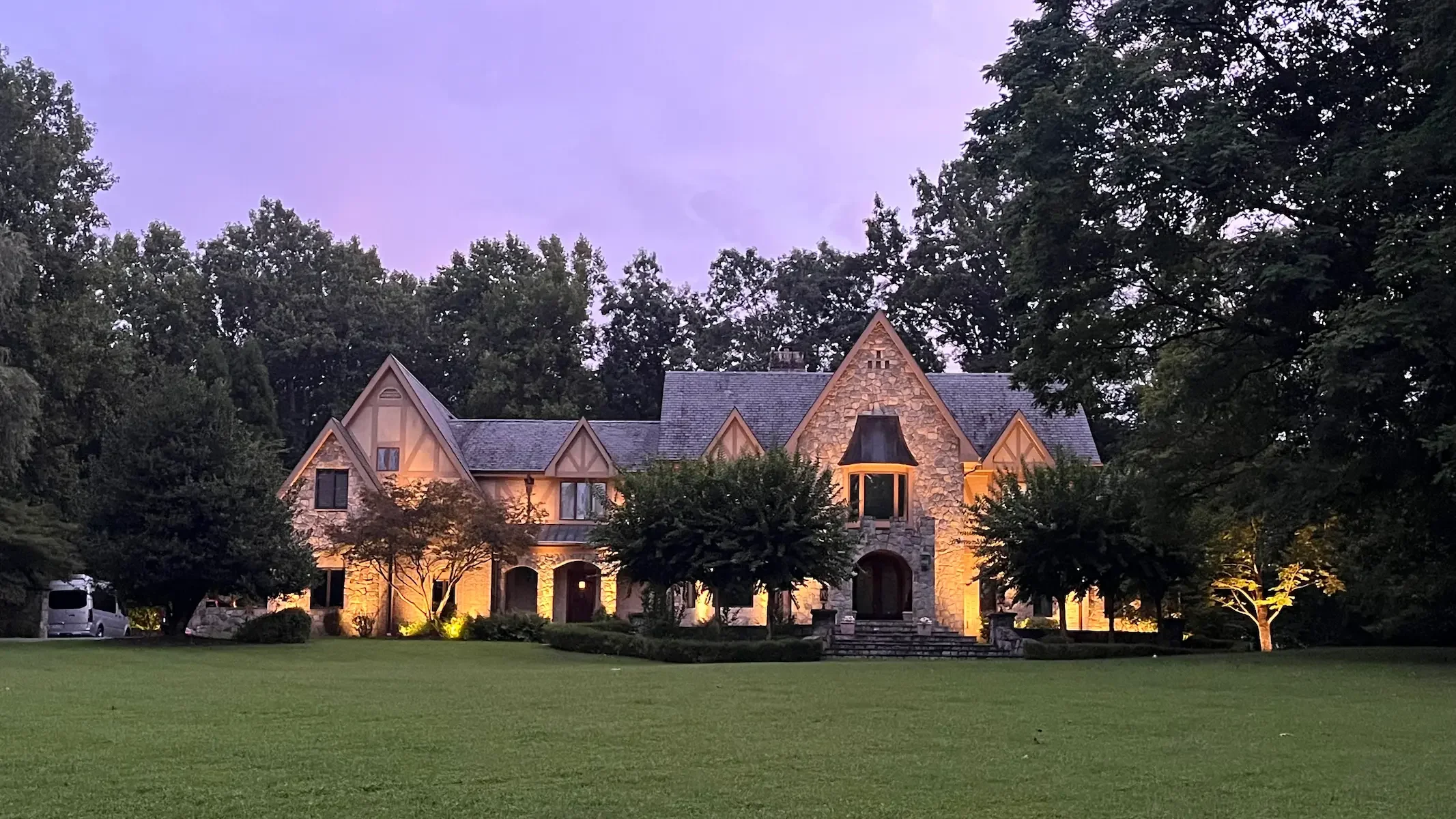
Professional landscape lighting creates layers of light that enhance architecture, improve safety, and transform outdoor living spaces without overpowering the property.
At Loudoun Lighting, we believe every fixture should serve a purpose. Sometimes that purpose is highlighting a beautiful stone façade. Other times it's creating a welcoming path to the front door, adding subtle moonlight beneath mature trees, or extending the use of an outdoor patio well into the evening. Regardless of the application, each lighting decision contributes to a unified design rather than functioning as an isolated element.
Professional landscape lighting should accomplish several goals simultaneously:
Highlight your home's architectural details
Showcase specimen trees, gardens, and focal points
Improve safety along walkways, driveways, and steps
Increase security by reducing dark areas around the home
Create comfortable outdoor living spaces for entertaining and relaxation
Enhance curb appeal and perceived property value
Blend seamlessly into the landscape during the day while delivering stunning results at night
When all of these objectives work together, your outdoor lighting feels effortless. Visitors notice the beauty of your home—not the fixtures themselves.
Start With Your Property's Purpose
One of the biggest misconceptions about landscape lighting design is that every property should be lit the same way. In reality, no two lighting plans should ever be identical.
A professionally designed lighting system is built around the home, the landscape, and the people who live there. Before selecting fixtures or deciding where lights should go, experienced designers first ask an important question:
How do you want to experience your property after dark?
The answer shapes every design decision that follows.
Some homeowners want to create an impressive first impression from the street. Others prioritize entertaining around a pool or outdoor kitchen. Some are focused on safely navigating walkways, while others want to showcase mature trees, gardens, or architectural details that disappear after sunset.
By identifying the property's primary goals first, every lighting decision becomes intentional.
Create a Welcoming Arrival
The journey begins long before guests reach your front door.
Your driveway, front walk, and entryway create the first impression of your home, making them some of the most important areas to consider during the design process.
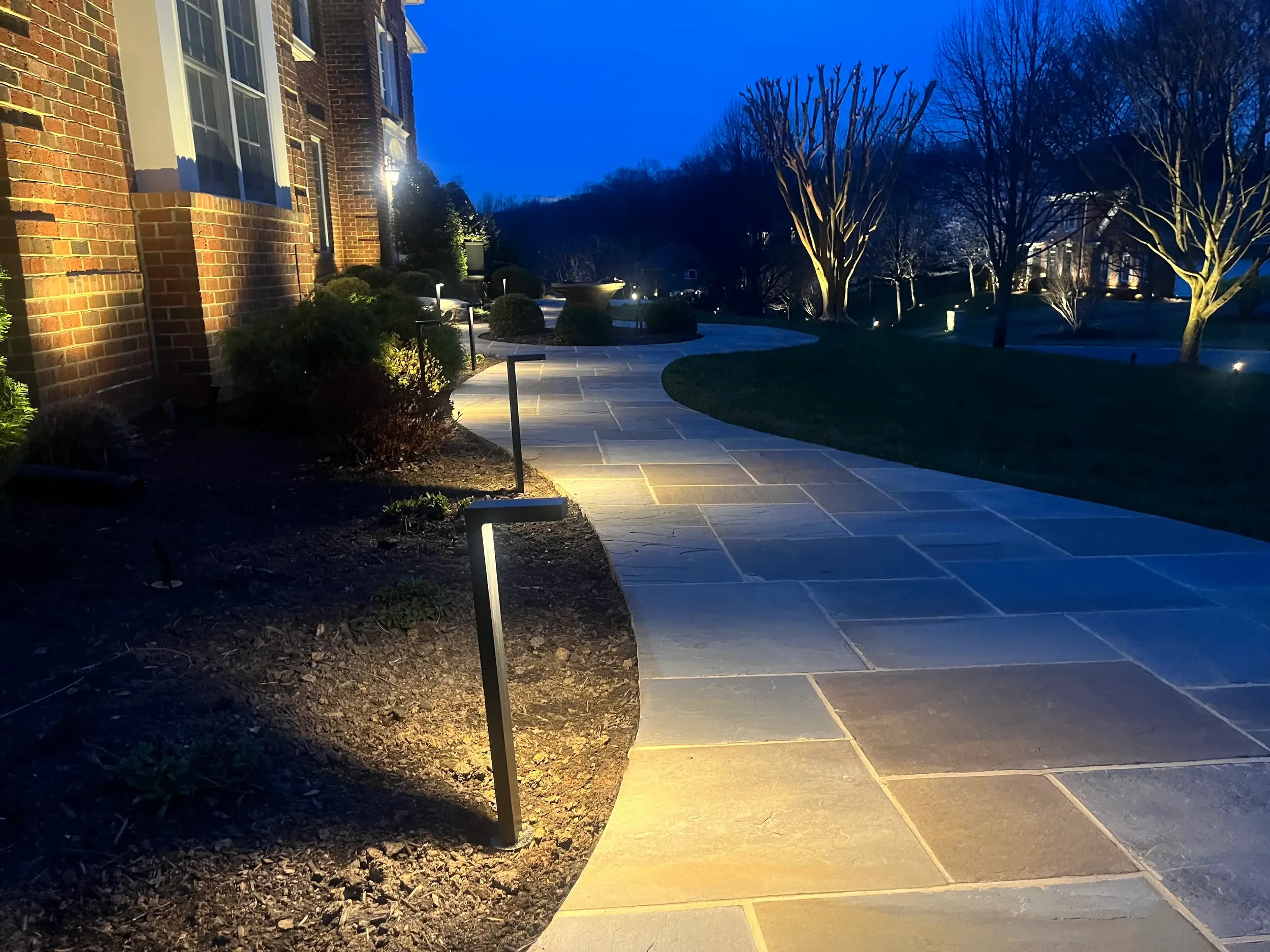
Rather than flooding these spaces with bright light, professional landscape lighting gently guides visitors while highlighting your home's architecture. Layering subtle illumination along walkways, accenting columns or stonework, and softly lighting the front entry creates an inviting arrival experience that feels elegant instead of overwhelming.
A thoughtfully illuminated entrance also improves visibility for family members and guests while helping visitors confidently navigate steps, changes in elevation, and pathways after dark.
Depending on your home's design, this area may incorporate:
Architectural accent lighting
Column and entry lighting
Driveway lighting
Bollard lighting for larger properties
Soft landscape lighting around planting beds
Pro Tip: The goal isn't to make your front yard look bright—it's to make it feel welcoming. Professional lighting guides the eye naturally toward your home's entrance while maintaining comfortable contrast throughout the landscape.
Extend Your Outdoor Living Spaces
Many homeowners invest thousands of dollars into outdoor living features that can only be enjoyed during daylight hours.
Landscape lighting allows patios, decks, outdoor kitchens, fire pits, pergolas, and pool areas to become functional gathering spaces well into the evening.
The best outdoor living lighting creates enough illumination for conversation, dining, and entertaining without producing harsh glare or making the space feel overlit.
Rather than relying on a single bright fixture, professional designs layer multiple lighting techniques to create depth and warmth. Downlighting from nearby trees, subtle accent lighting around seating areas, and carefully illuminated landscaping all contribute to an inviting nighttime atmosphere.
Outdoor lighting can also define different "rooms" within your landscape, making larger backyards feel more cohesive and intentional.
Whether you're hosting a summer dinner party or relaxing with family after sunset, a professionally designed lighting system extends how—and how often—you enjoy your outdoor spaces.
Showcase Your Home's Architecture
During the day, your home's architectural details naturally stand out through sunlight and shadow.
At night, those defining features disappear unless they're intentionally illuminated.
Architectural lighting draws attention to the craftsmanship that makes your home unique. Stone facades, brick textures, columns, dormers, rooflines, archways, and decorative trim can all become dramatic focal points when lit properly.
One of the most common mistakes we see is homeowners trying to illuminate the entire house equally. In reality, professional designers create visual hierarchy by emphasizing key architectural features while allowing other areas to remain in shadow.
This contrast creates depth and elegance while avoiding the flat, washed-out appearance often associated with overly bright exterior lighting.
The specific techniques used depend on your home's architecture, materials, and surrounding landscape, but every lighting decision should support the home's overall character rather than compete with it.
Highlight Mature Landscaping
Your landscape changes over time—and your lighting design should celebrate that.
Specimen trees, ornamental grasses, flowering gardens, retaining walls, natural boulders, and water features often become some of the most dramatic elements of an outdoor lighting design.
Large canopy trees can be transformed with uplighting or moonlighting techniques that reveal their branching structure and create beautiful patterns of light throughout the landscape.
Layered garden lighting adds texture, dimension, and seasonal interest while ensuring landscaping remains visible long after the sun goes down.
Rather than treating plants as obstacles to work around, professional lighting design incorporates them as integral elements of the overall composition.
As landscapes mature, lighting systems should also evolve. Trees grow, gardens expand, and new landscape features are added over time. That's why ongoing maintenance and occasional fixture adjustments are essential for preserving the original design intent.
Design Insight: A landscape lighting system isn't static. As your property grows and changes, your lighting should evolve alongside it to maintain balanced illumination and highlight new focal points.
Improve Safety Without Sacrificing Beauty
Safety is one of the most practical benefits of professional landscape lighting—but it shouldn't come at the expense of aesthetics.
Strategically placed lighting improves visibility along:
Walkways
Steps
Driveways
Side yards
Pool decks
Outdoor staircases
Property transitions
Entry points
The key is providing enough illumination for comfortable navigation without creating harsh pools of light or excessive brightness.
Professional designers carefully balance fixture spacing, beam spreads, mounting heights, and brightness levels to ensure safe movement while preserving the property's nighttime ambiance.
This thoughtful approach is especially important for larger estates, sloped landscapes, and homes with multiple outdoor living areas.
Think Beyond Today
One hallmark of professional landscape lighting design is planning for the future.
A well-designed system should accommodate:
Growing trees and landscaping
Future landscape renovations
Outdoor living additions
Pool installations
Seasonal changes
Long-term maintenance access
Fixture upgrades
Expanding lighting zones
Planning ahead reduces costly modifications later while ensuring your lighting system continues to perform beautifully for years to come.
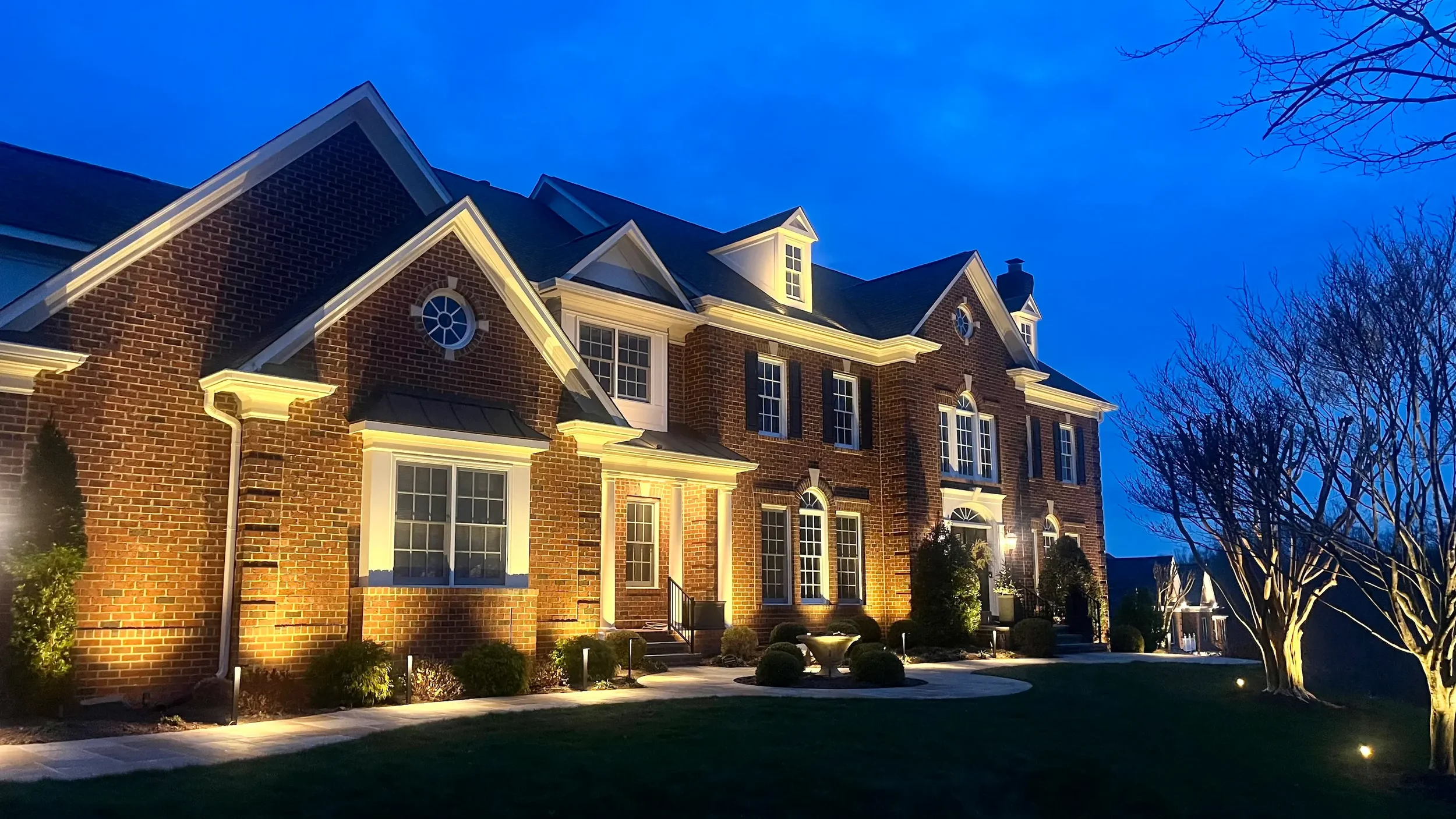
A custom lighting plan should complement the home today while allowing the system to evolve with the landscape over time.
At Loudoun Lighting, every design is created with long-term performance in mind. Rather than installing lighting that only works for today's landscape, we develop systems that can adapt as your property evolves.
Every Property Deserves a Custom Lighting Plan
Luxury homes deserve more than a one-size-fits-all lighting kit.
A professionally designed outdoor lighting system begins with understanding how your property functions, identifying the features that deserve attention, and creating a cohesive plan that balances beauty, safety, and functionality.
Only after those goals are established do we begin selecting fixtures, determining beam spreads, and choosing the lighting techniques that will bring the design to life.
That intentional planning is what separates a collection of outdoor lights from a truly exceptional landscape lighting design.
Ready to see what's possible for your home? Schedule a personalized design consultation with Loudoun Lighting and discover how a custom lighting plan can transform your property after dark.
10 Essential Landscape Lighting Techniques Every Homeowner Should Know
Professional landscape lighting uses different techniques to intentionally shape how your home and landscape are experienced after dark. Each lighting technique serves a different purpose, whether it's highlighting architectural details, creating depth in the landscape, improving safety, or making outdoor living spaces more inviting.
The most successful lighting designs rarely rely on just one technique. Instead, professional designers layer multiple lighting methods to create a balanced, cohesive look that feels natural rather than overlit.
Below are ten of the most common landscape lighting techniques and how they're used to transform luxury homes and landscapes. If you'd like to dive deeper into any of these methods, explore our complete guide to landscape lighting techniques.
1. Uplighting
Uplighting is one of the most recognizable landscape lighting techniques and a cornerstone of many professional lighting designs. Fixtures are installed at ground level and directed upward to emphasize architectural features, specimen trees, columns, stonework, and other vertical elements. By drawing the eye upward, uplighting adds depth, dimension, and dramatic contrast while preserving the home's natural character. The key is thoughtful placement and beam selection—too much light can overwhelm a feature, while the right amount creates a timeless, elegant effect that complements the overall landscape.
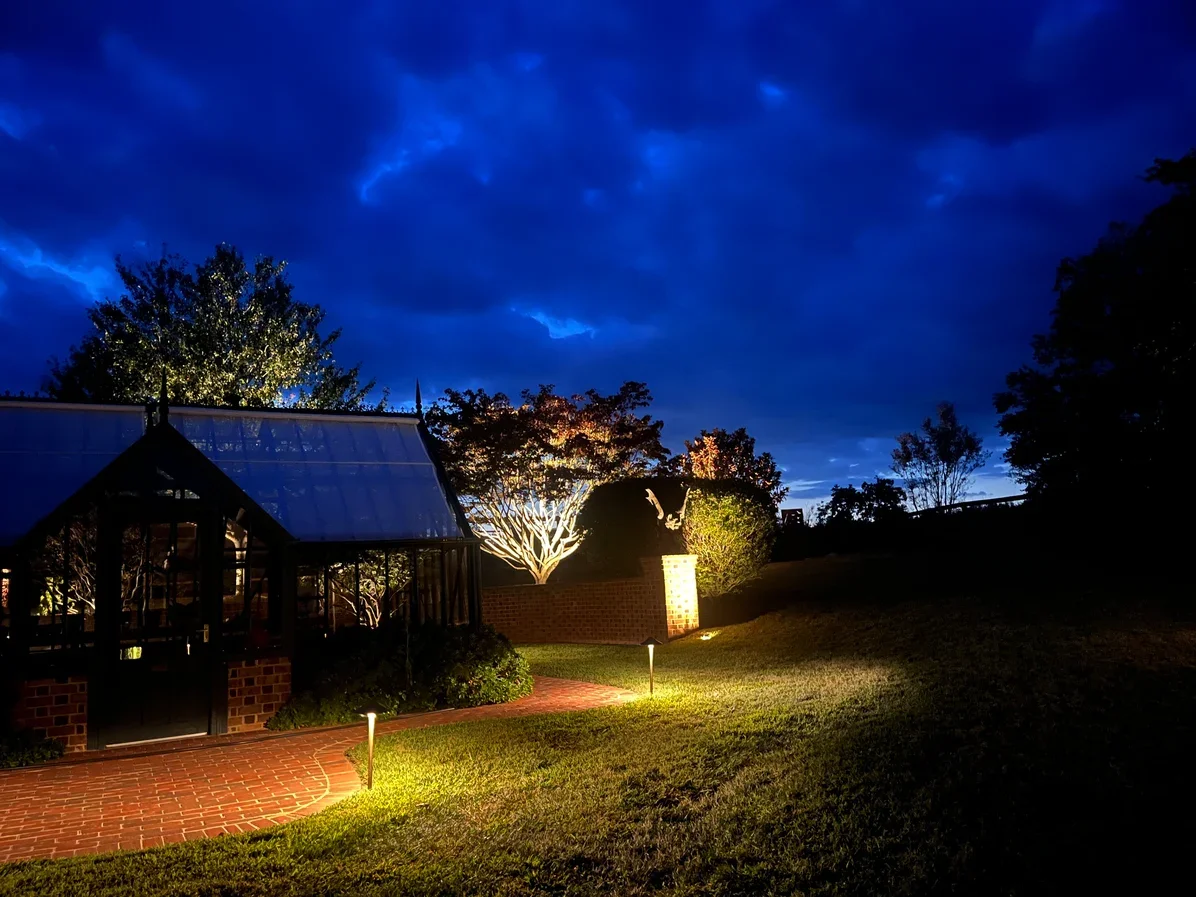
From the Field: Hunt Country Estate
One of our favorite examples of uplighting comes from a 70-acre Hunt Country estate in Northern Virginia. With mature hardwoods, expansive gardens, and a stately brick home, the property offered countless opportunities for lighting—but our goal wasn't to illuminate everything.
Instead, we focused on carefully selected specimen trees and key architectural features surrounding the home. Narrow beam uplights emphasize the height and branching structure of mature oaks, while wider beam fixtures gently highlight the brick façade and front entry.
By embracing restraint and layering light throughout the property, we created a nighttime experience that feels elegant, timeless, and true to the landscape.
2. Downlighting (Moonlighting)
Downlighting, often called moonlighting, recreates the soft, natural appearance of moonlight filtering through tree branches. Fixtures are mounted high in mature trees or on architectural elements and aimed downward to gently illuminate patios, walkways, gardens, and outdoor gathering spaces. Because the light source remains hidden, the result feels subtle and inviting rather than artificial. This technique is especially popular for homeowners who want to create a relaxed atmosphere for entertaining while improving visibility throughout the landscape.
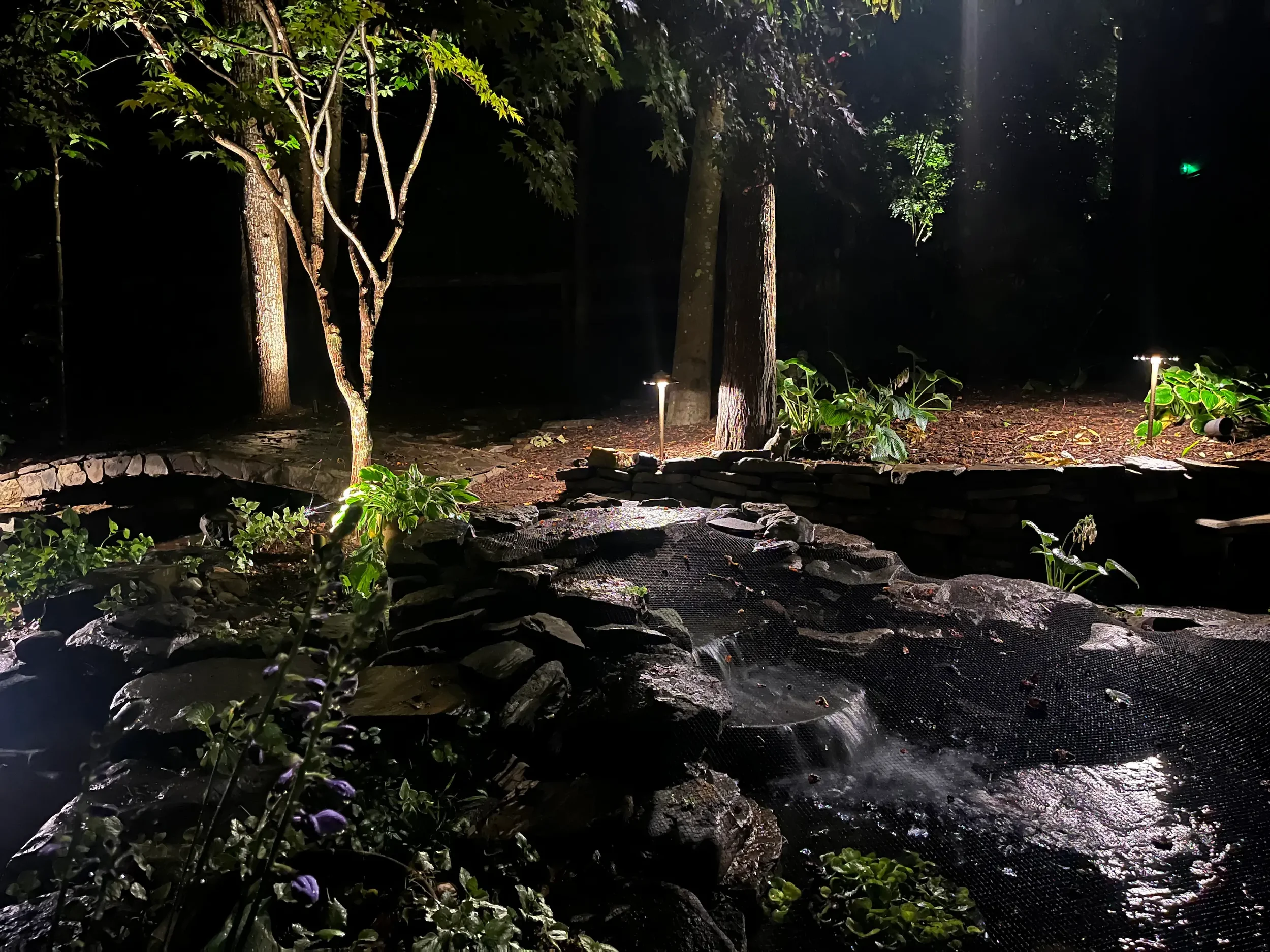
From the Field: Clifton Koi Pond
For this Clifton property, the homeowners wanted to enjoy their koi pond and surrounding landscape well into the evening without adding visible fixtures around the water's edge.
Rather than lighting the pond directly, we installed carefully aimed downlights high within mature trees overlooking the feature. The result is a soft moonlighting effect that mimics natural light filtering through the branches while creating beautiful reflections across the water.
The finished design enhances the landscape without distracting from it, creating a peaceful atmosphere that's just as enjoyable after sunset as it is during the day.
3. Path & Walkway Lighting
Path lighting improves safety while guiding visitors naturally through your property. Rather than creating a row of bright fixtures, professionally designed path lighting provides gentle pools of illumination that define walkways, steps, and entrances without overpowering the surrounding landscape. Proper spacing, beam control, and fixture placement are essential to achieving a refined look. When integrated into a broader lighting design, path lighting enhances both curb appeal and functionality while helping guests move confidently throughout your outdoor spaces.
4. Architectural Accent Lighting
Architectural accent lighting highlights the craftsmanship and defining features of your home. Carefully placed fixtures draw attention to elements such as stone facades, brickwork, columns, archways, dormers, and decorative trim, creating depth and visual interest after sunset. Rather than illuminating every surface equally, professional designers establish a visual hierarchy that emphasizes the home's most distinctive features. The result is a balanced nighttime appearance that enhances curb appeal while remaining elegant and understated.
5. Wall Grazing
Wall grazing is used to emphasize texture by placing fixtures close to a vertical surface and directing light upward or downward across it. The technique creates dramatic shadows that reveal the natural character of materials like stone, brick, and wood. It's particularly effective for homes with rich architectural details or textured exterior finishes. When executed properly, wall grazing adds depth and sophistication while turning ordinary walls into striking design elements after dark.
6. Wall Washing
Unlike wall grazing, wall washing creates a soft, even layer of light across a vertical surface. Fixtures are positioned farther away and use wider beam spreads to produce smooth, consistent illumination with minimal shadowing. This technique is ideal for highlighting large facades, entry features, decorative walls, or contemporary architecture with clean lines. Wall washing helps create a welcoming appearance while making homes feel larger and more visually balanced after sunset.
7. Shadowing & Silhouetting
Some of the most dramatic lighting effects come from using shadows intentionally. Shadowing places a fixture in front of an object so its silhouette is projected onto a nearby wall, while silhouetting positions the light behind the object to emphasize its shape against a softly illuminated background. These techniques are often used to showcase ornamental trees, sculptures, unique plantings, and water features. By embracing contrast rather than eliminating it, shadowing and silhouetting add artistic interest and create memorable nighttime focal points.
8. Cross Lighting
Cross lighting uses two or more fixtures positioned on opposite sides of a feature so their beams overlap. This approach minimizes harsh shadows while revealing greater depth and detail than a single fixture can provide. It's commonly used for large specimen trees, architectural features, and landscape focal points that deserve attention from multiple viewing angles. Cross lighting creates a more balanced, natural appearance and is especially effective on larger luxury properties where scale and dimension play an important role.
9. Bollard Lighting
Bollard lighting combines function with architectural design. Taller than traditional path lights, bollards provide broader illumination while becoming attractive landscape features during the day. They're often used along driveways, entry courts, garden paths, and outdoor gathering areas where visibility and aesthetics are equally important. Decorative bollards, such as those in Loudoun Lighting's Tailored Lights Collection, can also reinforce the architectural style of the home while creating a memorable arrival experience.

From the Field: McLean Driveway Entrance
At this McLean residence, the homeowners wanted to improve visibility along their driveway while creating a memorable arrival experience that complemented the home's contemporary architecture.
Instead of traditional path lights, we incorporated handcrafted decorative bollards from the Tailored Lights Collection. During the day, they serve as sculptural landscape elements. At night, they provide comfortable illumination that defines the driveway entrance without producing glare or competing with the surrounding architecture.
The result is functional lighting that also becomes part of the landscape design.
10. Layered Lighting
Perhaps the most important landscape lighting technique isn't a single fixture or application—it's layering. Professional outdoor lighting combines architectural lighting, landscape lighting, path lighting, moonlighting, and accent lighting into one cohesive design. Each layer serves a different purpose while working together to create balance, depth, and visual harmony. Rather than relying on one bright source of light, layered lighting guides the eye through the property, highlights key features, and creates a comfortable outdoor environment that feels both elegant and inviting.
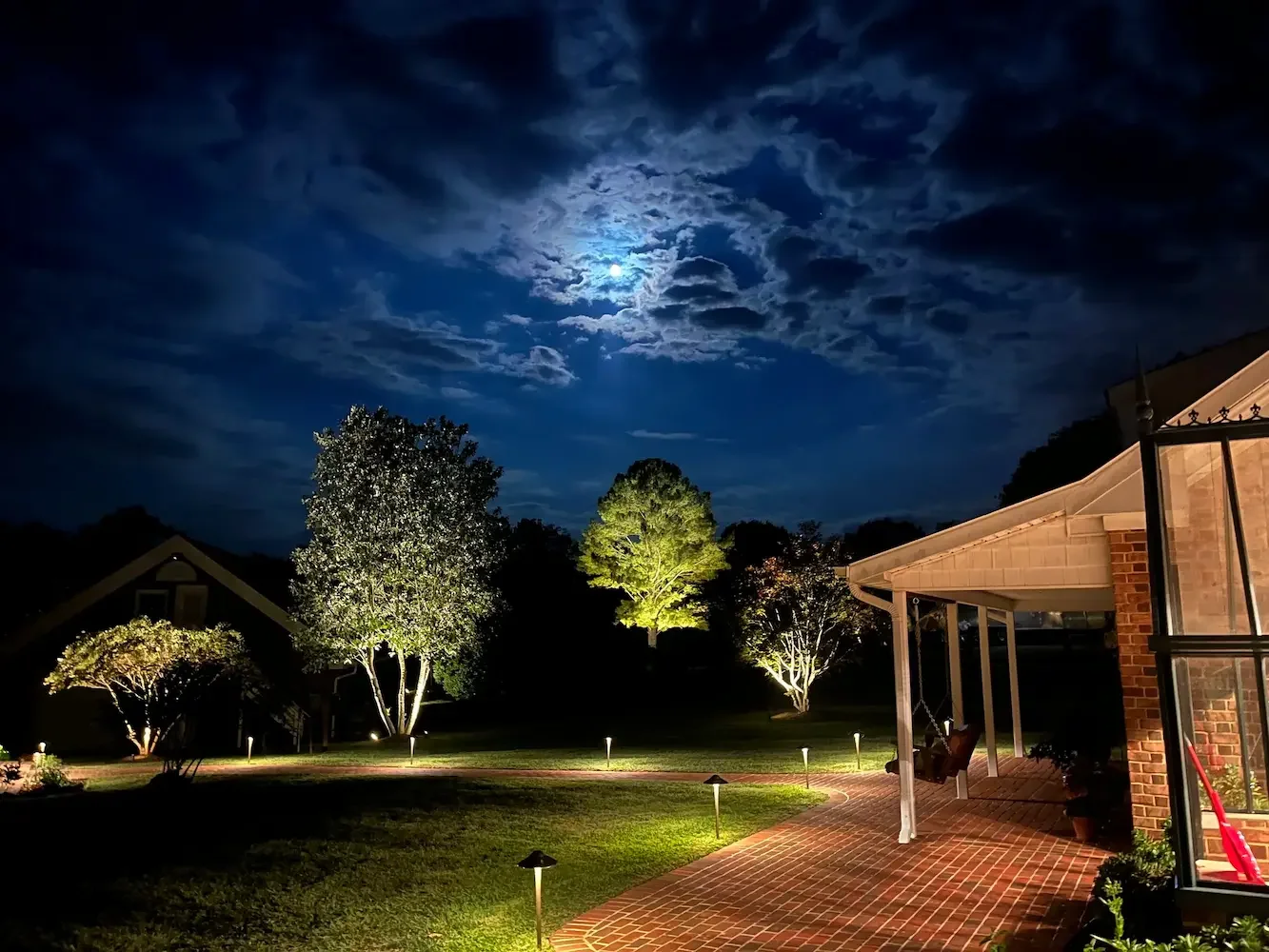
From the Field: Layering Light Across a Luxury Estate
One of the hallmarks of professional landscape lighting is that it feels balanced from every viewpoint.
On a recent Northern Virginia estate, we combined multiple lighting techniques to create distinct layers throughout the property. Architectural lighting highlighted the home's stone façade and columns, moonlighting illuminated outdoor gathering spaces, path lighting improved navigation, and uplighting showcased mature specimen trees.
Each layer serves a different purpose, yet together they create a cohesive nighttime environment that feels welcoming, elegant, and never overlit.
Choosing the Right Technique for Your Home
Understanding these techniques is the first step toward creating a beautiful outdoor lighting plan. The next step is learning how professional designers combine them into a layered lighting system that enhances your home's architecture, improves safety, and creates inviting outdoor spaces without overwhelming the landscape.
How to Layer Outdoor Lighting Like a Professional
One of the easiest ways to spot an amateur landscape lighting installation is that every fixture seems to compete for attention.
The front of the house is equally bright from one end to the other. Every tree is illuminated with the same intensity. Path lights are spaced like runway lights. The result is a property that's technically "well lit" but lacks warmth, depth, and visual interest.
Professional landscape lighting takes a different approach.
Instead of thinking in terms of individual fixtures, designers think in layers of light. Each layer serves a specific purpose while working together to create a cohesive nighttime experience.
Just as interior designers combine ambient, task, and accent lighting inside the home, outdoor lighting should be layered to balance beauty, safety, and functionality.
When these layers work together, your home feels inviting rather than overlit, and your eye naturally moves from one focal point to the next.
Layer One: Safety & Navigation
Every successful lighting design begins with helping people move safely throughout the property.
This foundational layer focuses on areas where visibility is most important, including:
Front walkways
Driveways
Steps and staircases
Side paths
Entryways
Gates
Pool decks
Changes in elevation
The objective isn't to flood these areas with light—it's to provide enough illumination for confident navigation while maintaining a comfortable nighttime atmosphere.
Professional designers carefully consider:
Fixture spacing
Beam spread
Brightness
Mounting height
Viewing angles
The result is subtle guidance that feels natural rather than distracting.
Pro Tip: If your path lights are the first thing people notice when they arrive, they're probably too bright.
Layer Two: Architectural Lighting
Once visitors can safely navigate the property, the next layer establishes the home's visual identity.
Architectural lighting highlights the craftsmanship that makes your home unique.
This may include:
Stone facades
Brick detailing
Columns
Entry porticos
Rooflines
Chimneys
Decorative trim
Arches
Not every feature needs to be illuminated.
One of the hallmarks of professional landscape lighting is deciding what not to light.
Leaving portions of the home in shadow creates contrast, allowing important architectural details to stand out while preserving the property's natural elegance.
This selective approach creates far more visual impact than evenly illuminating every square foot of the façade.
Layer Three: Landscape Lighting
With the architecture established, attention shifts to the surrounding landscape.
Trees, gardens, natural stone, ornamental grasses, retaining walls, and water features all contribute to the overall composition.
Landscape lighting creates depth by adding foreground, middle ground, and background elements throughout the property.
For example:
A specimen Japanese maple may become the foreground focal point.
Foundation plantings create visual transition around the home.
Mature canopy trees define the background.
Garden beds soften architectural lines.
Instead of appearing flat after sunset, the property gains dimension and visual richness.
Professional lighting designers intentionally vary brightness levels so every landscape element doesn't compete equally for attention.
Layer Four: Outdoor Living
Modern luxury homes are designed to be enjoyed beyond the interior walls.
Patios, outdoor kitchens, covered porches, fire pits, pergolas, and pools deserve the same thoughtful lighting design as the home's interior.
Outdoor living lighting should feel comfortable enough for conversation while providing sufficient illumination for dining, cooking, and entertaining.
Rather than relying on one bright overhead fixture, layered outdoor living spaces often combine:
Moonlighting
Accent lighting
Architectural lighting
Landscape lighting
Decorative fixtures
Integrated hardscape lighting
These layers create warmth while preserving the relaxing atmosphere homeowners want in outdoor gathering spaces.
Layer Five: Accent & Focal Points
The final layer adds personality.
Every property has features that deserve special attention.
These may include:
Water features
Garden sculptures
Historic trees
Specimen plantings
Outdoor artwork
Decorative gates
Custom masonry
Bollard installations
These focal points shouldn't overpower the overall design.
Instead, they provide moments of visual interest that reward homeowners and guests as they move through the landscape.
When used thoughtfully, accent lighting creates discovery rather than distraction.
Less Is Often More
One of the biggest surprises for homeowners is learning that adding more fixtures doesn't necessarily improve a lighting design.
In fact, the opposite is often true.
Professionally designed landscape lighting embraces restraint.
Darkness is an essential design element.
By allowing portions of the landscape to remain intentionally unlit, illuminated features become more dramatic, architectural details gain definition, and the property feels more sophisticated.
Over-lighting can flatten the landscape, eliminate natural contrast, and create unnecessary glare that distracts from the home's beauty.
At Loudoun Lighting, we believe every fixture should have a purpose. If a light doesn't improve the overall composition, it probably doesn't belong in the design.
Design Insight: Professional landscape lighting isn't about making your property brighter. It's about directing attention exactly where it belongs.
Choosing the Right Fixtures & Color Temperature
A beautiful landscape lighting design isn't just about where fixtures are placed—it's also about choosing the right equipment and the right quality of light.
Professional designers carefully match fixture types, beam spreads, and color temperature to each application, ensuring every element works together to create a cohesive nighttime environment.
Select the Right Fixture for the Job
Different landscape features require different lighting solutions. An uplight designed to showcase a mature oak tree won't produce the same effect on a stone façade, and a path light serves a very different purpose than a decorative bollard.
Rather than relying on one fixture throughout the property, professional lighting designs use a combination of fixture types to create layers of light while minimizing glare and maximizing visual impact.
Equally important is choosing high-quality fixtures that are built for long-term outdoor performance. Durable materials, precision optics, and proper beam control all contribute to a lighting system that continues to perform beautifully year after year.
Choose the Right Color Temperature
Color temperature plays an important role in how your home and landscape appear after sunset. Most professionally designed residential lighting systems use 2700K or 3000K LEDs, but the best choice depends on your home's architecture, exterior materials, and the atmosphere you want to create.
Warmer light often complements traditional homes with brick or natural stone, while a slightly cleaner white light may better suit contemporary architecture. Rather than applying the same color temperature to every project, professional designers evaluate how the light interacts with the home's materials and surrounding landscape to create the most natural result.
Maintaining a consistent color temperature throughout the property also helps create a cohesive appearance while avoiding the mismatched look that can occur when different fixture types or replacement lamps are mixed.
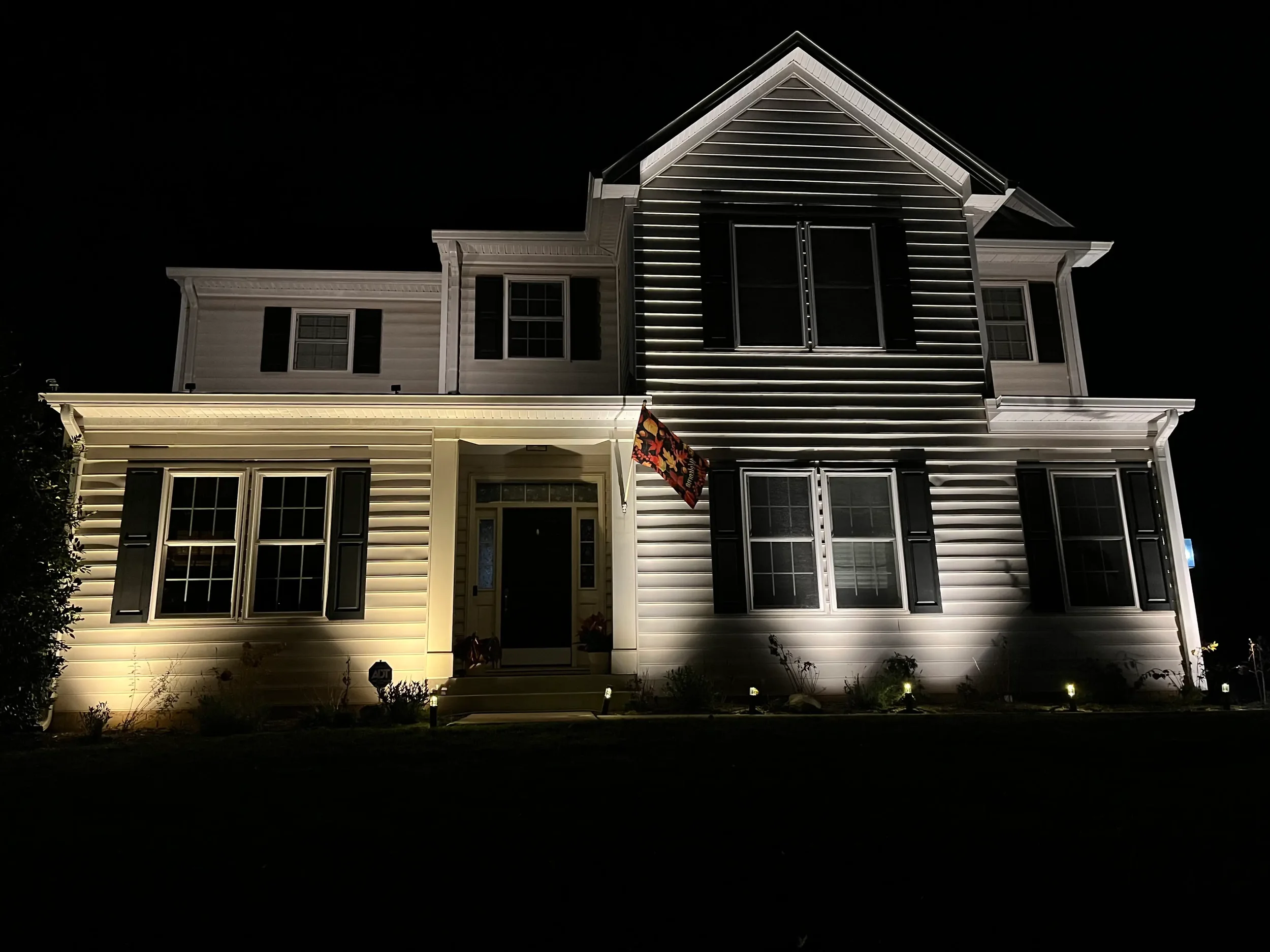
From the Field: Comparing Color Temperature on the Home
Choosing between 2700K and 3000K isn't always as simple as comparing numbers on a box. Color temperature can look different depending on a home's exterior materials, surrounding landscape, and even the colors being illuminated.
For this project, the homeowner wanted to see the difference before making a final decision, so we scheduled an evening appointment and installed different lamp temperatures side by side on the façade.
The warmer light appears especially warm against the home's earth-tone siding—closer visually to what many homeowners might expect from an even lower Kelvin temperature. Seeing the options on the actual home allowed the client to evaluate how each temperature interacted with the architecture rather than choosing from a sample or specification alone.
The visit also revealed another design consideration: existing shrubs limited where several fixtures could be placed, creating some asymmetry in the light patterns along the foundation. Because the comparison took place during winter, we planned to revisit the property in spring when the landscaping could be adjusted.
Design First, Products Second
It's easy to focus on fixture specifications or the latest lighting technology, but professional landscape lighting always starts with the design itself. The best fixtures can't compensate for poor placement, while a thoughtfully designed lighting plan can create remarkable results using carefully selected, purpose-built products.
When fixture selection, color temperature, and lighting design all work together, the result is an outdoor lighting system that feels balanced, timeless, and beautifully integrated into your home.
Common Landscape Lighting Mistakes to Avoid
Even the highest-quality fixtures can't compensate for poor planning. Many outdoor lighting systems fall short not because of the products themselves, but because they're designed or installed without considering how light should interact with the home and landscape.
Whether you're installing a new system or upgrading an existing one, avoiding these common mistakes can help create a more balanced, beautiful, and longer-lasting result.
1. Installing Too Many Fixtures
More light doesn't always create a better design. Over-lighting can flatten the landscape, eliminate natural contrast, and make your home feel harsh rather than inviting. Professional lighting uses restraint, highlighting key features while allowing shadows to add depth and visual interest.
2. Using Fixtures That Are Too Bright
Excessive brightness often creates glare, harsh shadows, and an unnatural appearance. Instead of maximizing light output, professional designers carefully match fixture brightness to each application, creating comfortable illumination that enhances the property without overwhelming it.
3. Lighting Everything Equally
Not every architectural or landscape feature deserves the same emphasis. Great lighting creates visual hierarchy by drawing attention to the home's most distinctive elements while allowing secondary features to complement the overall design.
4. Ignoring Beam Spread & Fixture Placement
The right fixture in the wrong location—or with the wrong beam angle—can completely change the finished result. Professional designers carefully select beam spreads and fixture placement to create even, intentional illumination while minimizing glare and unwanted light spill.
5. Using the Wrong Fixture for the Job
Landscape lighting fixtures are designed for specific applications. Installing a fixture in an orientation it wasn't engineered for can reduce performance, increase maintenance, and even lead to premature failure. Selecting the proper fixture is just as important as selecting the right lighting technique.
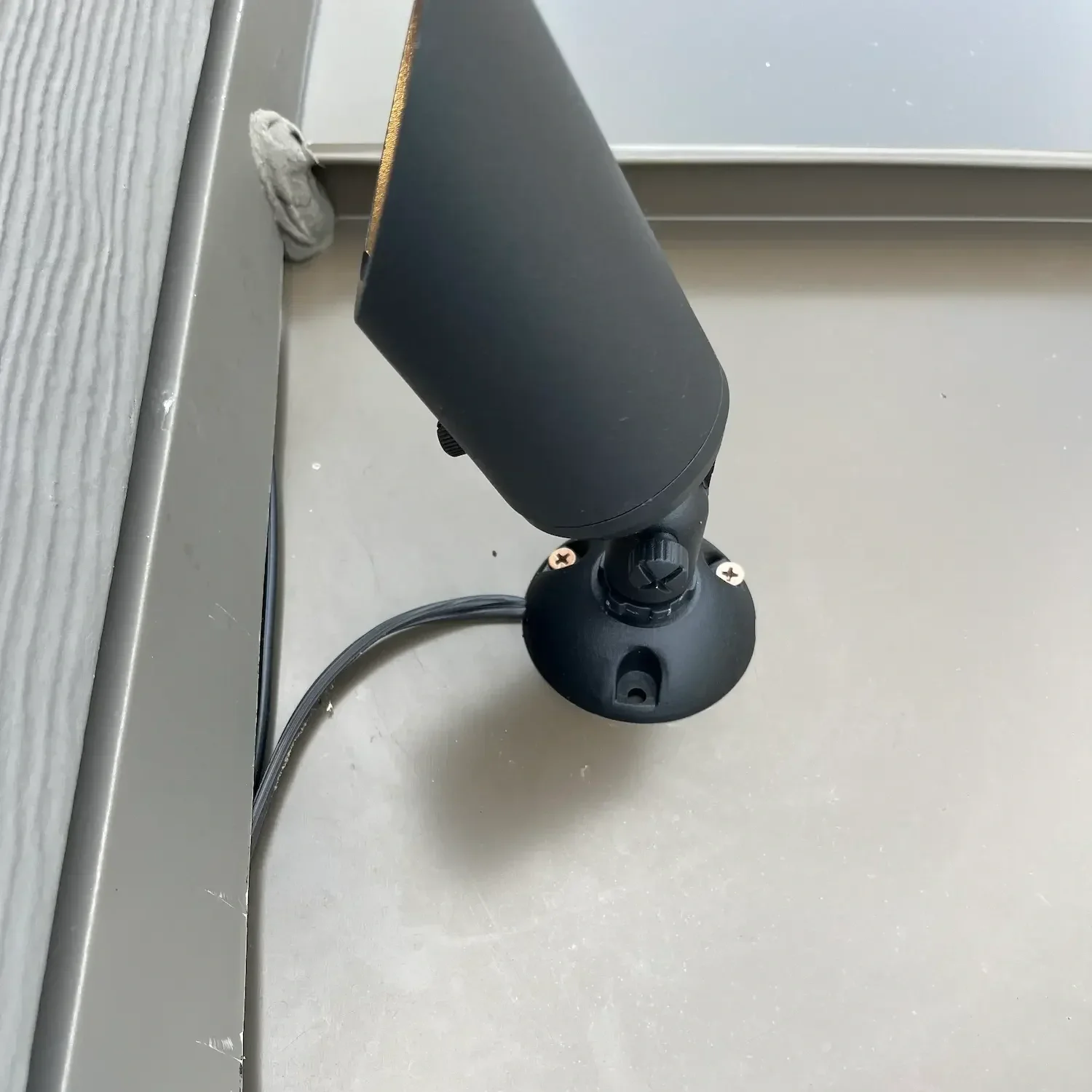
From the Field: The Right Fixture Matters
During an evaluation of an existing lighting system, we discovered an uplight that had been mounted high on the home's exterior and repurposed as a downlight.
Although the fixture itself was well made, it wasn't designed for that orientation. Over time, water entered the housing, leading to premature failure and unnecessary replacement costs.
This project reinforced an important lesson: even premium fixtures can underperform when they're used in applications they weren't engineered for. Successful landscape lighting depends on choosing not only the right fixture, but also the right application.
6. Forgetting That Landscapes Grow
Trees mature, gardens expand, and outdoor spaces evolve over time. Without periodic maintenance and fixture adjustments, even a beautifully designed lighting system can gradually lose its intended appearance. Professional maintenance helps ensure your lighting continues to complement the landscape as it changes.
7. Focusing on Fixtures Instead of Design
Perhaps the biggest mistake is believing that premium fixtures alone guarantee beautiful results. Exceptional landscape lighting starts with a thoughtful design that considers architecture, landscape, viewing angles, and how the property is used. The fixtures simply bring that vision to life.
Want to learn how to avoid these and other common mistakes? Read our complete guide to Landscape Lighting Mistakes Homeowners Make, where we explore each issue in more detail and share real-world examples from projects across Northern Virginia.
Professional Lighting Is an Investment in Design
Avoiding these common mistakes isn't about making your property brighter or installing more fixtures.
It's about creating a lighting system that complements your home, enhances your landscape, and continues to perform beautifully for years to come.
Thoughtful design, quality materials, proper installation, and ongoing maintenance all work together to create an outdoor environment that feels welcoming, elegant, and timeless.
At Loudoun Lighting, every project is guided by these principles because great landscape lighting isn't measured by how many fixtures are installed—it's measured by how naturally your home comes to life after dark.
What Does the Loudoun Lighting Design Process Look Like?
Every home has its own architecture, landscape, and personality. That's why no two outdoor lighting designs should ever be the same.
At Loudoun Lighting, we believe exceptional landscape lighting begins long before the first fixture is installed. Rather than starting with products or predetermined layouts, we begin by understanding your property, how you use your outdoor spaces, and the experience you want to create after dark.
From there, we develop a custom lighting plan that balances beauty, functionality, and long-term performance. Every fixture, beam angle, color temperature, and lighting technique is selected with a specific purpose, ensuring the finished design feels cohesive, elegant, and uniquely suited to your home.
While every project is different, our approach typically includes four key stages.
1. Consultation & Property Evaluation
Every project begins with a conversation.
We'll walk your property together, discuss your goals, and evaluate the architectural and landscape features that make your home unique. During this stage, we consider everything from mature trees and outdoor living spaces to sight lines, existing lighting, and how you envision using your property after sunset.
This careful evaluation allows us to create a lighting plan that's tailored specifically to your home rather than relying on a one-size-fits-all solution.
2. Custom Lighting Design
Using the information gathered during the consultation, we develop a personalized lighting design that highlights your home's best features while creating a balanced nighttime environment.
Rather than illuminating every surface equally, we determine where light should be added, where shadows should remain, and which lighting techniques will best complement your home's architecture and landscape.
For homeowners who want to visualize the finished result before installation, we also offer custom lighting renderings that provide a realistic preview of the proposed design.
3. Professional Installation & Nighttime Aiming
Careful installation is just as important as thoughtful design.
Every fixture is installed with long-term performance in mind, then carefully aimed and adjusted after dark to achieve the intended effect. Small refinements to beam direction, brightness, and fixture placement ensure the finished lighting feels natural, balanced, and free from distracting glare.
This nighttime fine-tuning is one of the details that separates professionally designed landscape lighting from standard installations.
4. Long-Term Maintenance & Support
Landscape lighting exists within a living landscape that changes over time.
As trees mature, gardens grow, and outdoor spaces evolve, periodic maintenance helps preserve the original design while adapting the system to your property's changing needs.
Our maintenance services include fixture adjustments, cleaning, inspections, and system updates that keep your outdoor lighting performing beautifully year after year.

From the Field: Lighting That Evolves With the Landscape
One of our long-term clients originally installed their landscape lighting more than a decade ago. Since then, trees matured, gardens expanded, and outdoor living spaces evolved, changing how the property looked—and how it was used after dark.
Rather than replacing the entire system, we adjusted fixture placement, refined beam angles, updated select components, and incorporated new focal points to complement the landscape's growth.
This project is a great reminder that landscape lighting isn't a one-time installation. Like the landscape itself, it should evolve over time to continue delivering beautiful results.
A Thoughtful, Founder-Led Approach
Every Loudoun Lighting project is guided by founder Garrett Cunnington, whose hands-on experience and design-first philosophy shape every stage of the process.
Rather than recommending the same lighting package for every home, Garrett approaches each property individually—looking for opportunities to highlight its architecture, complement the surrounding landscape, and create outdoor spaces that feel welcoming, timeless, and uniquely personal.
The result is more than an outdoor lighting system. It's a carefully designed nighttime experience that enhances how you enjoy your home for years to come.
Want to learn more? Explore our in-depth guide to the professional landscape lighting design process, where we take a closer look at how custom lighting plans are developed, installed, and refined for luxury homes.
Bring Your Outdoor Lighting Vision to Life
When thoughtfully designed, landscape lighting does far more than illuminate your property. It highlights the craftsmanship of your home, brings depth to your landscape, extends the enjoyment of outdoor living spaces, and creates an inviting atmosphere that welcomes family and guests alike.
The difference between a collection of outdoor lights and a professionally designed lighting system isn't the number of fixtures or their brightness. It's the careful planning behind every decision—from selecting the right lighting techniques and beam spreads to balancing light and shadow, choosing the appropriate color temperature, and ensuring the system continues to perform beautifully as your landscape evolves.
At Loudoun Lighting, we believe every home deserves a custom lighting design that reflects its unique architecture, landscape, and the way its owners live. By taking a thoughtful, founder-led approach to every project, we create outdoor lighting systems that are elegant, functional, and built to stand the test of time.
Whether you're planning a new installation, upgrading an existing system, or simply exploring ideas, investing in professional landscape lighting is an investment in your home's beauty, safety, and long-term enjoyment.
Ready to transform your home after dark? Schedule a personalized design consultation with Loudoun Lighting and discover how a custom outdoor lighting plan can bring your property to life.
Frequently Asked Questions
This guide has covered a lot of information, but homeowners often have additional questions when planning a landscape lighting project. Below are answers to some of the most common questions we hear.
How do I design landscape lighting for my home?
Start by identifying how you use your property after dark. Consider areas where you want to improve curb appeal, enhance safety, showcase architecture, or create inviting outdoor living spaces. From there, develop a lighting plan that layers different techniques—such as uplighting, path lighting, and moonlighting—rather than relying on a single type of fixture.
How many landscape lights do I need?
There's no standard number. The right quantity depends on your home's architecture, lot size, landscape features, and design goals. A professionally designed system often uses fewer fixtures than homeowners expect because each fixture is selected and placed with a specific purpose.
What is the best color temperature for landscape lighting?
For most luxury homes, 2700K and 3000K are excellent choices. The best option depends on your home's architecture, exterior materials, and the atmosphere you want to create. A professional designer can help determine which color temperature best complements your property.
Is low-voltage landscape lighting worth it?
Yes. Most professionally installed residential landscape lighting systems use low-voltage technology because it is energy-efficient, flexible, and well-suited for custom outdoor lighting designs. It also makes future expansions and adjustments easier as your landscape evolves.
Does landscape lighting increase home value?
Professionally designed landscape lighting can enhance curb appeal, improve safety, and extend the usability of outdoor living spaces—all features that contribute to a home's perceived value and overall appeal.
How often should landscape lighting be maintained?
We recommend having your system inspected periodically, particularly as trees and landscaping mature. Routine maintenance helps keep fixtures properly aimed, ensures optimal performance, and allows the lighting design to evolve with the property.
How long does a professionally installed landscape lighting system last?
With quality fixtures and routine maintenance, a professionally installed system can provide years of reliable performance. As landscapes mature or your needs change, the system can often be adjusted or expanded without replacing the entire installation.
