
Outdoor Lighting Design for a Hunt Country Farm Estate in Northern Virginia
When this client first contacted us, it was immeidately clear this would not be a typical residential lighting consultation.
The property was a 70-acre Hunt Country estate in Northern Virginia with wooded acreage, open fields, groomed trails, and a developing working farm operation. Located within Virginia’s renowned horse country, the estate included:
A classic red-brick residence with double porches and long sightlines
A pool and spa area
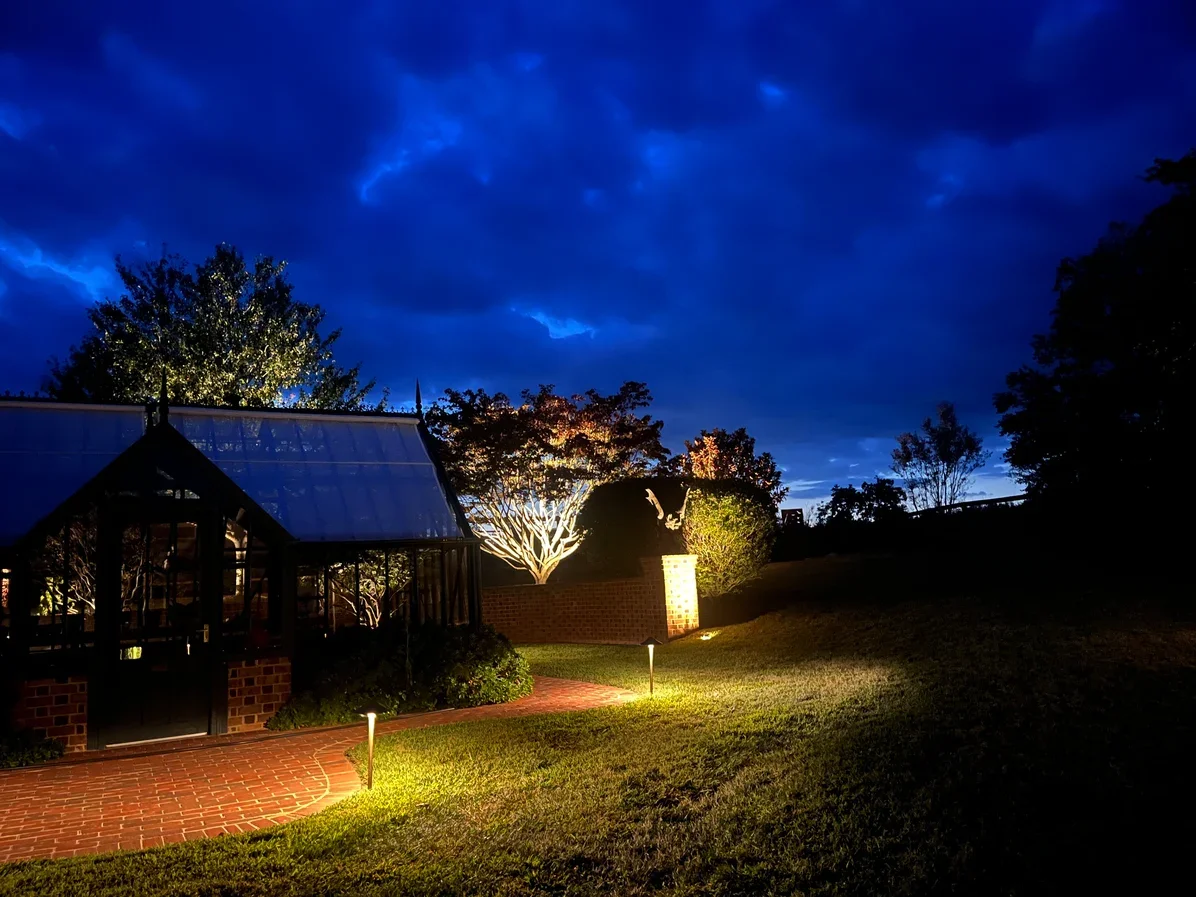
A detached greenhouse connected by brick walkways
A fire pit gathering space
Multiple barns and utility structures
A pond and woodland trails
Expansive driveway approaches through the property
Like many large rural properties in Loudoun County and Northern Virginia, the challenge was not simply where to place fixtures. The goal was to create a lighting experience that respected the land, improved navigation, and enhanced how the property felt after dark.
What stood out most, however, was not the scale of the estate.
It was the way the client approached the process from the beginning.
Why Why Large Estate Lighting Projects Start With Trust
Why We Begin With a Discovery Call
We typically begin large estate lighting projects with a brief phone consultation before scheduling a site visit. This helps us understand goals, evaluate project fit, and respect everyone’s time—especially for remote or large-scale rural properties.
In this case, the client declined the call rather directly.
Given the distance, the uncertainty, and the tone of the interaction, we paused. Experienced professionals learn to assess risk early, particularly on complex outdoor lighting projects with significant scope.
Still, we decided to move forward with the visit.
That decision ended up shaping the entire project.
Designing Outdoor Lighting Around Experience, Not Fixtures
Once on-site, the tone shifted immediately.
The client walked me through the entire property—inside and out—including vantage points from within the home, even from the primary bedroom. The goal was clear: understand how the land is seen, experienced, and lived in, not just where fixtures might go.
Two priorities were made clear:
No lighting mounted on structures
Lighting should focus only on pathways and vegetation
This aligned perfectly with our philosophy for luxury outdoor lighting design in Hunt Country and Northern Virginia estates.
Preserving the Character of a Hunt Country Estate
One thing became immediately clear during the walkthrough:
The property itself dictated the design language.
This was not a place for overly modern fixtures or highly visible technology. The landscape required subtlety and warmth.
The lighting needed to feel timeless—as though it had always belonged there.
Why Avoid Modern-Looking Fixtures on Rural Estates?
Because the land sets the tone.
In Hunt Country properties throughout Loudoun County and Northern Virginia, understated lighting often creates the most luxurious result. The best outdoor lighting systems disappear into the environment while still delivering exceptional functionality and atmosphere.
Designing for Two Decision-Makers
The initial consultation was conducted with the husband only, while the wife was traveling.
That’s always important to note.
In luxury residential projects, especially on large estates, design decisions rarely belong to one person alone.
We learned that:
This was not their primary residence
They owned multiple properties nationwide
They had completed outdoor lighting projects before
They were evaluating multiple lighting firms
Rather than overwhelming them with technical specifications, we agreed to present conceptual direction once both decision-makers could participate.
Planning Outdoor Lighting for a Large Property?
Thoughtful outdoor lighting starts with understanding how the land is lived in and experienced after dark. Schedule a consultation with Loudoun Lighting to discuss a custom lighting plan designed for your property and long-term goals.
How We Present Estate Lighting Concepts
For large outdoor lighting projects, we focus on helping clients evaluate the experience—not just the budget.
Our presentation included:
Aerial imagery
Highlighted experience zones
Recommended fixture families
Budget ranges tied to project scope
This allows clients to focus on the overall vision rather than getting lost in line-item details too early in the process.
The Zoom Call That Defined the Project
Once both spouses joined the conversation, the project evolved quickly.
The wife, a CEO of a prominent national nonprofit organization, regularly hosted fundraising events, networking gatherings, and high-level dinners on the property.
Suddenly, the lighting goals became much broader.
We discussed:
The experience of arriving via the 1,000-foot driveway
How trees should appear from multiple vantage points
The rhythm of movement between gathering spaces
How guests would transition from the house to the fire pit, greenhouse, and gardens
One design concept resonated immediately.
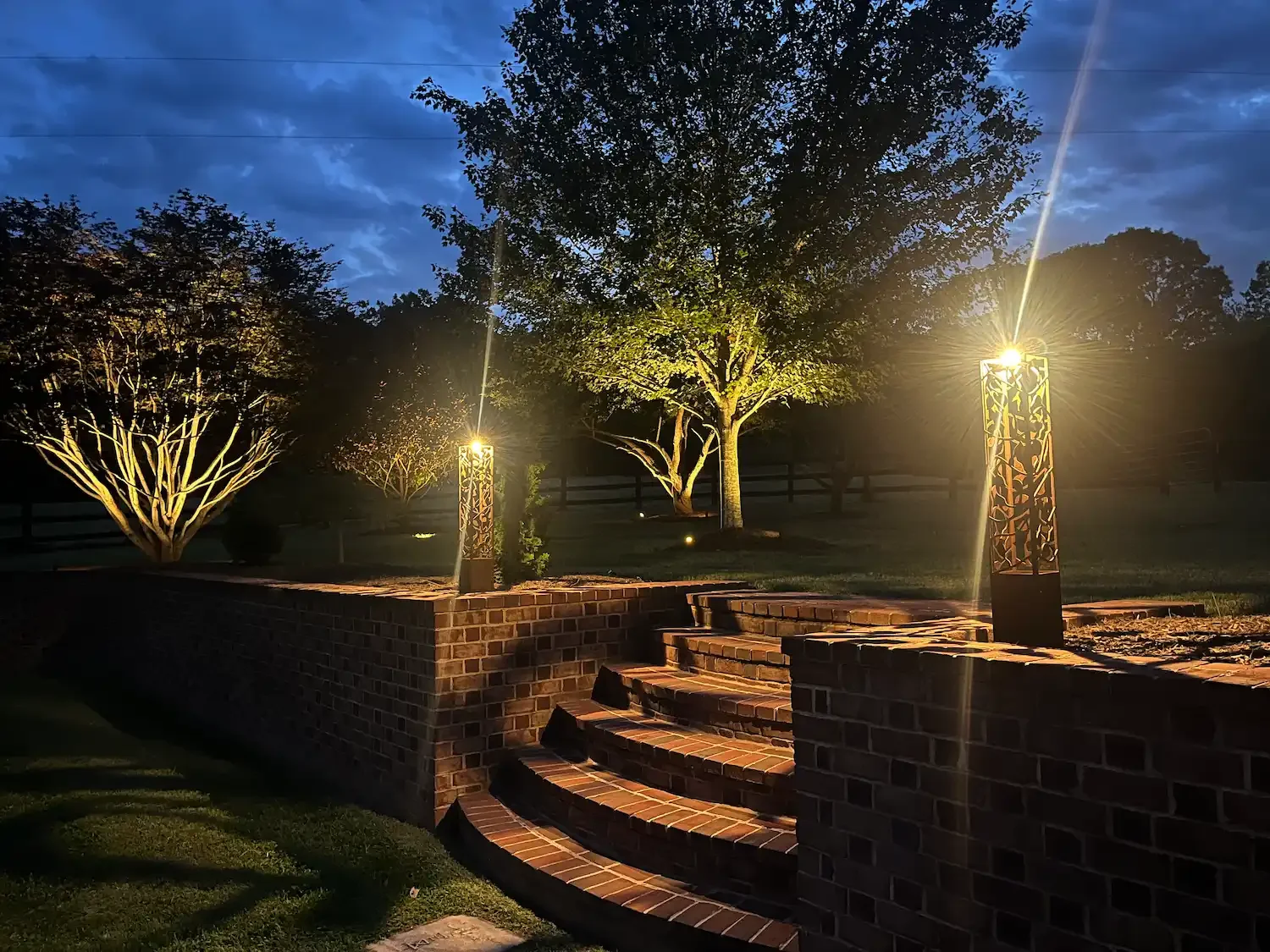
Behind the greenhouse sat a garden accessed by stairs. Rather than installing traditional path lights, we proposed 42-inch organic fixtures with vine-pattern cutouts in a rust finish that created warmth and shadow instead of obvious illumination.
The goal was atmosphere—not attention.
Planning Outdoor Lighting for Entertaining and Events
As conversations continued, another important detail emerged:
The property would soon host a major fundraising garden event.
The clients needed confidence that:
Phase one would be completed well ahead of schedule
The lighting system could expand later if needed
The design would support both daily living and large-scale entertaining
We proposed three scalable approaches:
Small scope
Medium scope
Full estate scope
Initially, they selected the smallest option—roughly 75 fixtures.
That would not remain the case for long.
Why Estate Lighting Projects Often Grow Over Time
Once installation began, trust accelerated everything.
As clients experienced the results firsthand, additional phases followed naturally.
Eventually, the project expanded to include:
More than 100 fixtures
Nearly half a mile of direct burial cable
Expanded pathway lighting
Additional landscape lighting zones
Enhanced tree lighting throughout the property
Two moments stood out especially:
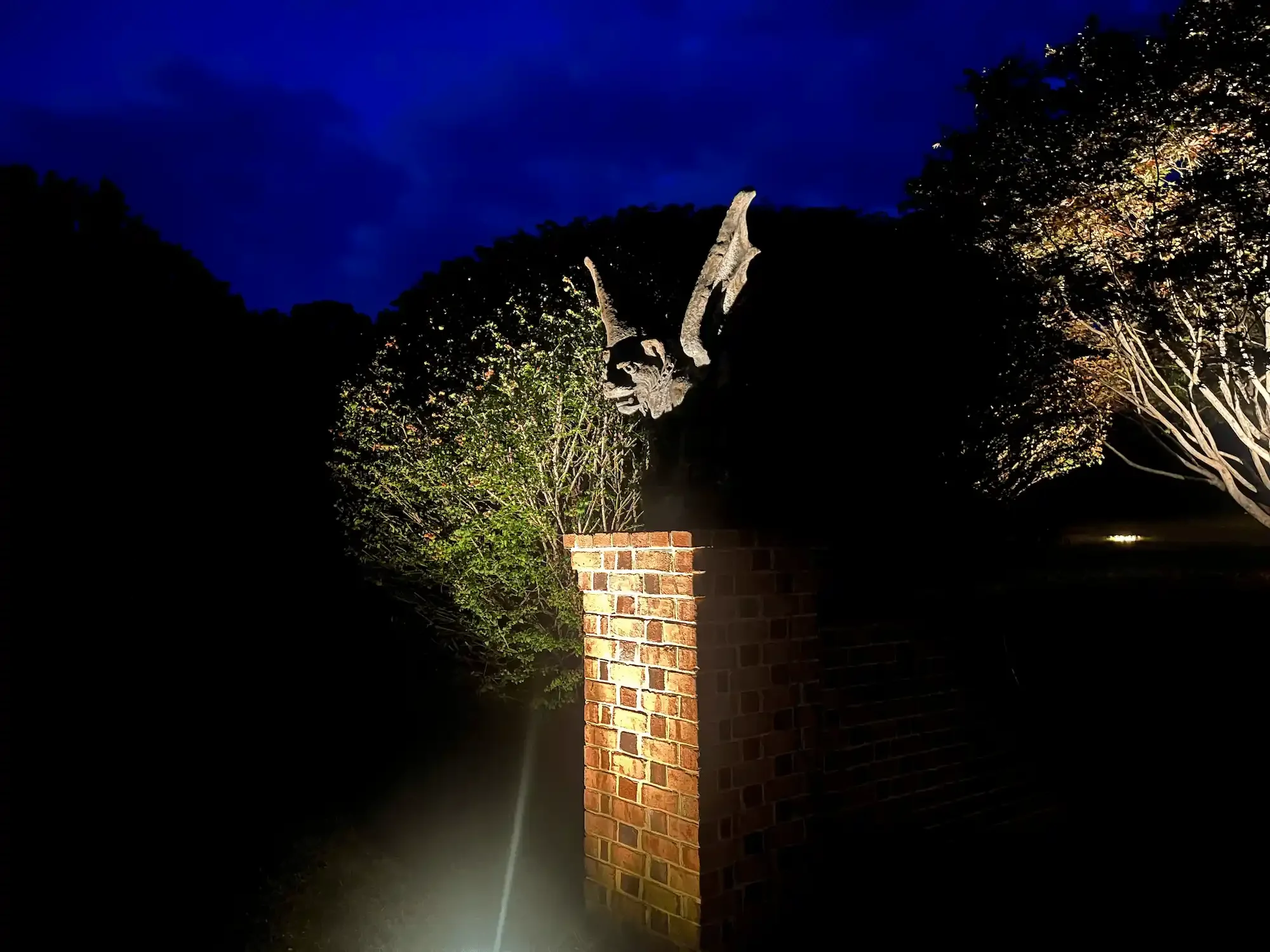
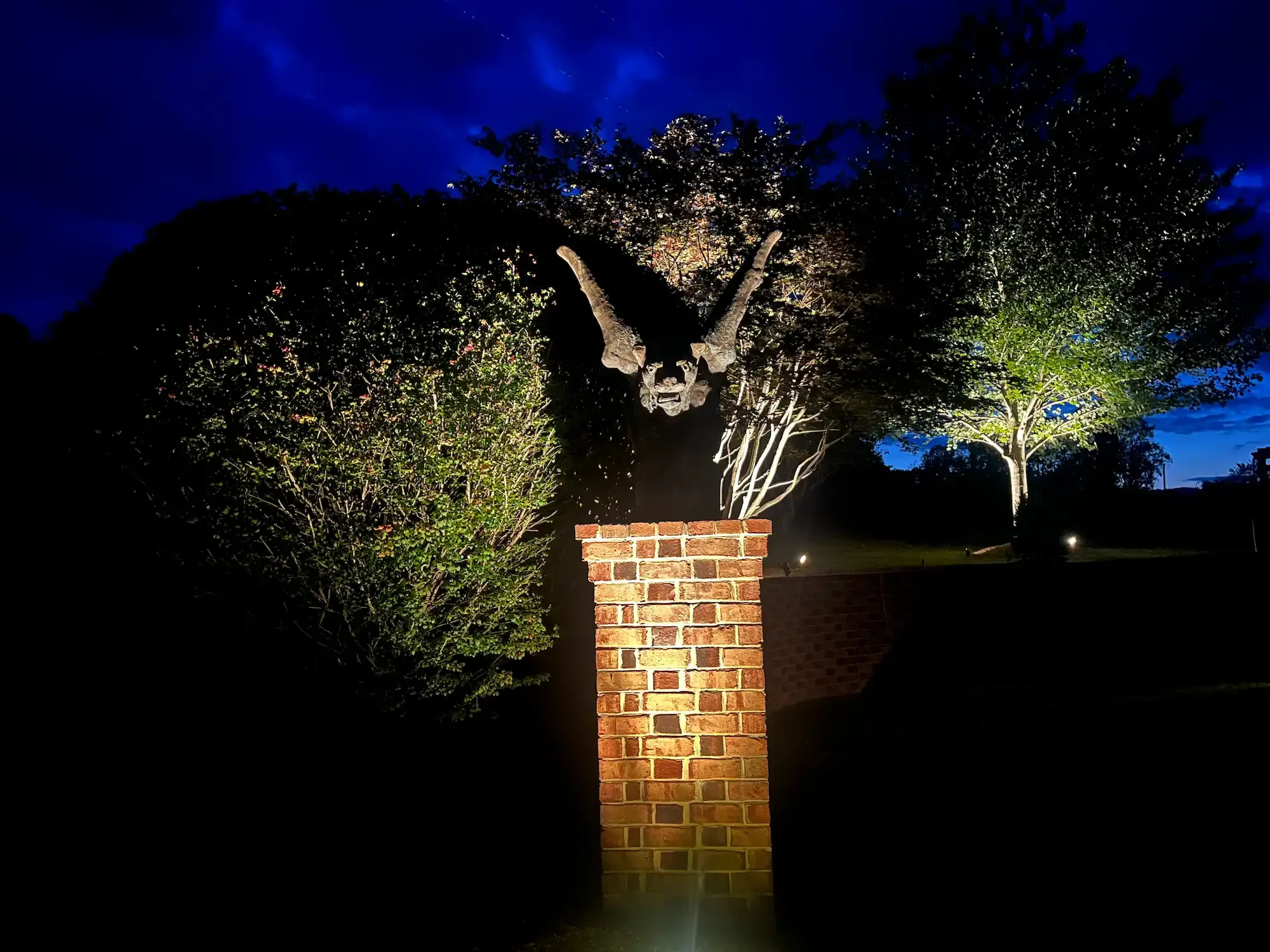
The wife requested lighting for stone gargoyles integrated into a retaining wall garden
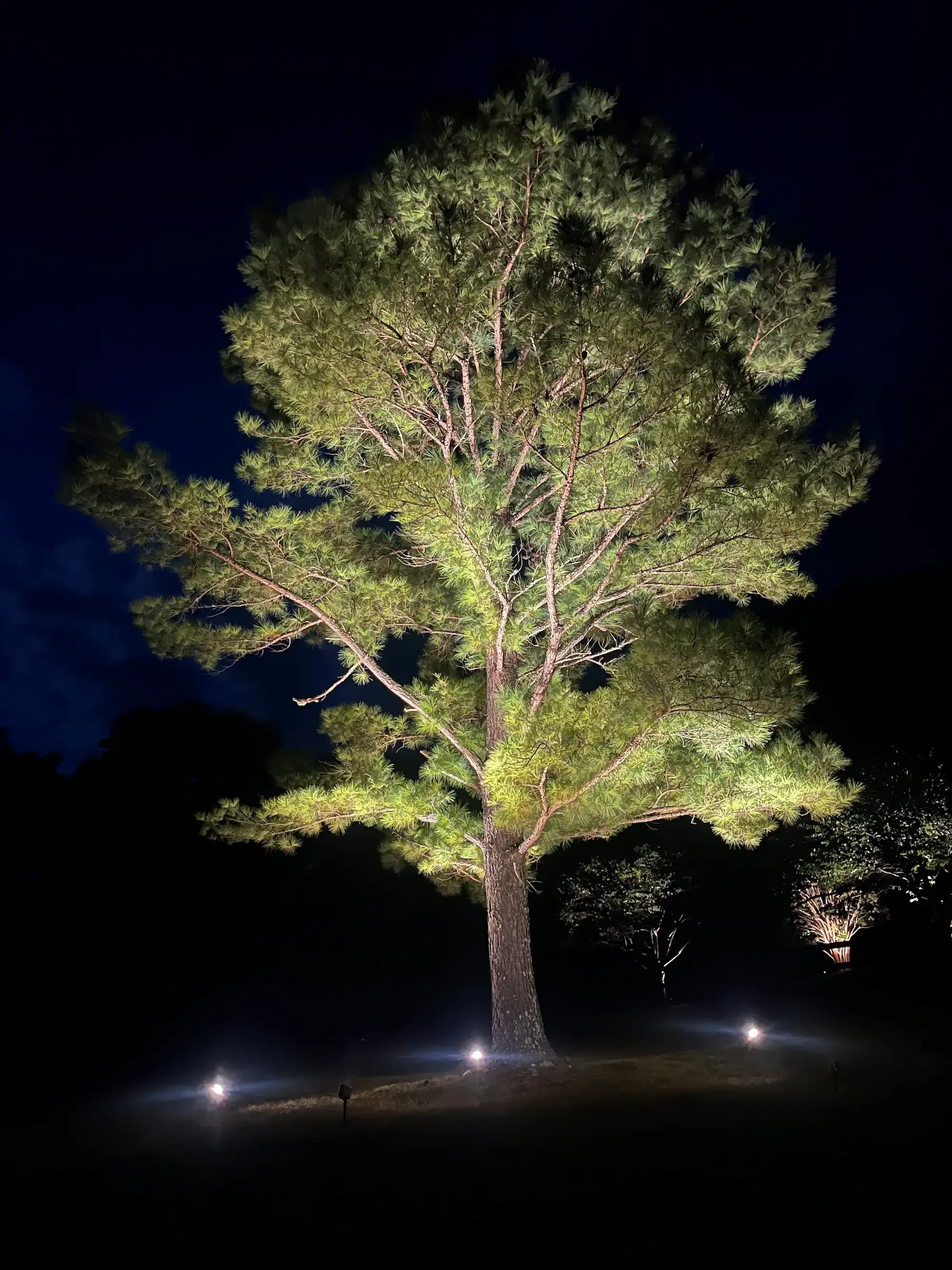
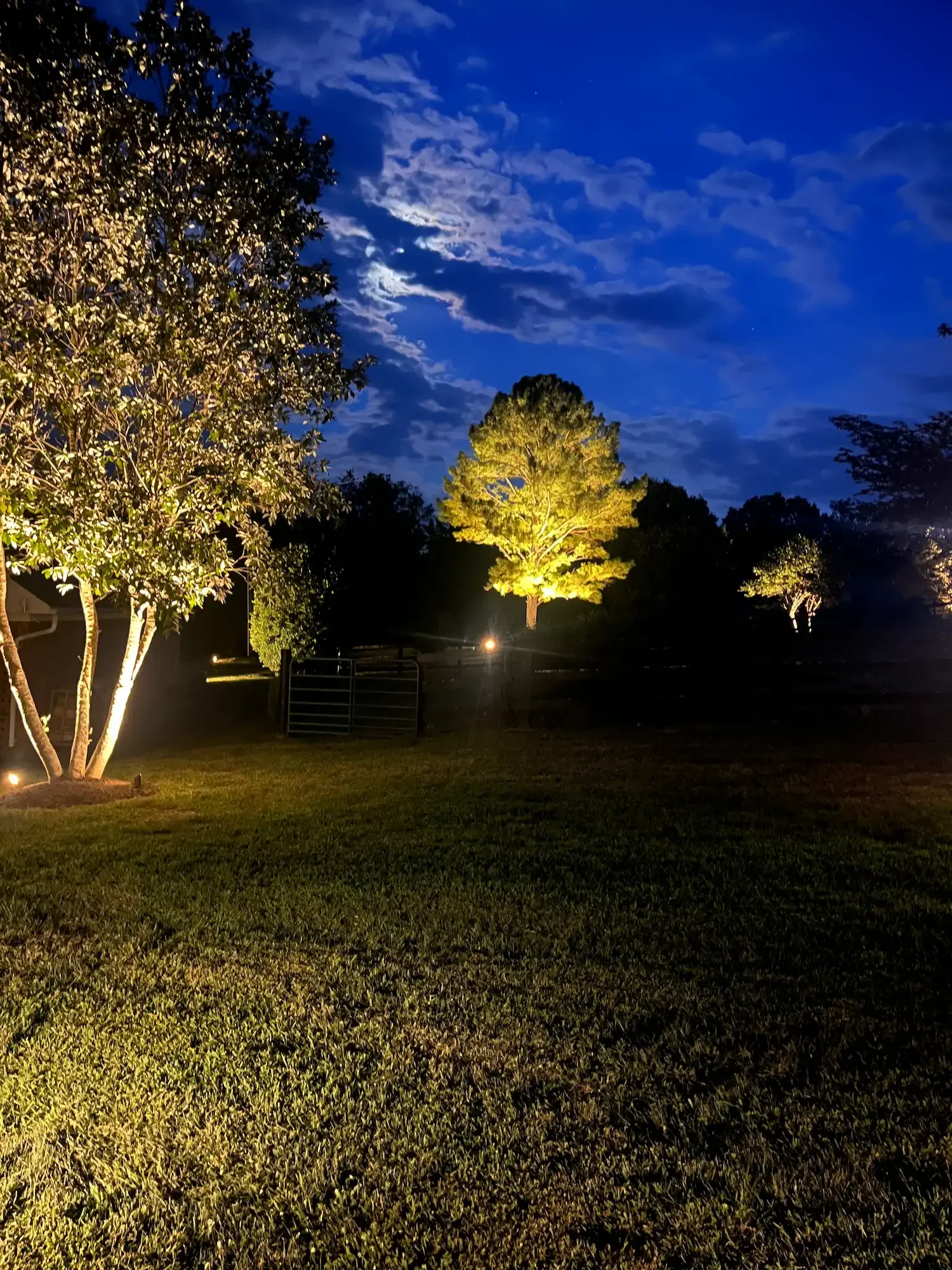
The husband became focused on illuminating a solitary pine tree positioned dramatically within an open field
That tree eventually became one of the defining visual moments of the entire property.
Why Simple Lighting Controls Worked Best
With multiple buildings and lighting zones, the property required five transformers.
We reviewed several control options:
Photocells
Astronomical timers
Smart lighting systems
Wi-Fi-enabled controls
Despite having access to modern smart technology, the client intentionally selected simple photocell controls.
Why?
Because they appreciated the gradual activation sequence across the property as dusk settled naturally over the landscape.
Perfect synchronization was not the goal.
Atmosphere was.
How Moonlighting Improved the Guest Experience
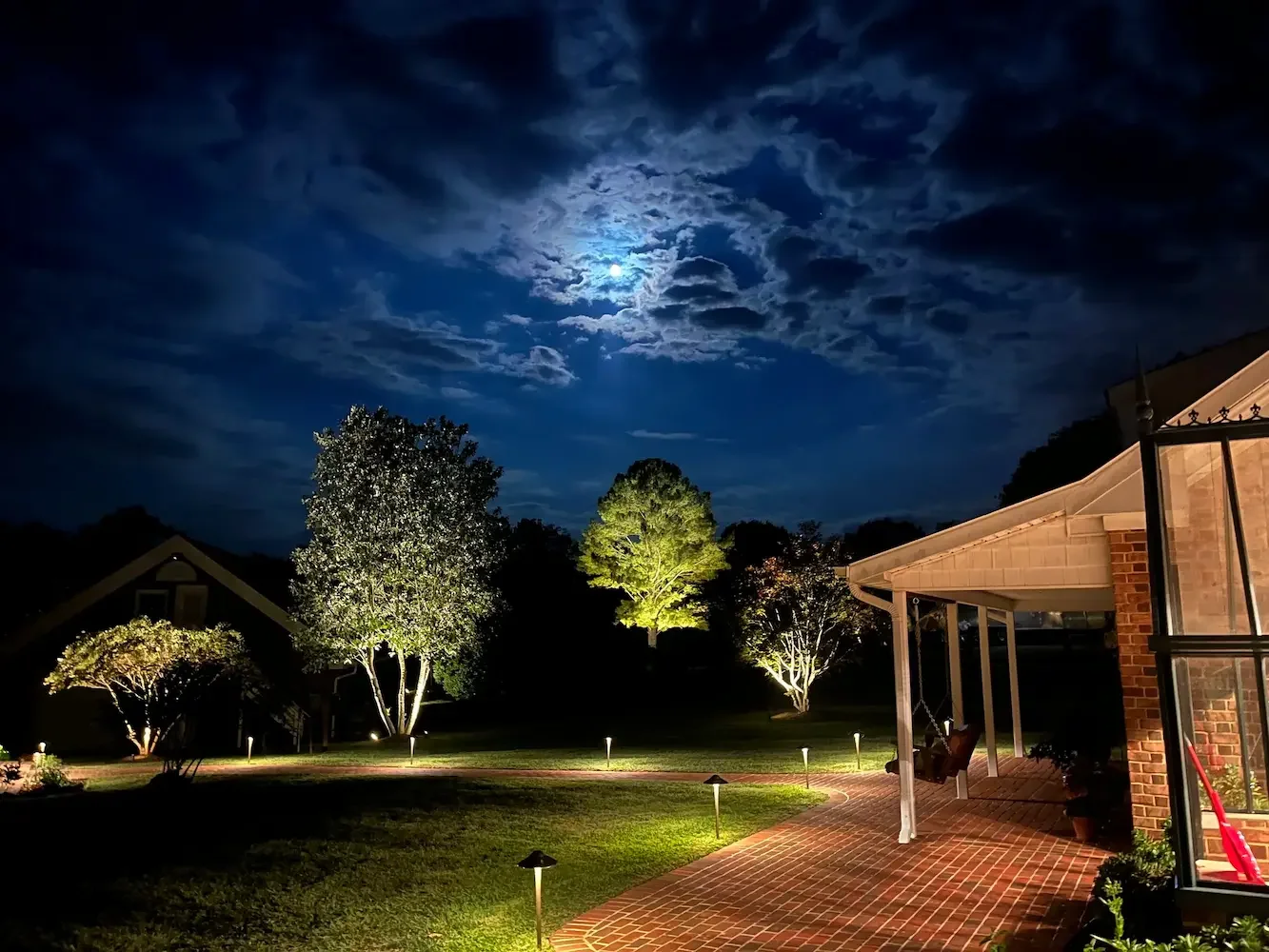
One of the most successful design elements involved moonlighting between the main house and horse barn.
By placing fixtures high within trees, we created soft downward illumination that mimicked natural moonlight.
Originally intended as atmospheric lighting, the area unexpectedly became the primary pedestrian pathway for shuttle-dropped guests during events.
The lighting solved a circulation challenge before the client even realized it existed.
The Event That Tested Everything
Toward the end of summer, one final request arrived.
The clients needed additional tree lighting installed around a 30-foot dining table before a major hosted dinner event.
The timing mattered.
The nonprofit organization had hosted a large gala in Washington, D.C. the evening before. The following night’s estate dinner would honor an internationally recognized guest.
The lighting needed to perform flawlessly.
It did.
The Real Measure of Success
About a month later, the clients contacted us again.
Not for lighting adjustments.
Instead, they invited my wife and me to attend a nearby steeplechase event they were hosting with friends.
For us, that invitation meant everything.
Clients do not invite contractors into their personal world unless trust has moved beyond a transactional relationship.
That was the real success of the project.
Looking for Luxury Outdoor Lighting in Loudoun County or Northern Virginia?
At Loudoun Lighting, we design custom outdoor lighting systems for estates, farms, and luxury residential properties throughout Loudoun County, Fairfax County, and Northern Virginia Hunt Country.
From long driveway approaches and woodland trails to entertaining spaces and phased estate lighting projects, our designs prioritize atmosphere, restraint, functionality, and long-term flexibility.
Explore our inspiration gallery or contact Loudoun Lighting to schedule a personalized outdoor lighting consultation.
FAQs
What types of properties benefit from estate lighting design?
Large rural estates, equestrian properties, farms, vineyards, and multi-structure properties often benefit from customized outdoor lighting plans that improve safety, navigation, ambiance, and long-term flexibility.
Do you design around fixtures or around experience?
Always experience first. Fixtures are simply tools. Good outdoor lighting design is about how people move through a property, how spaces feel after dark, and how lighting supports gathering, navigation, and atmosphere without overwhelming the environment.
For large rural properties, restraint is often what creates the strongest result.
Is simple lighting control better than smart lighting?
Sometimes, yes. The best outdoor lighting system is not necessarily the most advanced—it’s the one most appropriate for the property and how the client lives.
What is moonlighting in landscape lighting?
Moonlighting is a technique where fixtures are mounted high in trees to cast soft downward illumination that mimics natural moonlight. It’s ideal for pathways, gathering areas, and large landscapes where subtlety matters.
Can outdoor lighting projects be completed in phases?
Absolutely. Many estate lighting projects evolve over time. We often design systems that can expand as the property grows or as clients identify new needs after living with the lighting.
What is the best outdoor lighting approach for rural properties?
For large rural estates, restraint is often key. The best outdoor lighting enhances navigation, architecture, and landscape features without overpowering the natural environment.