
What Homeowners Need to Know Before Investing in an Outdoor Lighting System
Homeowners investing in professional outdoor landscape lighting systems often compare warranty coverage when evaluating contractors and lighting products. But not all landscape lighting warranties are created equal. Understanding what is covered—and what is excluded—can help homeowners make smarter long-term decisions about their outdoor lighting investment.
When homeowners invest in a professional-grade outdoor low-voltage landscape lighting system, warranties are often a major part of the decision. A “lifetime warranty” sounds reassuring—and in many cases, it can be meaningful protection.
But in the landscape lighting world, the real value of a warranty depends on more than the words on the page. It depends on who issued it, who holds it, what’s excluded, and whether it can realistically be honored years down the road.
This guide explains how warranties actually work in practice—and what homeowners should understand before relying on them.
The Three Layers of Landscape Lighting Warranty Coverage
Most outdoor lighting systems involve three distinct layers of warranty responsibility:
Manufacturer warranties (fixtures, transformers, LED modules or lamps)
Distributor or dealer support, which may assist with claims and replacements
Installer warranties, typically covering workmanship, aiming, and limited labor
Marketing language often collapses these into a single phrase—“lifetime warranty”—but in reality, coverage is split, conditional, and often incomplete.
What Landscape Lighting Warranties Typically Cover—and Exclude
In the professional-grade market, it is common for fixtures and transformers to carry long or lifetime warranties. These components are engineered products manufactured under controlled conditions, and reputable brands are confident in their durability.
For example, established professional lighting manufacturers such as AMP Lighting and FX Luminaire publish detailed warranty documentation outlining coverage terms, exclusions, and product-specific limitations.
Common Warranty Exclusions
However, even strong warranties usually exclude or limit:
Lamps / LED modules, which are considered consumables
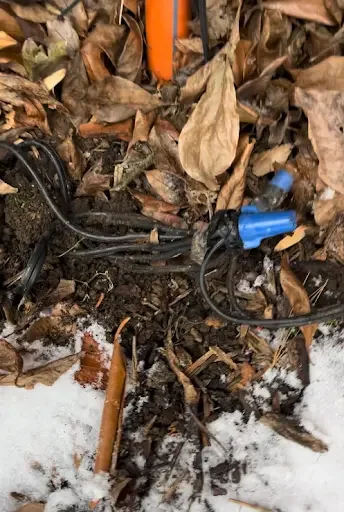
Wire and cabling
Underground connections and splices
Accessories and specialty components
Labor, including diagnostics, repairs, and truck rolls
Some installers include labor for a short initial period; many do not. A lifetime fixture warranty does not mean a lifetime, no-cost system.
Why a Landscape Lighting Warranty Is Only as Strong as the Company Behind It
A warranty only has value if the company offering it is still in business—and willing and able to honor it.
This matters on multiple levels:
Manufacturers of fixtures, lamps, and transformers
Distributors who support claims
Installers who often act as the homeowner’s point of contact
We are frequently approached by overseas manufacturers and distributors promoting “lifetime warranties” on no-name products. While the warranty language may sound generous, the long-term odds of successfully enforcing those warranties can be low if the brand, distributor, or reseller disappears.
A lifetime warranty from a short-lived company is not truly a lifetime warranty.
What Happens When Outdoor Lighting Products Are Discontinued?
Even established manufacturers discontinue product lines. When that happens, warranty replacement can become complicated.
A failed fixture may be replaced at no charge—but if the original style, finish, or form factor is no longer made, the replacement may not match the rest of the system. Homeowners are then forced to choose between:
accepting a mismatched fixture, or
replacing multiple fixtures to restore visual consistency
This is a practical risk rarely discussed up front, but it matters greatly in design-driven systems.
Who Actually Owns the Manufacturer Warranty?
Another subtle but important nuance: many manufacturer warranties are issued to the purchaser of record, which is often the installer—not the homeowner.
Even if an installer contract states that the manufacturer warranty is being “conveyed” to the homeowner, that language does not automatically make the warranty transferable unless the manufacturer explicitly allows it.
In those cases, warranty access may depend on the installer’s continued involvement and longevity. This isn’t inherently negative—but it’s important to understand.
Why Keeping Landscape Lighting Records Matters
One of the most common issues we see during service calls is homeowners who cannot remember who their original installer was, or whose installer is no longer in business.
When paperwork is missing, homeowners sometimes miss out on warranty support and instead incur service charges that could have been avoided.
We strongly recommend keeping:
Original proposals and invoices
Fixture and transformer brand/model information
Installation dates
Any written warranty documentation
If your original installer has gone out of business, these records still matter. They allow your next provider to quickly understand the system and, in many cases, leverage existing relationships with manufacturers or distributors. While there are no guarantees, manufacturers are often quite accommodating when clear documentation exists.
Good records don’t just protect warranties—they reduce diagnostic time and long-term service costs.
How to Evaluate an Outdoor Lighting Warranty Before You Buy
Before choosing a system, ask:
Who provides the warranty, and who actually holds it?
What components and labor are excluded?
What happens if a product line is discontinued?
How long has the manufacturer and installer been in business?
What documentation will I receive at project closeout?
Final Thoughts on Landscape Lighting Warranties
Warranties in outdoor lighting vary widely, but the most important differences are often hidden in company longevity, transferability, exclusions, product continuity, and record-keeping.
A thoughtfully designed system, installed to best practices by a stable provider using established brands, will outperform a “lifetime warranty” on paper that cannot be practically enforced.
For homeowners investing in high-end outdoor lighting systems in Northern Virginia, understanding warranty structure upfront can prevent costly surprises years later.
FAQs
If my installer goes out of business, do I lose my warranty?
Not necessarily—but it depends on the manufacturer’s terms and whether you have documentation. Keeping records significantly improves your chances of receiving support from another provider or the manufacturer.
Why are lamps and LEDs usually excluded from lifetime warranties?
They are treated as consumables with finite lifespans, affected by voltage, heat, and usage patterns—even in high-quality systems.
Is a lifetime warranty more important than the installer’s experience?
No. Installation quality, voltage management, and long-term serviceability matter just as much—if not more—than warranty language alone.
Do landscape lighting warranties include labor?
Usually not. Many manufacturer warranties cover replacement products only, while labor for troubleshooting, repairs, or fixture replacement may be billed separately unless specifically included by the installer.
