
When a 1950s home in McLean, Virginia, was replaced with a 7,358-square-foot custom home by LUKA Design & Build, the homeowners thought carefully about the details. But as construction neared completion, they discovered that the outdoor lighting shown on the plans wasn’t included in the construction scope.
They brought in Loudoun Lighting to help. We joined the project late—but just in time to address one important detail before the driveway was poured.
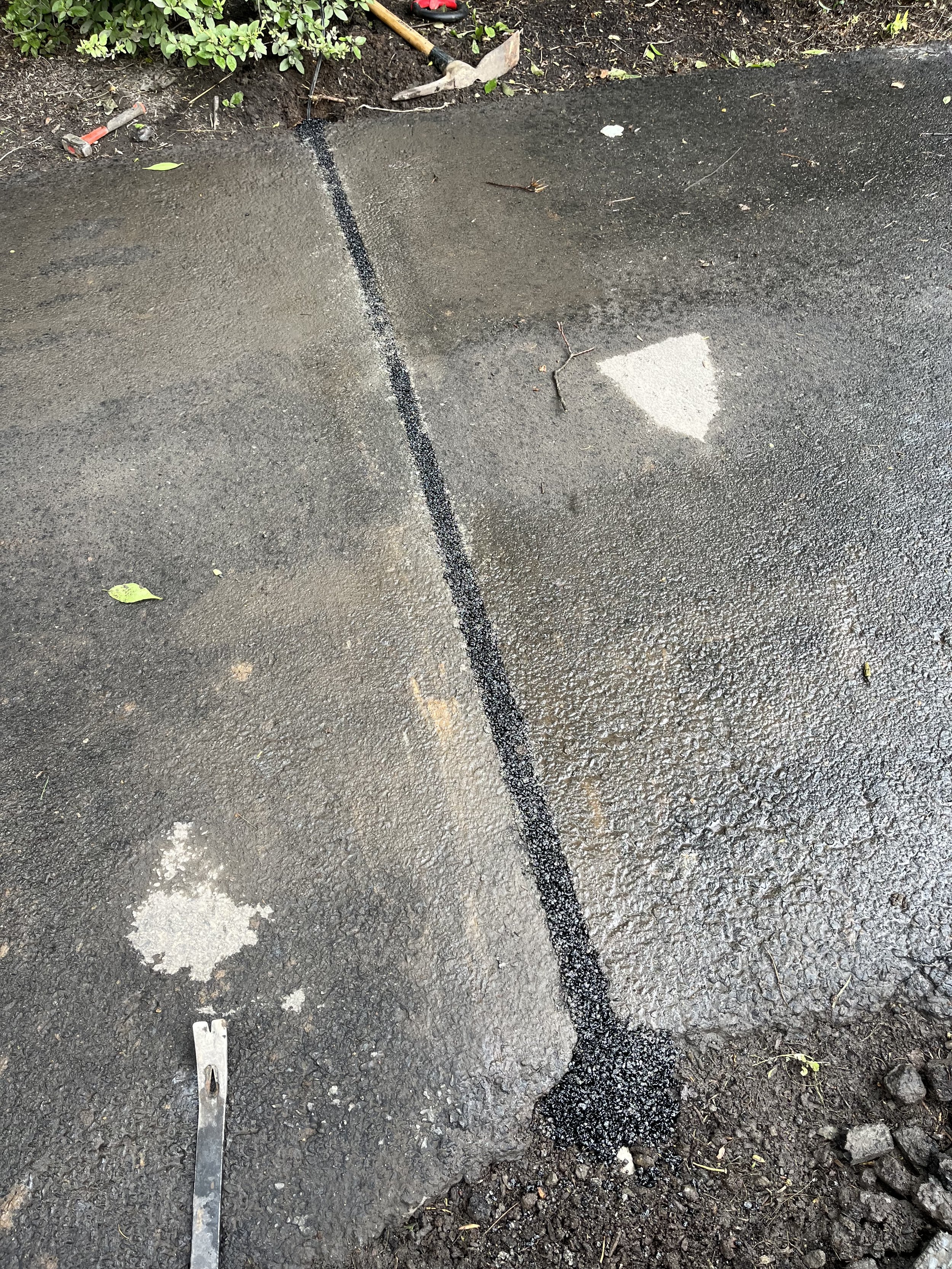
On a separate project, we cut across an existing driveway to create a route for low-voltage lighting wire. Planning conduit before a driveway is poured can help avoid this kind of retrofit.
Why We Planned the Wiring Before the Driveway
During our first site review, we saw that conduits were needed beneath the driveway for the low-voltage wiring.
Once a driveway is poured, getting wiring across it can mean cutting or boring beneath the finished concrete. Planning those pathways ahead of time made the installation easier and helped avoid that extra work.
We recommend that homeowners, builders, and landscape professionals discuss lighting while a home is still under construction. The fixtures can come later. Conduit installed at the right time can keep options open and prevent a difficult retrofit.
If you’re planning a project, our guide to planning a landscape lighting design explains how fixture placement, wiring, and lighting layers fit together.
Choosing a Color-Changing System
Before we chose fixture locations, we talked with the homeowners about how they wanted to use the lighting. They wanted warm architectural lighting for everyday evenings, with the option to add color for holidays, game days, and special occasions.
Color-changing systems vary in how they control fixtures, group lights, communicate wirelessly, and handle programming. We compared several professional options:
WAC ColorScaping
Haven Lighting 9 Series Pro with Game Day
Alliance Outdoor Lighting’s Bluetooth system
The homeowners chose Alliance. It offered the effects and control they wanted, felt straightforward to use, and matched their priorities for quality, capability, and investment.
Our job is to understand how clients plan to use their lighting and help them choose accordingly. The most elaborate system isn’t automatically the right one.
Adding a View of the Backyard
After the first installation, the homeowners asked us to return and add lighting in the backyard.
We chose a few landscape features to highlight rather than illuminating every tree. The added lighting made the yard more inviting, but it also changed how the home felt from the inside. At night, an unlit window can look like a dark pane of glass. A few well-placed lights outside can give you something to see beyond it and make the landscape feel connected to the room.
The homeowners’ invitation to return meant a lot to us. It’s a good sign when clients enjoy the work enough to ask us back.
For more on how selected trees and garden features can shape a nighttime view, see our guide to highlighting garden features with lighting.
See the Home at Dusk
More than a year after our installation, the completed home was photographed for the builder. You can see the project, including dusk images showing the exterior lighting, in LUKA Design & Build’s Tyndale project gallery.
The exterior photographs were produced by Peak Visuals. We didn’t commission or work directly with the photographer, but we’re pleased to see the installation included in the finished project. You can view more of Peak Visuals’ work in its Residential Exteriors gallery.
Plan Outdoor Lighting Before Construction Is Finished
Outdoor lighting works best when it’s considered alongside the home, hardscape, and landscape—not after all three are complete. Wiring routes, fixture locations, controls, and room for future additions are easier to coordinate during construction.
If you’re building or renovating in McLean or elsewhere in Northern Virginia, bring lighting into the conversation before the driveway, walkways, and landscaping are finished. A little planning at the right time can preserve choices and help the final system feel like part of the home.
Explore our custom landscape lighting services or get in touch to discuss your project.
Frequently Asked Questions
When should outdoor lighting be planned for a new home?
Ideally, discuss lighting during construction planning, before driveways and walkways are poured and landscaping is installed. Fixtures can be selected and installed later, but conduit and wiring routes are much easier to coordinate early.
Why install conduit beneath a driveway?
Conduit provides a protected pathway for low-voltage wiring to cross beneath the driveway. Adding it before the concrete is poured can avoid cutting or boring under the finished surface later.
Can color-changing landscape lighting also look warm and subtle?
Yes. A color-changing system can provide warm-white architectural lighting for everyday use and color for occasions, depending on the system and how it’s configured.
Does every tree or landscape feature need a light?
No. A few carefully selected focal points can add depth to the yard and create a view from inside the home. Lighting everything can make the result feel busy.
Can outdoor lighting be added after a home is built?
Yes, but the work may be more involved if there are no planned wiring paths beneath finished hardscape. Early coordination can make future installation simpler.