
When part of an outdoor-lighting system stops working, most homeowners have a few likely suspects in mind: a failed transformer, a burned-out lamp or a damaged fixture.
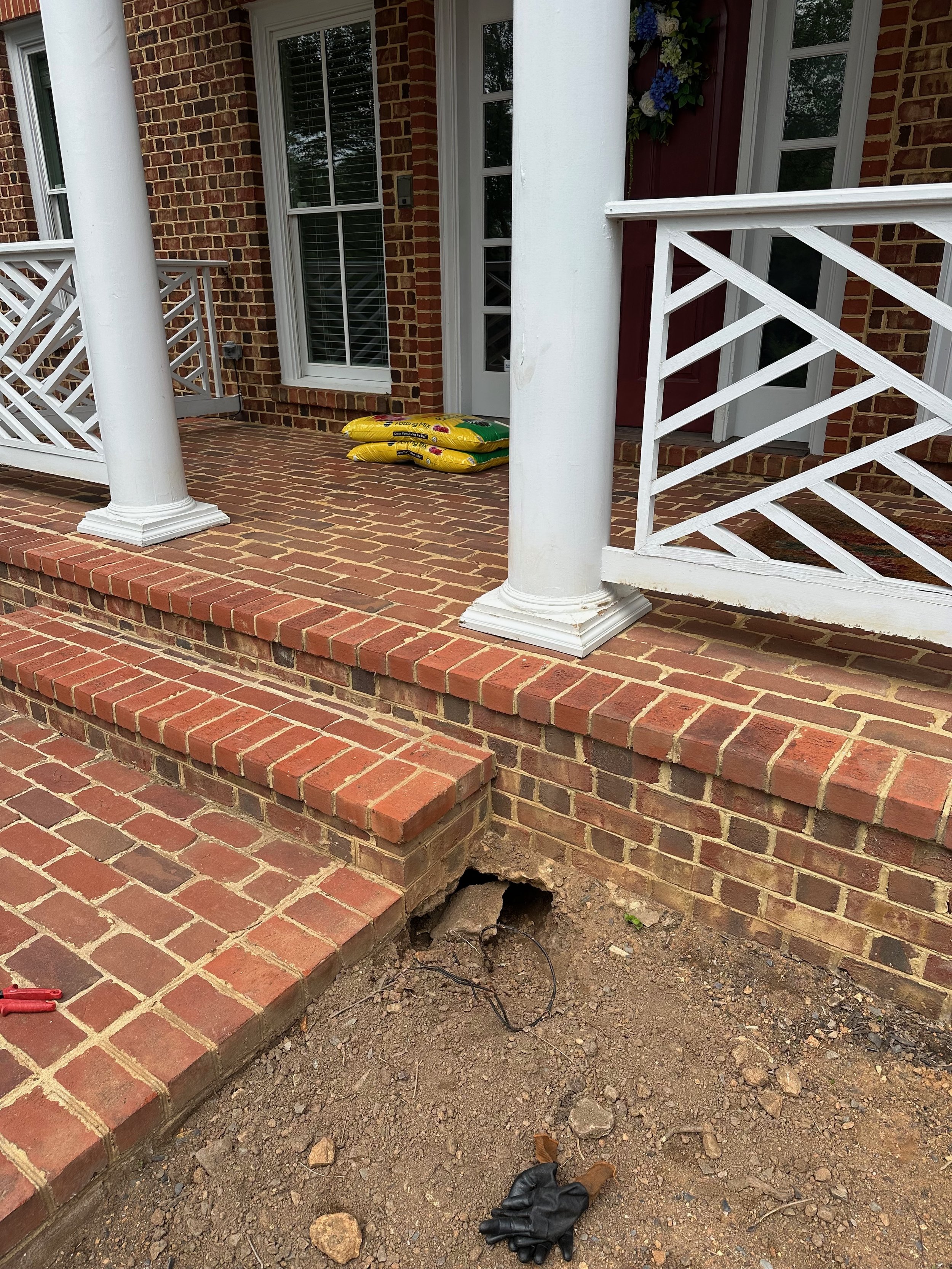
At one 70-acre property in Marshall, Virginia, none of those was the problem.
The culprit had four legs, lived under the front porch and apparently had a taste for landscape-lighting cable.
A lighting outage with an unexpected cause
Several months after we completed an architectural-lighting installation at the property, the homeowner called because part of the system had stopped working. We started looking for the usual lighting-system problem.
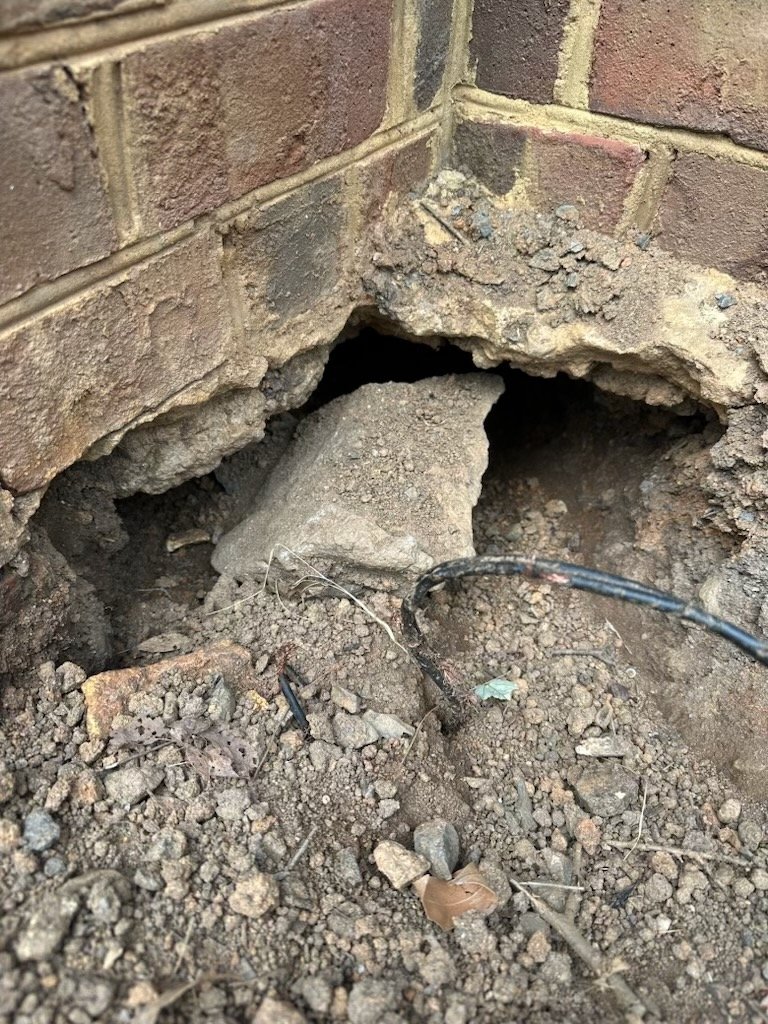
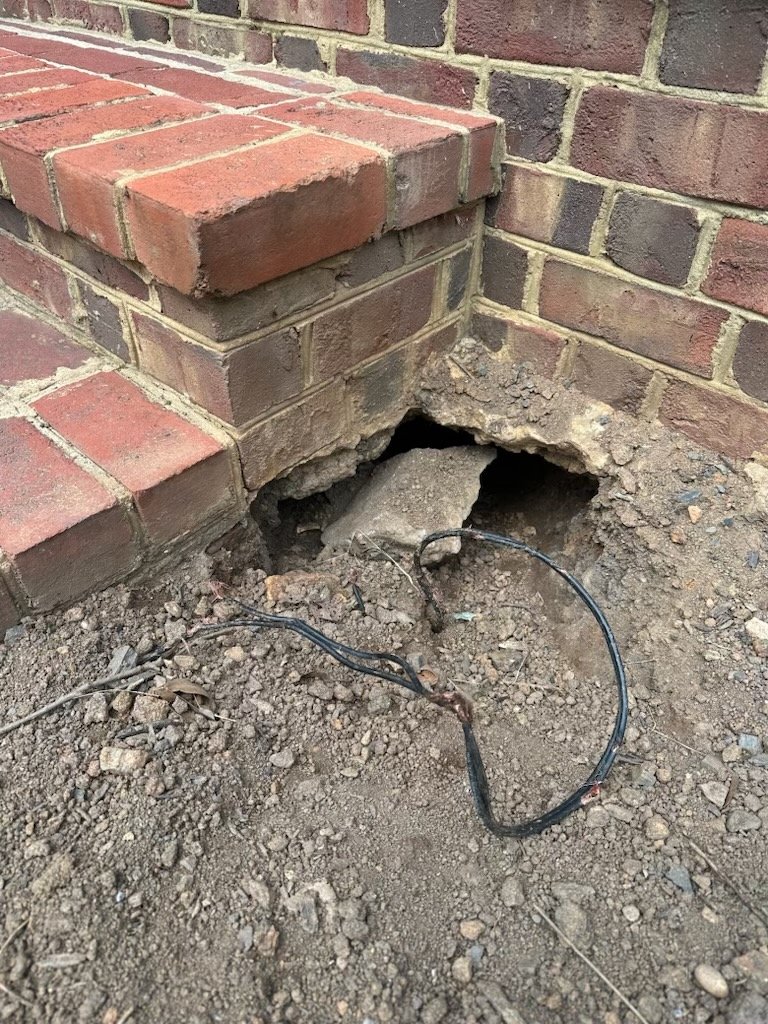
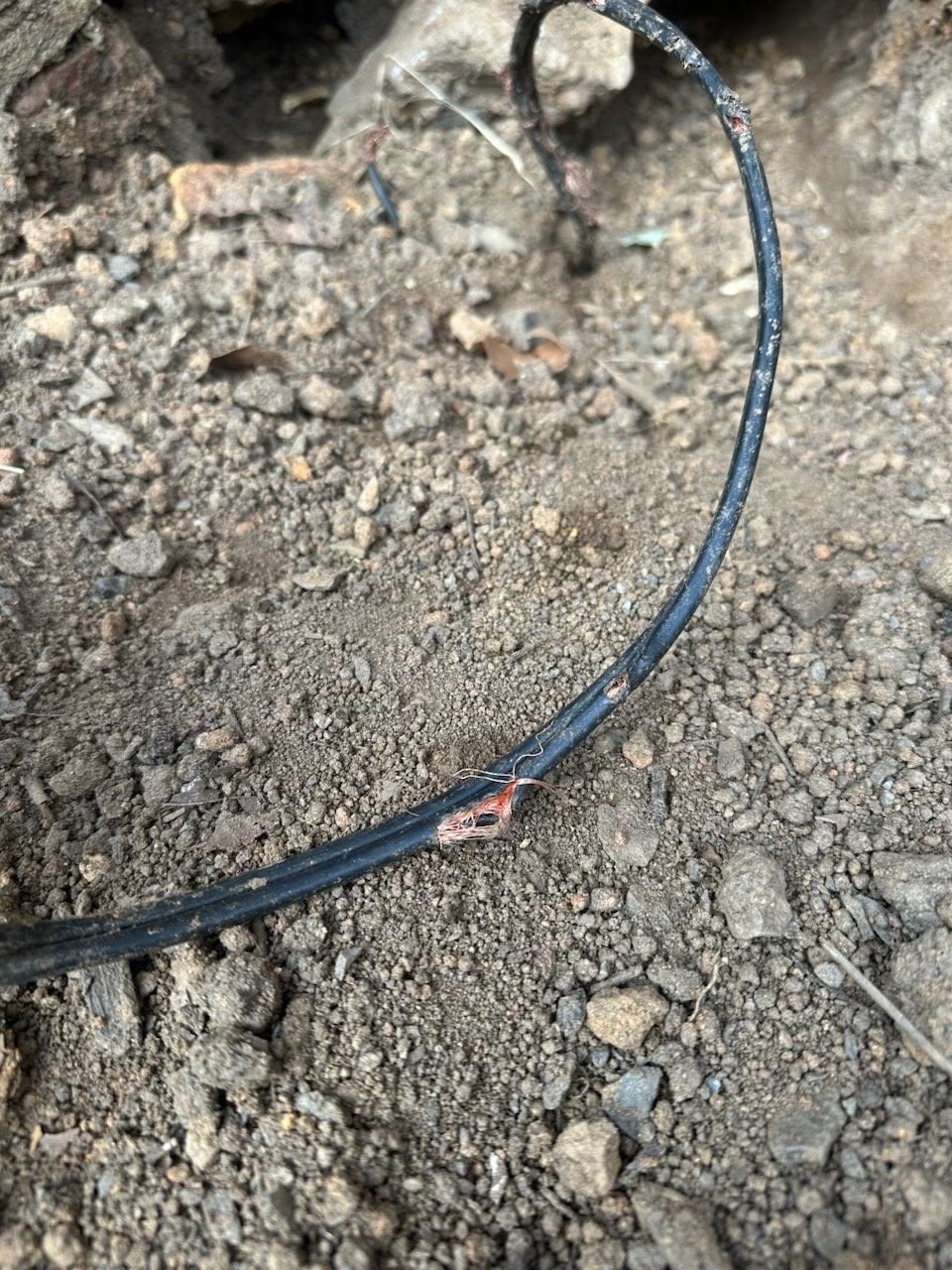
Instead, we found a sizable burrow beneath the front porch. Nearby, several lighting cables had been chewed through. The animal had moved into the area and damaged wiring beneath the brick walkway.
We repaired the damaged cable and ran the replacement through flexible sprinkler swing pipe. That added protection while letting the cable stay flexible in that spot.
Problem solved.
Or so we thought.
Why the first cable repair didn’t last
The homeowner packed the burrow with heavy gravel and rocks to keep the animal from coming back. The animal pushed the material back out, reclaimed its burrow and damaged the wiring again.
That made it clear the cable repair alone wasn’t going to solve the problem. The source of the repeated damage had to be addressed, too.
A wildlife-control professional eventually removed the animal. We were then able to finish the lighting repair without worrying that our persistent four-legged tenant would return for another round.
Sometimes an outdoor-lighting issue calls for another specialist. We can diagnose and repair the lighting system; wildlife control can handle the animal.
How wildlife can damage landscape lighting
Squirrels, mice, voles, chipmunks and other animals can chew or disturb underground wiring. Digging can expose cables, shift fixtures or create voids around wiring and connections.
That doesn’t mean wildlife is behind every lighting failure. A section of lights going dark could also be caused by:
Damaged or severed wiring
A failed fixture or lamp
A transformer problem
Water intrusion
Landscaping or excavation
Damaged or exposed connections
Animal activity
The important thing is finding out which problem you’re actually dealing with.
What to check when outdoor lights stop working
A quick splice might get the lights working again, but it may not address why they failed in the first place. A thorough diagnosis can include inspecting nearby wiring for additional damage, checking connections, testing the circuit and deciding whether vulnerable cable needs extra protection or a different route.
Outdoor lighting lives in a real environment. Trees grow, landscaping changes, water moves through the soil and, occasionally, wildlife decides the space beneath your porch would make a perfectly good home.
That’s why a repair shouldn’t always begin and end with replacing the part that appears to have failed. Finding the cause can help prevent the same problem from happening again.
In Marshall, the transformer wasn’t the problem. Neither was the fixture. It was a very determined resident with a taste for landscape-lighting cable.
Fortunately, the homeowner eventually won the battle—and the lights are back on.
Frequently Asked Questions
Can animals damage outdoor-lighting wiring?
Yes. Animals such as squirrels, mice, voles, chipmunks and other burrowing or chewing animals can damage outdoor-lighting wiring. Digging can also disturb cables, fixtures and underground connections.
What are signs that wildlife damaged landscape lighting?
Signs can include a section of lights suddenly going out, exposed wiring, disturbed soil, burrows near the lighting system or visible damage to cables and connections. A professional diagnosis can help identify the actual cause.
Why might an outdoor-lighting repair fail again?
The visible break may not be the only damage, or the cause may still be present. In this case, the animal returned to the same burrow and damaged the cable again, so the wiring repair needed to be paired with help from a wildlife-control professional.
Can protective pipe prevent damage to landscape-lighting cable?
Adding physical protection may reduce the risk in some locations. The right approach depends on where the cable is and what’s causing the damage. A lighting professional can assess whether protection or a different cable route makes sense.
Who should handle an animal problem near outdoor lighting?
A lighting professional can diagnose and repair the system. If an animal is causing repeated damage, a wildlife-control professional may need to address the animal. Follow local rules and use a qualified professional.
Why did part of my outdoor-lighting system stop working?
There are several possible causes, including damaged wiring, a fixture or connection problem, water intrusion, transformer issues or animal activity. Troubleshooting can identify the cause before parts are replaced unnecessarily.