
Modernizing Elevator Lighting at Fair Oaks Mall
A Case Study in Placemaking, Technology, and Execution
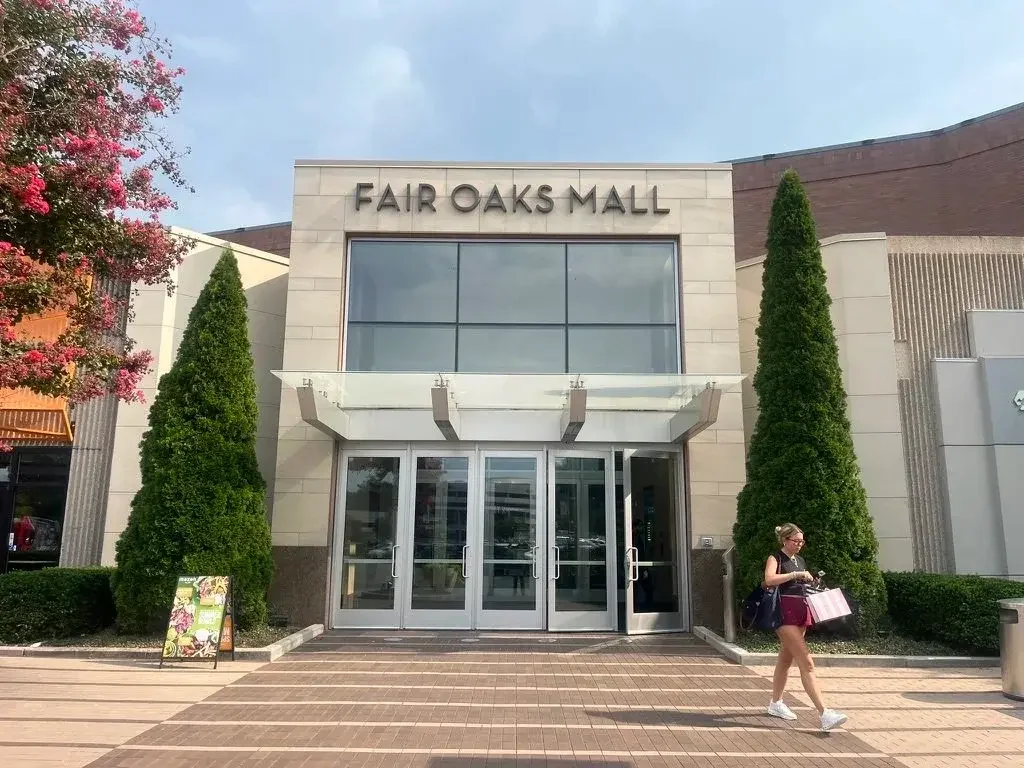
This project at Fair Oaks Mall in Fairfax, Virginia started the way many good commercial projects do: with a straightforward question.
The General Manager of the mall reached out to Loudoun Lighting and asked whether we could help bring the lighting around two central elevators out of the 1980s and into the present era. The request wasn’t framed as a flashy upgrade or a dramatic renovation. It was simply an acknowledgment that something felt dated—and that it was time to address it.
That instinct turned out to be exactly right.
Context Matters: Retail, Perception, and Modernization
Anyone paying attention to retail over the past decade understands the pressures facing traditional brick-and-mortar malls. Tenant mix, foot traffic, customer expectations, and competition from online retail all shape how these spaces need to perform today. Malls are no longer just places to shop; they are places to gather, socialize, eat, and spend time.
Fair Oaks Mall was already engaged in a broader effort to modernize the space and keep it feeling relevant and vibrant. Updating the elevator lighting was one of several projects aimed at quietly erasing visual cues that tied the building to another era.
The elevators in question sit in a main atrium and are visible from multiple vantage points. They are not hidden infrastructure; they are architectural features that people see, pass by, and orient themselves around.
The Existing Condition: A Look That Time Forgot
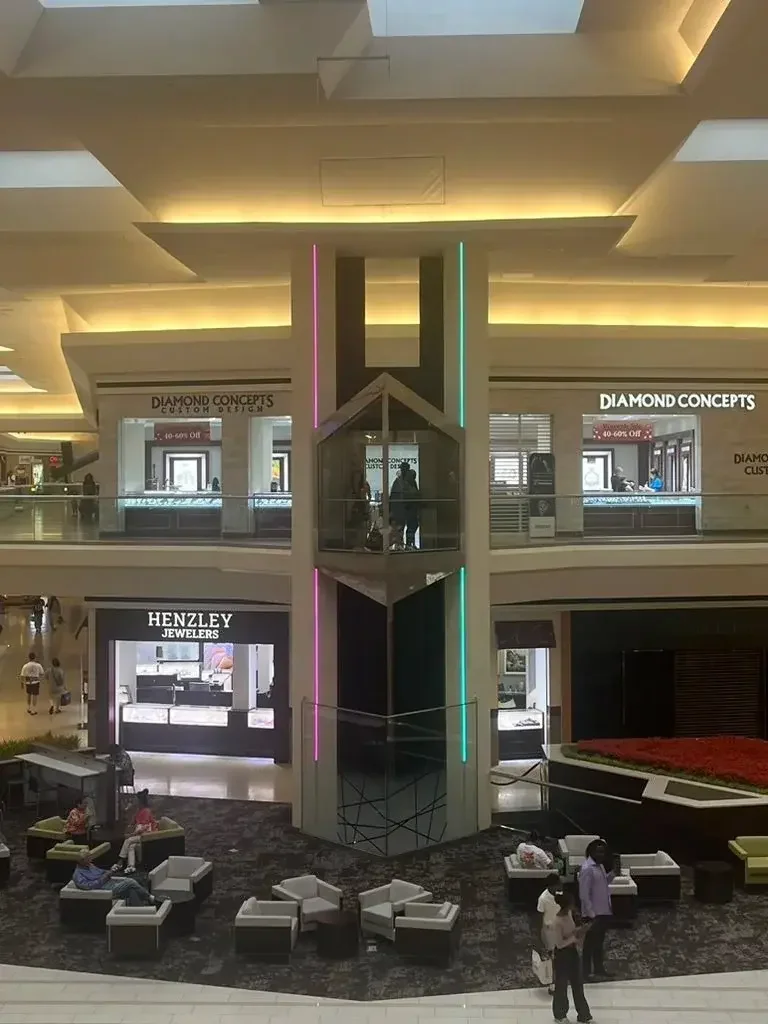
The original elevator lighting consisted of vertical channels running from the ground floor up past the second level. Inside those channels were small glass bulbs, spaced roughly every two inches, creating a vertical glow.
At one time, this probably felt futuristic.
Today, it read very differently.
The aesthetic reminded me of something between Disneyland’s Tomorrowland and late-20th-century commercial futurism—rows of small bulbs protruding from stainless steel channels. It wasn’t broken. It just felt out of place. Dated. Inconsistent with the experience the mall was trying to create elsewhere.
The challenge was not simply replacing lights. It was translating the intent of the original design—vertical emphasis, architectural presence—into a contemporary language.
Listening Before Designing
As we met with the mall’s General Manager, we spent time understanding what success looked like from their perspective.
A few things became clear very quickly:
This project was part of a larger modernization strategy.
They wanted flexibility—especially the ability to change colors for holidays, events, and seasonal themes.
They needed a solution that worked within retrofit constraints.
They wanted to work with a local Northern Virginia company, even though the mall itself is owned and operated by a national organization.
That last point mattered. It signaled that they valued responsiveness, accountability, and partnership—not just product.
The Role of Controls and Future-Proofing
Because Fair Oaks Mall is part of a national portfolio, their operational structure includes people in different locations. Facilities staff are on-site in Virginia. IT oversight lives in California. Staff roles change over time.
That reality heavily influenced system selection.
They needed a lighting system that was not dependent on any one person. Something that could be securely accessed by multiple authorized users, handed off virtually, and managed remotely if needed.
We introduced them to the HAVEN lighting system and demonstrated the app’s capabilities: color changing, scene creation, scheduling, automation, and remote management. What resonated most wasn’t just the visual capability—it was the operational resilience.
With this system, if someone is out sick, leaves the company, or changes roles, the lighting doesn’t become a mystery that only one person understands. Access can be managed. Control can be shared. Oversight can be maintained.
That’s what future-proofing looks like in a commercial environment.
Set It and Forget It: Eliminating Human Error
One of the most compelling features for the mall team was the ability to build a full lighting calendar in advance.
Instead of relying on someone to remember to change colors for Valentine’s Day, St. Patrick’s Day, or the holidays, those scenes can be pre-programmed. The system automatically overrides the default settings on the correct dates, then reverts back when the event passes.
This eliminates the “whoops” moments—wrong colors, missed holidays, lights left on too long or changed too late. In a commercial setting, those small mistakes are surprisingly visible.
Automation isn’t about removing people from the process. It’s about making sure the experience is consistent even when people are busy.
Execution Complexity: Beyond Typical Low-Voltage Work
This project was not a typical landscape lighting job.
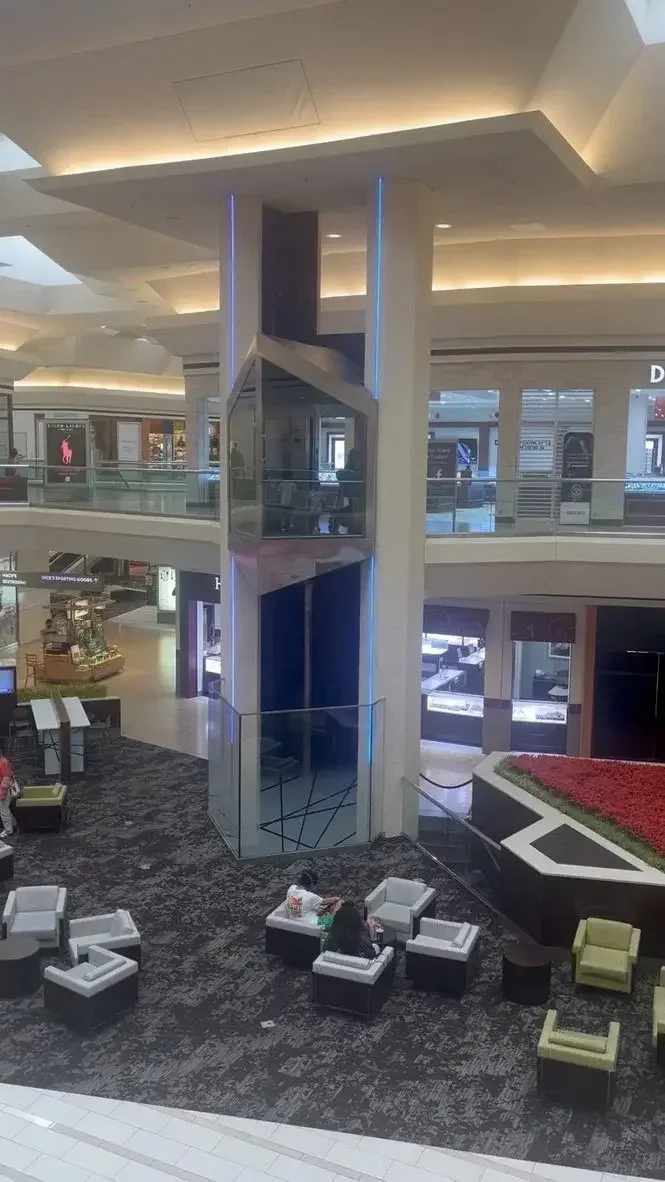
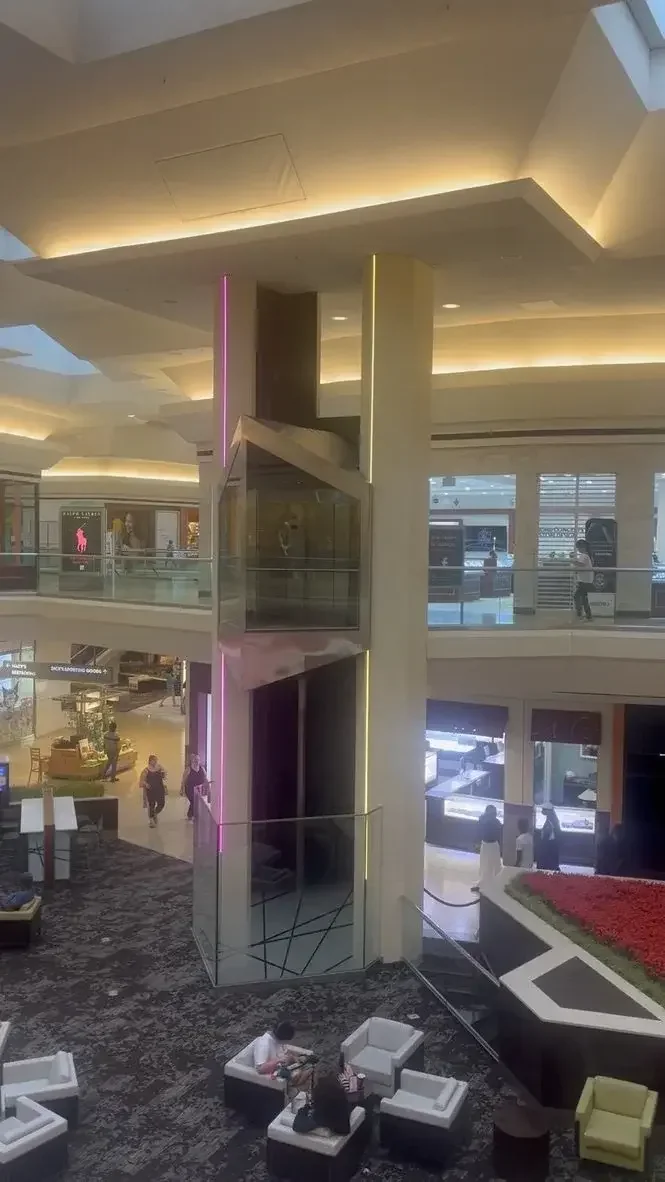
The work involved heights approaching 40 feet, elevator stanchions, faceplate removal, and scissor lifts. It also had to be completed entirely outside of mall operating hours for safety and access reasons.
Recognizing that scope early, Loudoun Lighting partnered with MAC General Power Solutions, a local commercial construction and electrical firm. This allowed us to bring the right expertise to the project without overextending beyond our lane.
Our role was clear:
Lighting system design
Product selection
Programming and commissioning
MAC General Power Solutions handled:
General build and installation
Lift operation
Electrical execution
Coordination of the physical work
This kind of partnership is critical on commercial projects. It ensures the client gets a cohesive solution without unnecessary risk.
If you’re responsible for a commercial, retail, or mixed-use space in Fairfax or Loudoun County and are evaluating lighting upgrades, controls, or modernization strategies, Loudoun Lighting can help you think through the options—before anything gets built.
We specialize in retrofit-friendly solutions, smart controls, and lighting systems designed to scale with changing teams and future needs.
Contact us to discuss your project.
Logistics, Coordination, and Off-Hours Work
All work had to be performed overnight while the mall was closed to customers. That meant careful coordination with the mall’s facilities team, security staff, and contractors.
Scissor lifts, temporary closures, and access planning all had to be sequenced correctly. There was no margin for error. Everything had to be ready to go before the doors opened the next morning.
Projects like this succeed or fail on planning as much as design.
Programming, Commissioning, and an Unexpected Bonus
Once the first elevator was completed, we moved into programming and scene creation. Because the elevators were done one at a time, something interesting happened.
For a brief period, the mall had one elevator with modern, color-changing lighting—and one with the original legacy lighting. If you stood in the right spot in the atrium, you could see both at once.
That created a real-world, side-by-side comparison that no rendering or presentation could ever replicate.
While programming the system during the day, I found myself asking passing mall visitors what they thought. Without knowing who I was or why I was asking, they consistently pointed to the modern elevator and said it looked better.
Then I would change the color in real time.
The reactions were immediate—surprise, curiosity, engagement. People would ask how it worked. They assumed I was just another shopper until that moment.
It was an unplanned but powerful validation of the project.
The Result: A Small Change with Outsized Impact
Once both elevators were completed, the effect was subtle but meaningful. The atrium felt more contemporary. More intentional. More aligned with the direction the mall is heading.
The mall team gained:
Full control over the lighting
Automation and scheduling
Remote access and contractor support
A system that can evolve with their needs
And perhaps most importantly, they eliminated a visual artifact that anchored the space to another era.
Final Thoughts
Lighting doesn’t have to shout to be effective. Sometimes its greatest value is in what it quietly reinforces—modernity, care, relevance, and attention to detail.
This project at Fair Oaks Mall is a great example of how thoughtful lighting design, paired with the right technology and the right partners, can support placemaking in commercial environments.
It wasn’t about making the elevators flashy. It was about making them belong—today and into the future.
FAQs
What are the benefits of LED lighting upgrades for commercial spaces?
LED upgrades reduce energy consumption, extend fixture lifespan, improve light quality, and lower maintenance costs. In commercial environments, they also enhance the visitor experience and support operational efficiency.
How long does a commercial lighting retrofit take?
The timeline varies depending on project scope, access, and installation logistics. For example, retrofits in active retail spaces—like Fair Oaks Mall—often require off-hours work and careful coordination to minimize disruption.
What are the benefits of smart lighting controls in commercial spaces
Smart lighting controls allow for scheduling, automation, color changes, remote access, and shared system management. For commercial properties, this reduces human error, improves consistency, and ensures the system remains usable even as staff roles change.
What features should I look for in smart lighting controls?
Look for systems that offer easy scheduling and automation, color and scene customization, remote management and multi-user access, and reliability and scalability for future needs.