
When hiring an outdoor lighting company, it's important to look beyond the initial price and evaluate the company's design experience, installation practices, fixture quality, and ongoing service. Asking the right questions can help you understand what a proposal includes, how the system will perform, and what support you'll receive after installation.
A professionally designed outdoor lighting system should enhance the home's architecture and landscaping, improve visibility and navigation, and create inviting outdoor spaces after dark. The company you choose plays an important role in achieving those results.
But not all outdoor lighting companies approach projects the same way. The following ten questions can help you compare providers, evaluate their proposals, and determine which company is best equipped to meet your property’s needs.
Why Outdoor Lighting Requires Specialized Experience
Outdoor lighting involves more than choosing fixtures and placing them around a property. A successful system requires careful planning to balance aesthetics, visibility, glare control, beam spread, fixture durability, electrical integrity, and long-term serviceability.
A common misconception is that brighter lighting automatically produces better results. In reality, effective outdoor lighting often relies on carefully positioned light, controlled brightness, and contrast between illuminated and darker areas.
The goal is to create depth, warmth, visibility, and atmosphere while allowing the home's architecture and landscape to remain the focus.
This becomes especially important on larger Northern Virginia properties, where lighting may need to guide long driveways, highlight mature trees, illuminate stone walkways, or create balance across patios, pools, and outdoor entertaining spaces.
10 Questions to Ask Before Hiring an Outdoor Lighting Company
1. Is outdoor lighting one of your primary specialties?
Start by understanding how central outdoor lighting is to the company's work. A provider with dedicated outdoor lighting experience should be able to explain its approach to fixture placement, beam angles, glare control, layered lighting, low-voltage system design, and long-term maintenance.
Ask how the company develops a lighting plan for a specific property and how it adapts its approach to different architectural styles, landscape features, and homeowner priorities.
Look for clear answers supported by relevant project examples. A company should be able to explain not only what it installs, but also why it recommends a particular design or installation method.
If you're still deciding whether to hire a dedicated lighting company, landscaper, or design/build contractor, read our guide to choosing the right type of landscape lighting provider in Northern Virginia.
2. Can You Show Examples of Similar Projects?
A reputable outdoor lighting company should be able to share completed projects that reflect your property's characteristics and goals.
Depending on your needs, ask to see examples involving:
Wooded lots and mature trees
Luxury residential homes
Pool and patio lighting
Outdoor entertaining spaces
Pathway and driveway lighting
Architectural lighting
When reviewing project photos, pay attention to how the lighting interacts with the property. Are architectural details and landscape features illuminated with intention? Does the lighting feel balanced, or are some areas excessively bright while others disappear into darkness?
Ask the company to explain the challenges involved in a comparable project and how its design addressed them. Relevant experience can help you assess whether the provider understands the practical and aesthetic considerations of your property.
3. Do you provide a written lighting plan and proposal?
A written proposal helps you understand exactly what you're purchasing and provides a basis for comparing outdoor lighting companies.
Ask whether the proposal documents the scope of work, fixture specifications, installation details, project timeline, pricing, and applicable warranties. It should also identify relevant exclusions or assumptions so you know what is and isn't included.
Depending on the project, the company may provide a lighting layout, fixture placement plan, or outdoor lighting rendering to help you visualize the intended result before installation begins.
When comparing proposals, look beyond the total price. Two estimates may differ significantly in fixture quality, installation scope, design detail, and future service options. A clear breakdown helps you understand those differences before making a decision.

4. Are you licensed and insured?
Before hiring an outdoor lighting contractor, ask what licensing and insurance coverage applies to the proposed work.
Request proof of appropriate liability insurance and workers' compensation coverage, where applicable. Confirm that the company and the people performing the work meet relevant licensing, permitting, and safety requirements for the installation.
Requirements can vary depending on the work being performed and the jurisdiction. A qualified contractor should be able to explain which requirements apply to your project and provide documentation when requested.
Verifying credentials before work begins helps protect the homeowner and clarifies who is responsible for the installation.
5. What fixtures and materials do you use?
Outdoor lighting fixtures vary considerably in construction quality, weather resistance, performance, and expected service life. Two fixtures may look similar but perform differently after years of exposure to moisture, temperature changes, and other outdoor conditions.
Ask the company to explain its fixture selections and why they are appropriate for your property. Important considerations include:
Fixture materials: Brass, copper, aluminum, and other materials have different durability and corrosion characteristics. Ask how the material performs in the intended environment.
LED quality: Understand the light output, color consistency, and expected performance of the proposed components.
Color temperature: Ask how the selected light color will complement the home's exterior materials, landscaping, and desired atmosphere.
Weather resistance: Confirm that fixtures are appropriate for their intended outdoor exposure.
Transformer and wiring: Ask about equipment specifications, wire protection, connections, and installation methods.
Serviceability: Find out whether fixtures and components can be maintained, repaired, or replaced when needed.
Material choice alone doesn't determine longevity. Construction quality, installation practices, environmental exposure, and the ability to service the system all affect long-term performance.
A knowledgeable company should be able to explain the reasoning behind its equipment choices rather than relying on general claims about product quality.
6. What warranty do you offer?
Ask for written warranty details before approving an outdoor lighting project. It's important to understand the difference between a manufacturer's product warranty and the contractor's workmanship warranty.
Clarify the following:
What warranty coverage applies to fixtures, LED components, and transformers?
How long is installation labor covered?
What exclusions or limitations apply?
Who handles a warranty claim if a fixture or component fails?
Are labor, troubleshooting, or replacement visits covered?
What support is available after the warranty period ends?
Warranty terms can vary significantly by manufacturer, component, and contractor. Don't assume that a long product warranty automatically covers the cost of diagnosing a problem or replacing a fixture.
For more information, read our guide to outdoor lighting warranties and what homeowners should know.
7. Who will actually perform the installation?
Ask who will be responsible for installing and overseeing your outdoor lighting system. Some companies use in-house installation teams, while others work with subcontractors. Either arrangement can work, provided responsibilities and quality standards are clear.
Before hiring a company, clarify:
Will your in-house team perform the work, or will subcontractors be involved?
Who supervises the installation?
Who is responsible for quality control?
How will the team protect existing landscaping and hardscaping during installation?
Who should I contact if an installation issue arises?
Installation quality affects how well the lighting system performs and how easily it can be maintained. Proper wiring protection, thoughtful fixture placement, secure connections, and organized system components all contribute to long-term reliability.
The important consideration is whether the company has a clear process for overseeing the work and addressing problems.
8. How do you approach lighting design?
The right outdoor lighting design should reflect your home's architecture, landscaping, and how you use the property after dark. Ask the company to explain how it would approach your specific property rather than applying a standard layout to every home.
A thoughtful design process should consider several factors:
Architecture: Which exterior features, materials, and structural details should be highlighted?
Landscaping: How could mature trees, gardens, stonework, and other landscape elements contribute to the overall composition?
Visibility and navigation: How should walkways, stairs, driveways, and entrances be illuminated?
Outdoor living: How will the lighting support patios, pools, outdoor kitchens, and entertaining areas?
Glare control: How will fixture positioning and beam angles minimize unwanted brightness and direct glare?
Views from inside the home: How will the illuminated landscape look through windows and from the main living spaces?
Ask how the company determines fixture placement, selects beam spreads, and balances illuminated features with surrounding areas. These decisions influence whether the finished system feels cohesive or uneven.
A well-designed system should create depth, improve visibility, and establish a comfortable atmosphere without overwhelming the property. Ask the company to explain the intended lighting effects before installation so you understand how the design supports your goals.
9. What happens after installation?
Outdoor lighting systems may need adjustments, troubleshooting, repairs, or additions over time. Before hiring a company, find out what support it offers after the initial project is complete.
Ask whether the company provides:
Routine maintenance and system inspections
Troubleshooting for fixtures that stop working or perform inconsistently
Fixture adjustments as landscaping grows or property needs change
Repairs and component replacements
Lighting additions or upgrades to an existing system
Guidance on maintaining system performance over time
It's also worth asking how service requests are scheduled, whether existing customers receive ongoing support, and how maintenance and repair work is priced.
A company that understands the full life of an outdoor lighting system can help homeowners address issues as they arise and adapt the installation as the property changes.
This matters when a system has been in place for years. A failed fixture or uneven lighting doesn't necessarily mean the entire installation needs to be replaced. Depending on the condition of the equipment and wiring, targeted repairs, adjustments, or upgrades may be appropriate.
Understanding the company's service approach before installation gives you a clearer picture of the long-term relationship you're entering.
10. What makes your approach different?
Ask the company to explain what distinguishes its design process, installation standards, equipment choices, and approach to ongoing service.
Look for specific explanations rather than broad claims about quality or customer satisfaction. The company should be able to describe how it approaches a project, how it makes design decisions, and how it handles challenges that may arise during installation or after completion.
You might ask:
How do you tailor a lighting plan to each property?
How do you evaluate fixture quality and long-term serviceability?
What standards guide your installation process?
How do you handle troubleshooting, repairs, and future system additions?
Can you share examples that demonstrate your approach?
A clear, consistent process helps you understand what to expect. The answers should also align with the company's project examples, written proposal, warranty terms, and service commitments.
What Lower-Cost Outdoor Lighting Proposals May Miss
When comparing outdoor lighting companies, it's tempting to focus primarily on the initial price. However, a lower estimate may reflect differences in the equipment, design work, installation scope, or ongoing service included in the proposal.
Potential differences include:
Less detailed lighting plans or limited design customization
Fixtures with different material specifications or construction quality
Inadequate attention to glare control and lighting balance
Exposed or poorly protected wiring and connections
Limited warranty coverage or unclear workmanship responsibilities
Little support for future repairs, adjustments, or system additions
For example, exposed or poorly protected wiring can create service problems and may require corrective work. Fixture failures or uneven lighting can also lead to additional costs if the original installation doesn't meet the property's needs.
A lower-priced proposal isn't automatically a poor choice, just as a higher price doesn't guarantee better results. The key is to compare the scope, specifications, installation practices, warranty coverage, and service options included in each estimate.
Outdoor lighting is a long-term investment in how your property looks and functions after dark. Understanding these differences helps you make a more informed decision.
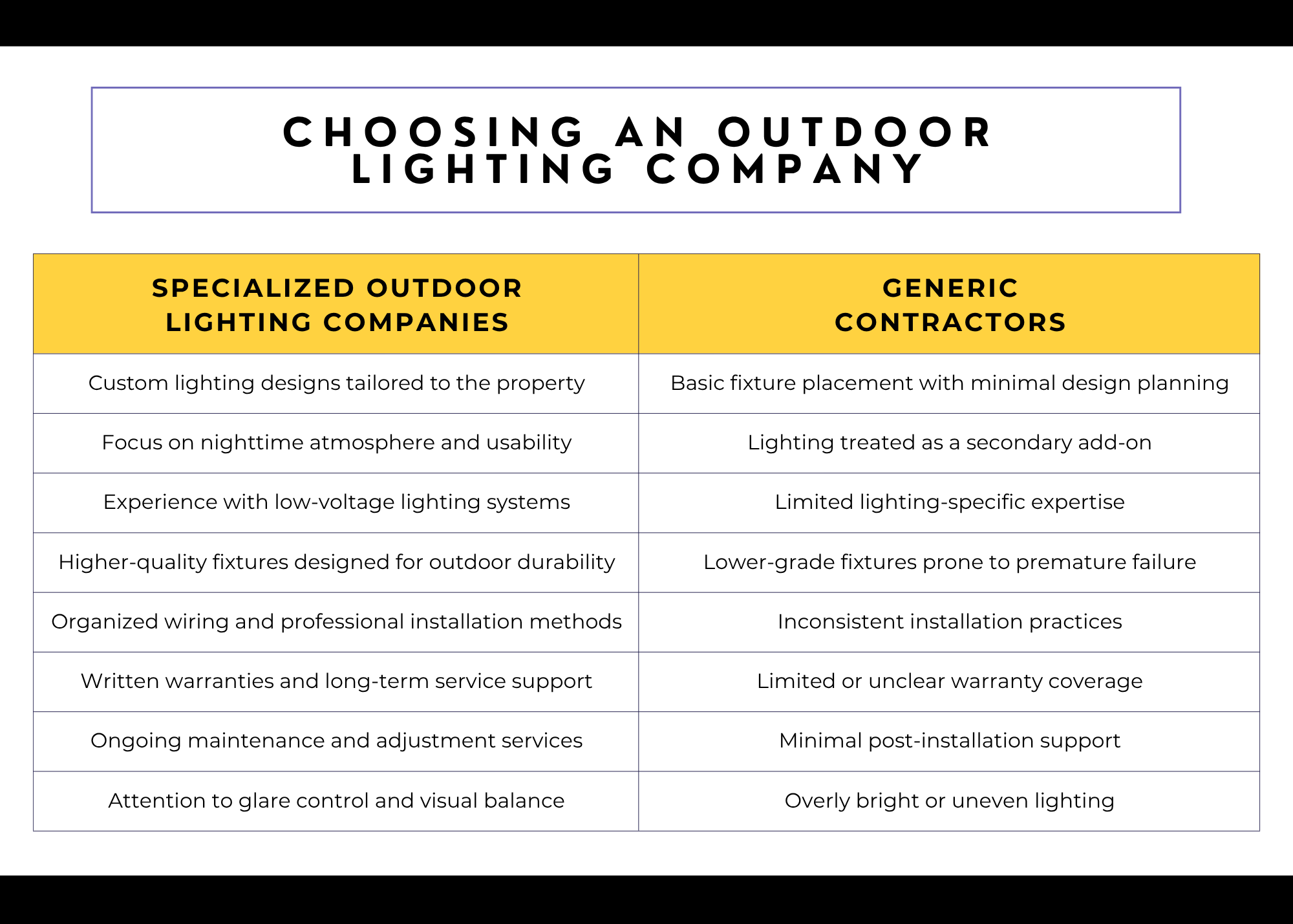
Red Flags to Watch For When Hiring an Outdoor Lighting Company
As you evaluate contractors, pay attention to warning signs that could indicate unclear expectations or inadequate project planning.
Potential red flags include:
Vague proposals that don't specify the work or equipment
Unusually low pricing without an explanation of what's included
Inability to provide appropriate proof of licensing or insurance
No written agreement outlining the project scope and terms
Unclear warranty coverage or responsibility for installation issues
No relevant project examples or references
High-pressure sales tactics that discourage questions
A standardized design approach that doesn't account for your property
Not every concern automatically disqualifies a company. For example, using subcontractors isn't inherently a problem if the work is properly supervised and responsibilities are clear.
The goal is to identify unanswered questions before committing to a project. A professional outdoor lighting company should be willing to explain its recommendations, document the agreed-upon work, and help you understand what to expect.
Why Local Experience Matters
Outdoor lighting projects in Northern Virginia can involve a wide range of property types, from established neighborhoods with mature landscaping to large estates with long driveways, historic architecture, wooded areas, and extensive outdoor entertaining spaces.
These properties present different design considerations. Lighting must account for the scale of the landscape, the materials and features of the home, access routes, and the desired atmosphere after dark.
A company familiar with properties throughout Loudoun County and Fairfax County can draw on local project experience when evaluating these factors and developing a lighting plan appropriate to the property.
At Loudoun Lighting, we believe outdoor lighting should feel intentional. A well-designed system should complement the home's architecture, improve how the property functions at night, and create an atmosphere that feels warm, comfortable, and natural to the space.
If you're evaluating outdoor lighting companies for an upcoming project, contact Loudoun Lighting. We're happy to answer questions about outdoor lighting design, installation, and ongoing service.
Frequently Asked Questions
How do I know if an outdoor lighting company is reputable?
A reputable outdoor lighting company should be able to provide relevant project examples, references when available, appropriate licensing and insurance documentation, a written proposal, and clear warranty information. It should also explain its design and installation process and answer questions about ongoing service. Look for consistency between what the company promises, what its proposal documents, and what its past work demonstrates.
What should I consider when comparing outdoor lighting installation companies?
Compare each company's experience with similar properties, the detail included in its proposal, fixture and material specifications, installation practices, applicable licensing and insurance, warranty coverage, and ongoing service options. Ask who will perform the installation and how the company handles repairs or adjustments after the project is complete. Comparing the scope and quality of the proposed work alongside the price provides a more useful basis for evaluating contractors than price alone.
Should outdoor lighting be installed by an electrician?
Professional outdoor lighting should be installed by qualified professionals who understand the relevant electrical safety requirements and the equipment being used. Many landscape lighting systems use low-voltage components, but requirements depend on the installation and the work involved. Ask the contractor which licensing, permitting, or other requirements apply to your project and who will be responsible for any electrical work that requires a qualified or licensed professional.
What type of outdoor lighting fixtures last the longest?
Durable fixtures made from materials such as brass and copper can perform well in outdoor environments, but longevity depends on more than the housing material. Construction quality, weather exposure, LED components, wiring connections, and installation practices all influence long-term performance. Ask the lighting company to explain its fixture selections, warranty coverage, and approach to servicing or replacing components over time.
Is professional outdoor lighting worth it?
Professional outdoor lighting can improve nighttime visibility, highlight architectural and landscape features, and make outdoor spaces more inviting after dark. A well-planned system also considers glare, light distribution, fixture durability, and future maintenance. The value depends on the property's needs, the quality of the design and installation, and how well the system performs over time.
