
What Are the Benefits of Upgrading to LED Outdoor Lighting?
Most outdoor lighting systems we come across aren’t necessarily broken; they’re just outdated.
Older halogen and incandescent setups use more energy, require constant maintenance, and don’t give you much control over how your home actually looks at night. We see this a lot—lights burning out in different areas, uneven brightness, and a setup that just doesn’t feel finished.
That’s where LED lighting changes things.
It’s not just a more efficient option. It gives you better performance, more control, and a cleaner overall result when it’s designed properly.
If your home still relies on older halogen, incandescent, or HID lighting, upgrading to LED outdoor lighting is one of the most impactful improvements you can make. And the biggest difference isn’t just the technology—it’s what you can do with it.
In this guide, we’ll walk through the key benefits of upgrading to LED outdoor lighting and what that actually means for your home.
Significant Energy Savings Without Compromising Light Quality
Most homeowners hear that LEDs save energy, and that’s true. But what matters more is how that energy is used.
LED fixtures are directional. Instead of light spilling everywhere, we can aim it exactly where it’s needed. That means we’re not wasting energy lighting areas that don’t matter.
In a lot of the systems we replace, there’s too much light in the wrong places and not enough where it actually counts. LEDs let us fix that.
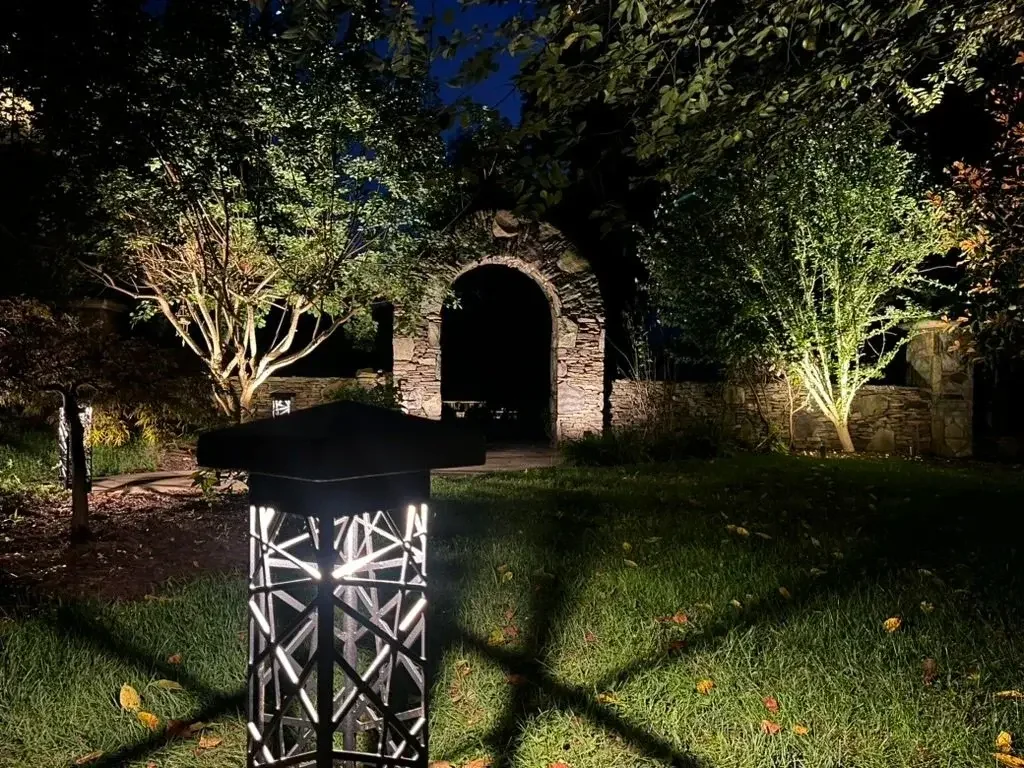
You end up using fewer watts, but getting better coverage and a cleaner look across the property—especially on larger homes where lighting needs to be balanced across architecture, pathways, trees, and entertaining spaces.
On this recent estate-scale LED outdoor lighting upgrade in Great Falls, strategic fixture placement and zoning allowed us to illuminate a four-acre property more intentionally while improving consistency and reducing wasted light output.
What that means for you:
Lower utility bills: Outdoor lighting runs for hours every night. More efficient fixtures make a noticeable difference over time.
More flexibility in design: Because LEDs use less energy, we can add more fixtures where needed without driving up costs.
Less wasted light: Everything has a purpose, which makes the system feel more intentional overall.
Long Lifespan and Less Maintenance
One of the biggest frustrations with older lighting systems is how often bulbs need to be replaced.
We see this all the time. One light goes out, then another, and before long the whole system looks inconsistent.
LEDs solve that.
High-quality LED fixtures are designed to last tens of thousands of hours. Instead of replacing bulbs every year or two, you can go years with minimal upkeep.
In practical terms:
You’re not constantly replacing bulbs
You’re not dealing with sections of your lighting going dark
The system stays consistent over time
This is especially important for larger homes or properties with lighting in hard-to-reach areas like rooflines or tall trees.
It’s a much more “set it and forget it” approach.
We’re seeing this more and more in neighborhoods throughout Northern Virginia. On two recent LED upgrade projects–one in Leesburg’s Grenata Preserve community and another in Great Falls–the existing outdoor lighting systems were roughly 10-15 years old. While the technology itself was outdated, the majority of the wiring and many of the fixtures were still in good enough condition to reuse.
By upgrading the system components to modern LED technology instead of starting completely over, the homeowners were able to improve performance, reduce maintenance demands, and significantly lower energy consumption without the cost of a full system replacement.
Better Light Quality and More Control
Lighting is about placement as much as it’s about brightness.
With LEDs, we can control exactly where the light goes. That’s how you highlight architectural details, bring out texture in stone or brick, and light landscaping without it looking overdone.
A lot of older systems just flood areas with light. It’s bright, but it doesn’t look good.
LEDs give you a cleaner, more consistent light, and more importantly, control over how everything is lit.
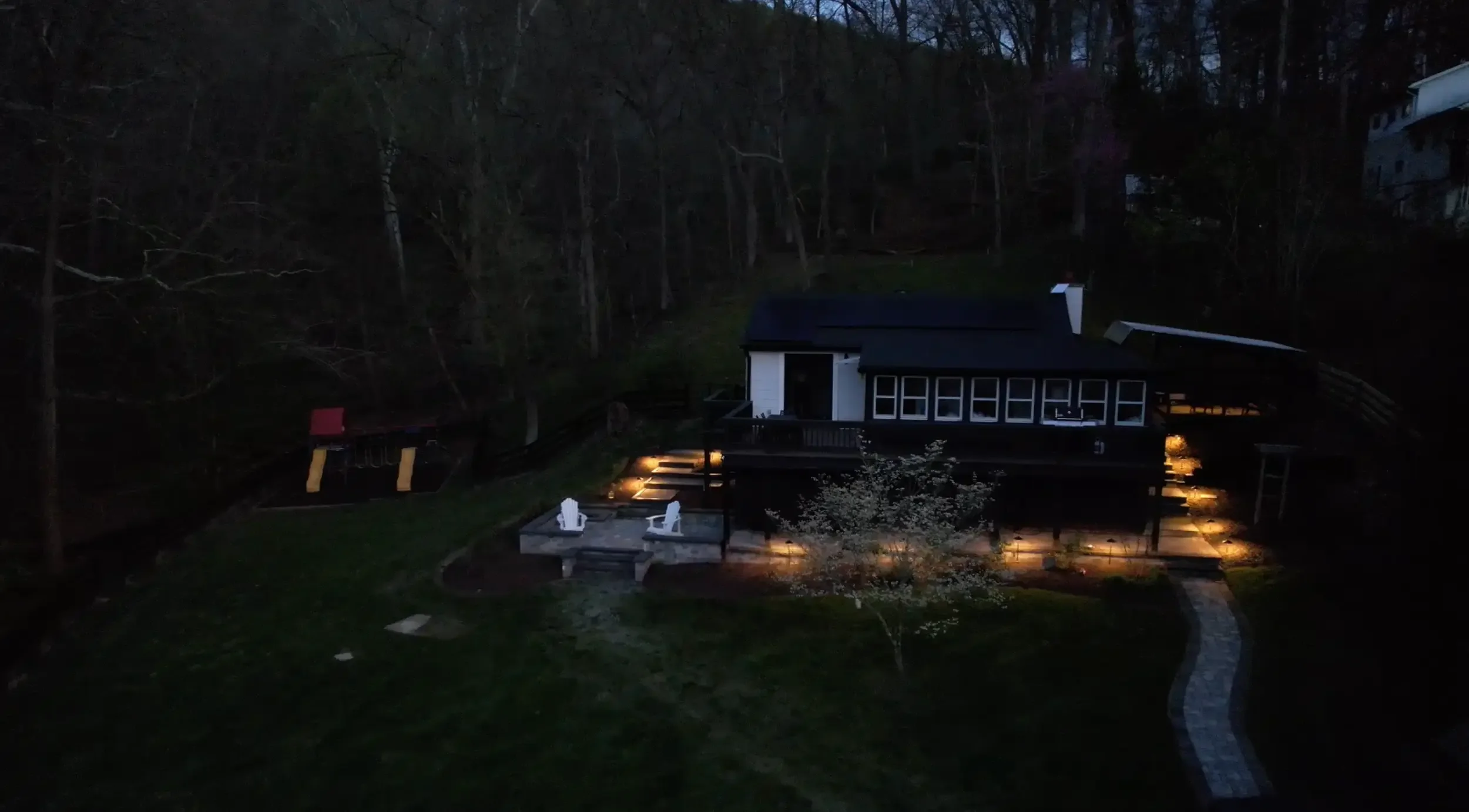
That level of control is what allows us to light a property effectively without over-lighting it or creating glare—especially in more natural settings where preserving the nighttime environment matters.
In this Dark Sky-compliant outdoor lighting project along the Shenandoah River, carefully directed fixtures and warmer LED tones allowed the homeowners to illuminate pathways and gathering areas while still preserving the quiet atmosphere and natural darkness surrounding the property.
That’s how we’re able to:
Highlight the right parts of your home
Create depth instead of flat lighting
Avoid glare or harsh hot spots
Keep everything balanced across the property
Color temperature also plays a role here. For most homes, we stick with warmer tones (around 2700K–3000K) because they feel more natural and inviting.
When everything is done right, the house just looks better at night—simple as that.
Improved Safety and Security
Outdoor lighting is also about how the space functions. Proper lighting makes it easier to move around your property safely, especially at night.
Key areas we focus on:
Walkways and paths
Steps and elevation changes
Driveways and entry points
This reduces the chances of trips or falls and makes the space more usable overall.
On the security side, a well-lit home is simply less appealing to anyone who shouldn’t be there.
We focus on eliminating dark gaps—around doors, along the house, and in key transition areas—without making the property feel overlit.
Done right, it feels natural. Not harsh, not overwhelming—just clear and comfortable.
Smart Controls and Automation
LED systems also give you more control over how and when your lighting runs.
Instead of everything being on or off, you can fine-tune the system to match how you actually use your space.
We use similar control strategies in commercial environments where consistency matters even more.
On this elevator lighting modernization project at Fair Oaks Mall, scheduling and remote system management allowed the mall team to automate lighting scenes, reduce manual adjustments, and maintain a more consistent experience throughout the space.
Common options include:
Lights turning on automatically at sunset
Dimming certain areas later in the evening
Motion-activated lighting where needed
Control from your phone or tablet
We’ll often set up different zones depending on how the space is used. Brighter when you’re entertaining, softer when things wind down.
It’s a level of flexibility that older systems just don’t offer.
Built for Outdoor Conditions
Outdoor lighting takes a beating—weather, temperature changes, moisture, and general wear.
LED fixtures are built to handle that.
They don’t have fragile filaments, and most high-quality fixtures are sealed to keep out water and debris.
What that means long-term:
Fewer failures during seasonal changes
More consistent performance year-round
Less time dealing with repairs or replacements
When paired with proper installation, the system is built to last.
More Efficient and Environmentally Responsible
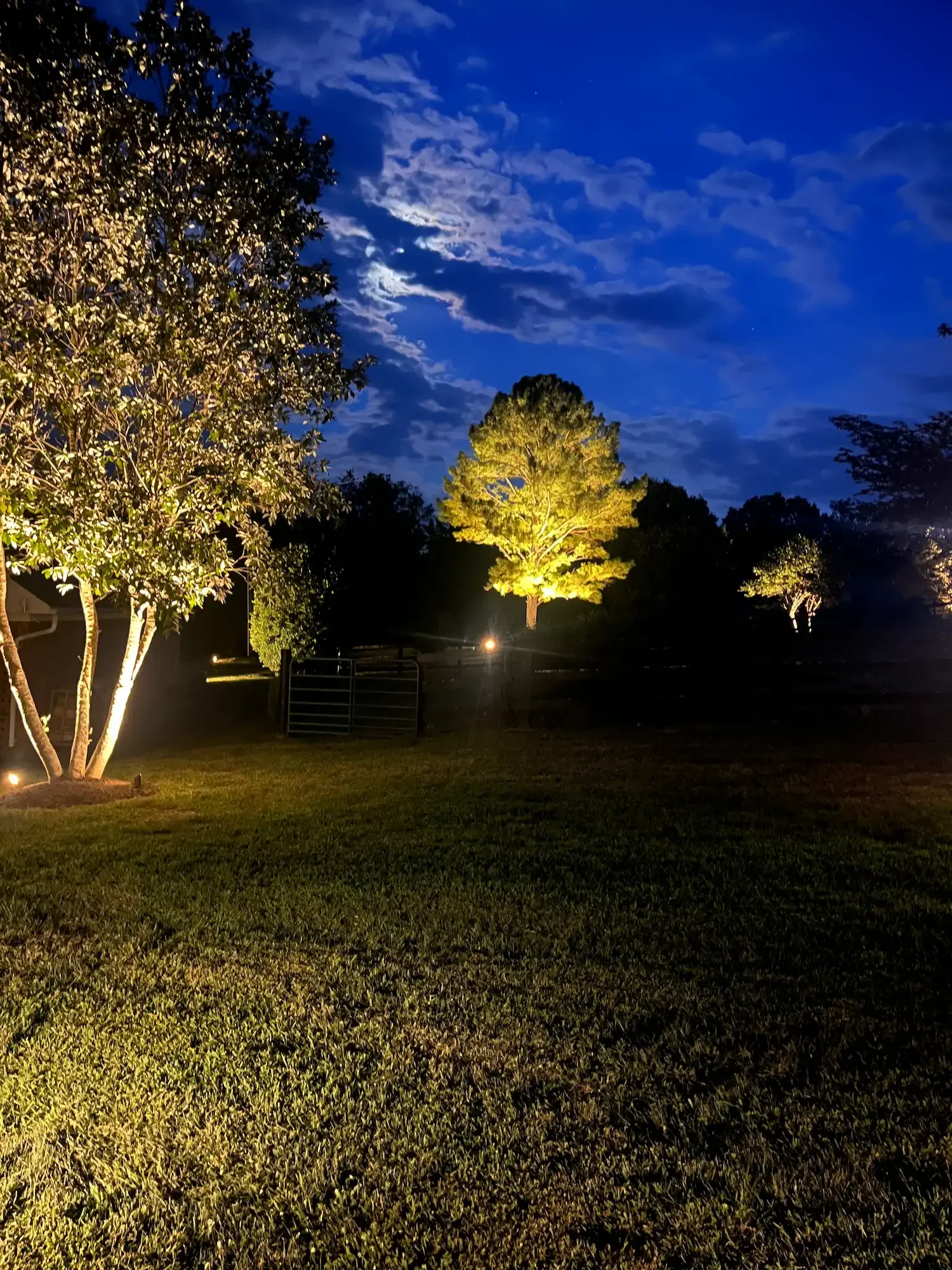
LED lighting uses less energy. That’s the main environmental benefit.
But it also lasts longer, which means fewer materials and fewer replacements over time.
That said, design matters here too.
We’ve all seen lighting that’s too bright or too harsh. That usually comes down to poor fixture selection or color temperature.
The approach we take:
Use warmer color temperatures
Keep light directed where it’s needed
Avoid over-lighting the property
The goal is to make the home look better, not brighter for the sake of it.
That kind of restraint matters more on larger or rural properties, where the lighting needs to support the land—not compete with it. We take a similar approach on projects like this Hunt Country farm lighting design, where doing less—more intentionally—made the biggest difference.
Strong Long-Term Value
LED lighting systems typically cost more upfront than older options, but they make up for it over time.
Between energy savings and reduced maintenance, most homeowners see the value pretty quickly.
Where that value comes from:
Lower operating costs
Fewer replacements and service calls
A system that lasts significantly longer
We often have conversations with homeowners who previously tried solar landscape lighting hoping for a lower-maintenance solution, only to find themselves repeatedly replacing dim fixtures, failed batteries, or inconsistent lights after just a few seasons. In many cases, investing in a professionally designed low-voltage LED system provides far better long-term reliability, performance, and overall value.
There’s also the added benefit of how the home looks.
Good lighting makes a noticeable difference in curb appeal. It highlights the details you’ve already invested in and makes the property feel more complete.
A Better Experience at Night
This is the part most people don’t think about until they see it.
A well-designed lighting system changes how you experience your home at night.
Instead of everything disappearing after sunset, the space stays usable. It feels more welcoming, more comfortable, and more finished.
You notice details you didn’t before. The house looks different—in a good way.
That’s really the goal.
Is Upgrading to LED Outdoor Lighting Worth It?
For most homeowners, yes.
You get:
Lower energy costs
Reduced maintenance
Better light quality
Enhanced safety and security
Greater control and customization
A more refined outdoor environment
But the biggest difference comes down to how the system is designed and installed.
Why Design Matters More Than the Technology
LEDs are a tool. How they’re used is what makes the difference.
We see this all the time. Systems that use good fixtures but fail because the underlying design or installation wasn’t done correctly. Wiring, voltage balance, and layout all matter just as much as the fixtures themselves. This diagnostic project is a good example of how small installation decisions can lead to bigger system failures over time.
In many cases, older outdoor lighting systems can b upgraded successfully when the underlying infrastructure has been properly maintained over time. Waiting until wiring, connections, or fixtures completely fail often leads to more extensive repairs and high long-term costs.
We see this often during diagnostic and repair projects, where seemingly small installation decisions—like poor wire routing, overloaded lines, or improper fixture placement—create larger system failures years later. Regular maintenance and system evaluations can help homeowners extend the life of their outdoor lighting while making future LED upgrades much more straightforward.
A well-designed system takes into account:
Where fixtures are placed
How the light is directed
How everything works together across the property
That’s what separates a system that just “works” from one that actually looks good and feels complete.
Thinking About Upgrading Your Outdoor Lighting?
If you’re considering upgrading to LED lighting, the biggest difference isn’t the fixture. It’s the design behind it.
The right setup, done the right way, will completely change how your home looks and functions at night.
That’s where we focus our time.
Schedule a consultation to explore what’s possible with LED outdoor lighting.
FAQs
What are the benefits of upgrading to LED outdoor lighting?
LED outdoor lighting improves energy efficiency, reduces maintenance, and provides better light quality. For homeowners in Loudoun and Fairfax County, VA, it also enhances safety, curb appeal, and overall control of the lighting system. An additional benefit is an expanded capability of your existing systems wiring. What do we mean by this? Older halogen systems could only accommodate limited number of fixtures per wire run and this mean adding additional fixtures to feature a new tree or planting required a new wire run. By converting to LED we can reduce the load on each wire run freeing up capacity to add more fixtures without adding incremental wire runs to your system!
How much energy can you save with LED outdoor lighting?
LED systems can reduce energy use by up to 70–80% compared to older lighting. For many homeowners, that means noticeably lower monthly utility costs.
How long do LED outdoor lights last?
Most high-quality LED lamps or drivers last between 35,000 and 50,000 hours, which means far fewer replacements over time compared with non-LED or halogen bulb options.
Is LED outdoor lighting worth the investment?
Yes. There are energy savings of course, but more impactful to the ROI is the reduced frequency of service calls to replace lamps. Getting someone out to perform service is often more expensive than the lamps themselves. We can reduce your run-rate spend with a one-time LED conversion. The long-term savings on energy and maintenance, along with better performance, make it a worthwhile upgrade.
Do LED outdoor lights work with smart home systems?
Yes. Most modern LED systems can integrate with timers, dimmers, and mobile apps, allowing you to control your lighting remotely and automate schedules.
